Start at 4 by 4
A four by four grid uses only the numbers one to four and can be solved by elimination in a couple of minutes. It teaches the rule and the scanning habit without the intimidation of a full grid.
From our digital bookshelf
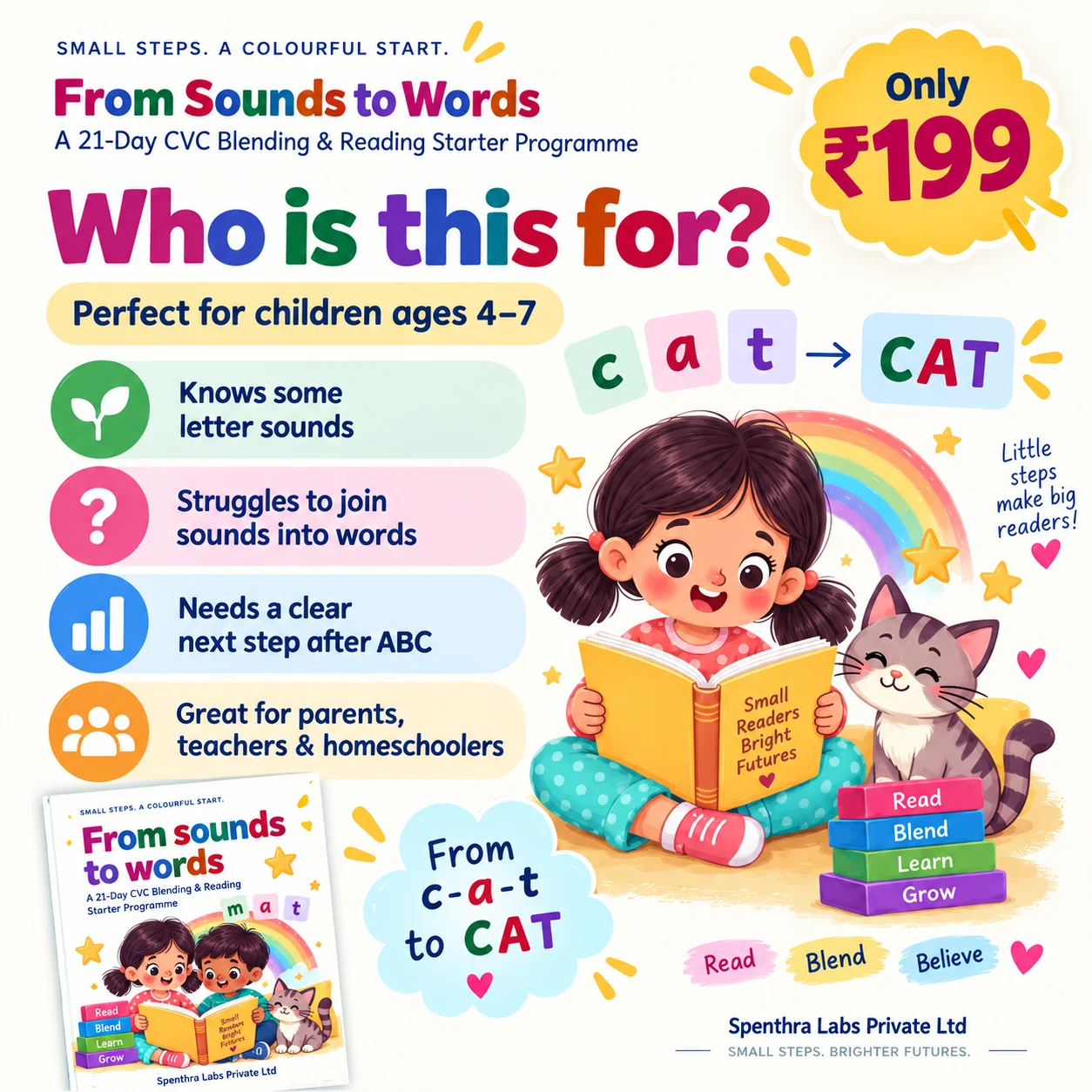
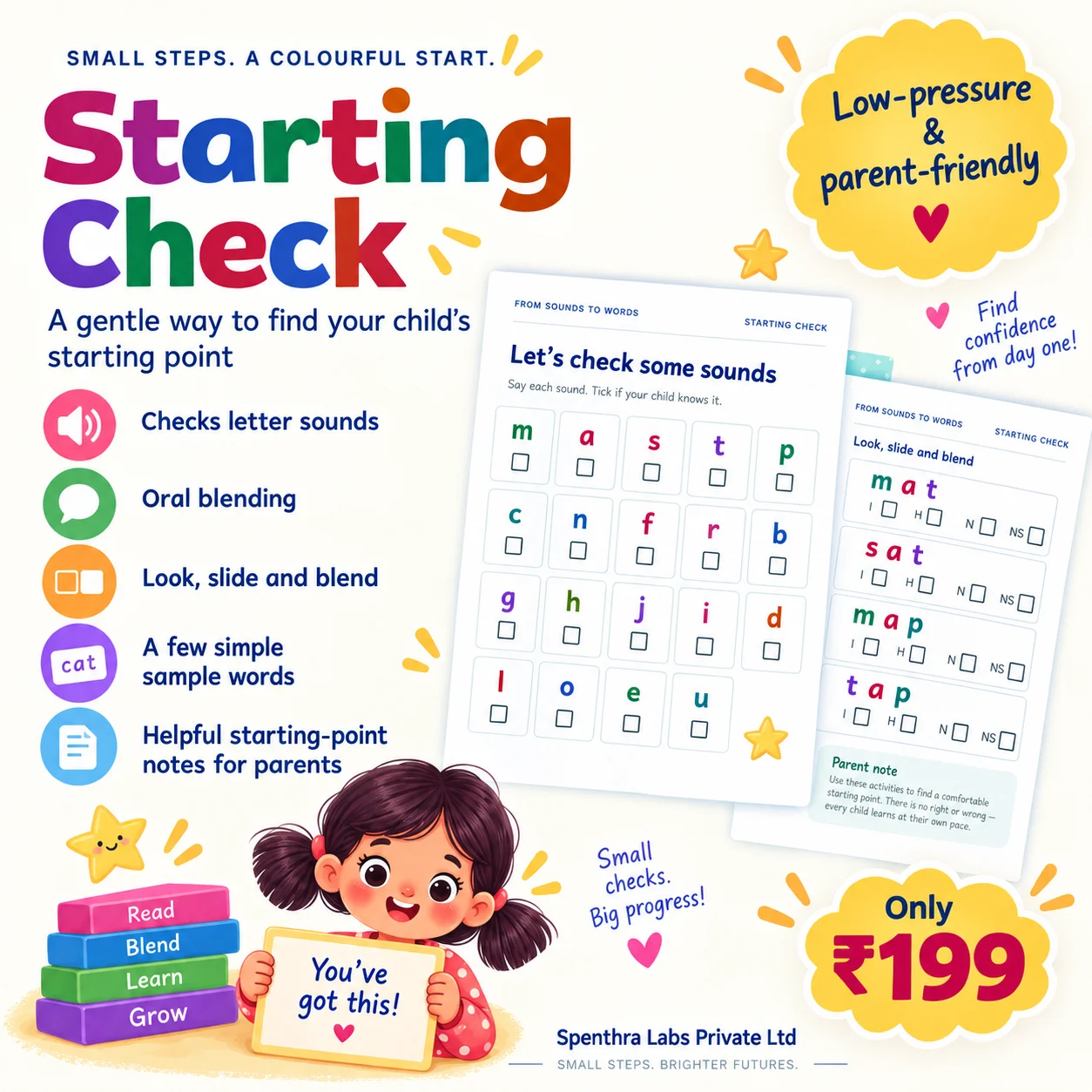
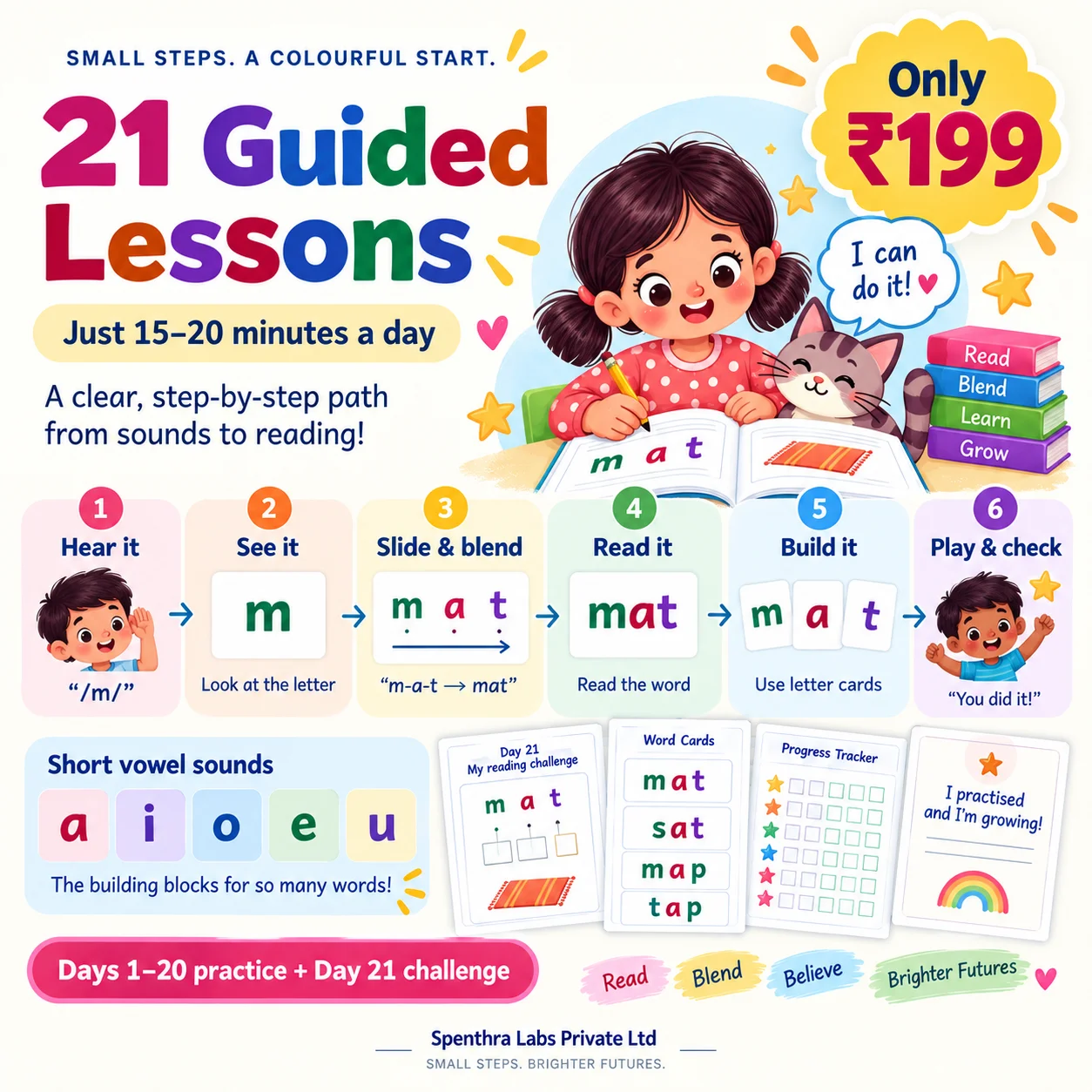
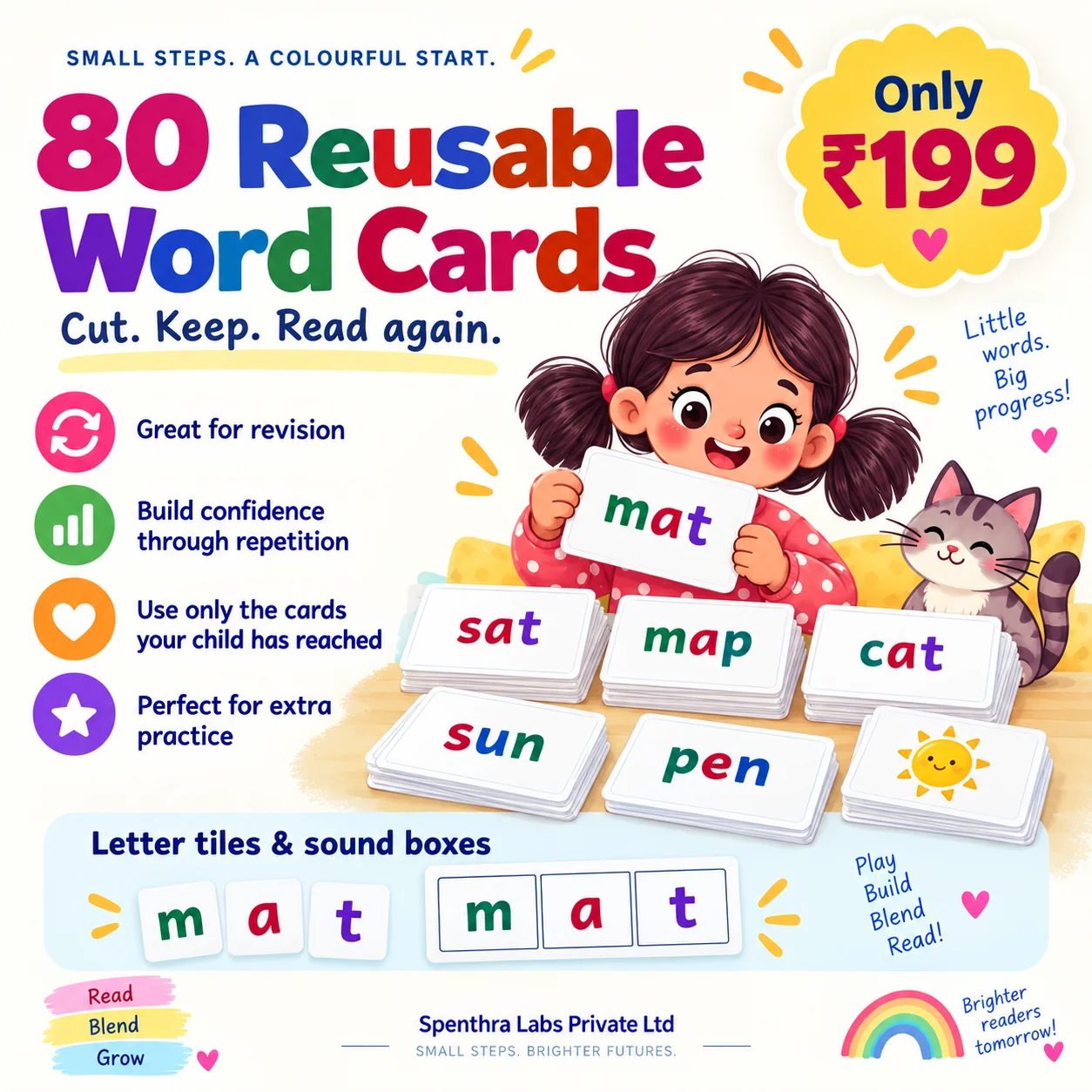
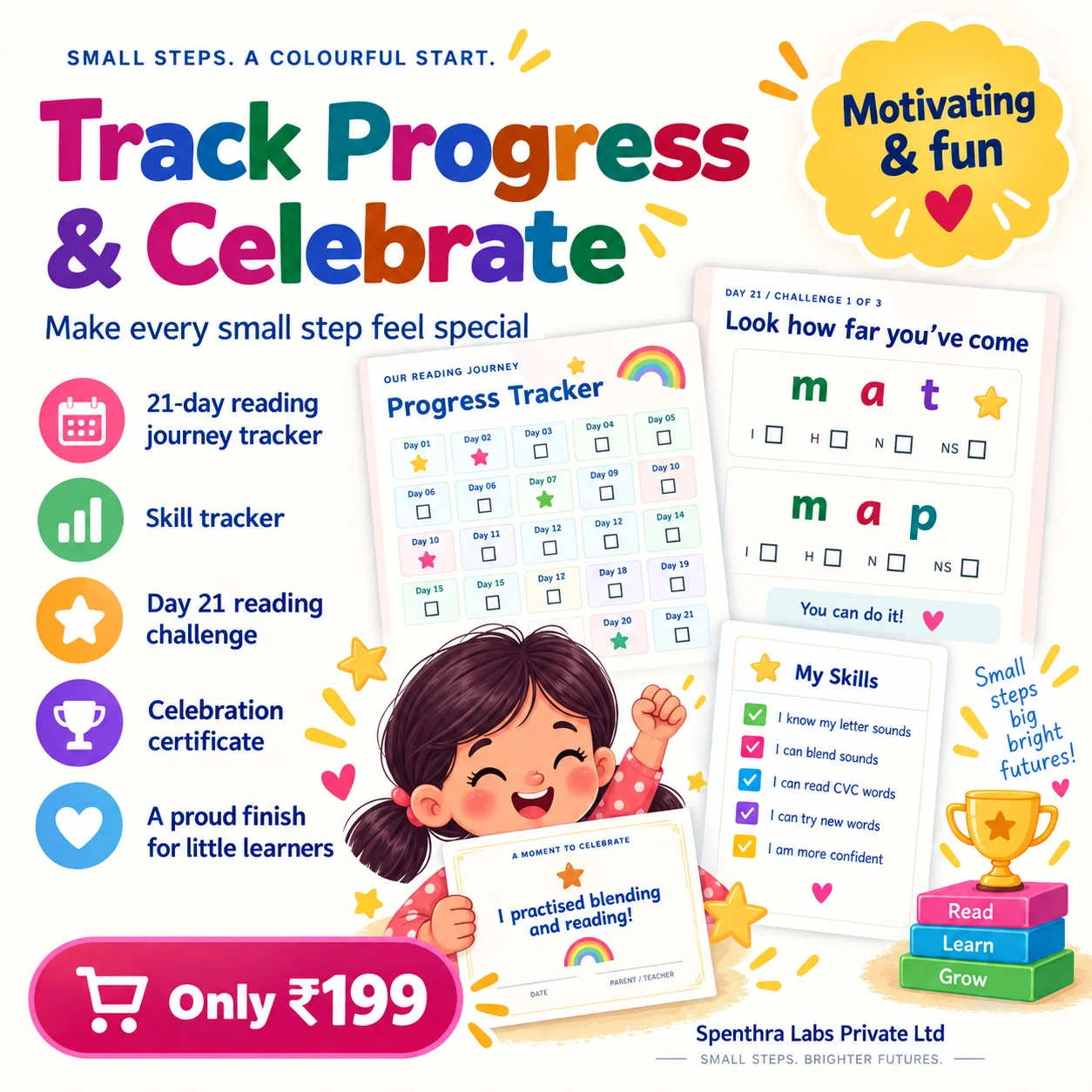
21 days of guided reading practice for little learners.
Ages 4–7 · English · Printable PDF
See MoreTake a look inside
Select an image to enlarge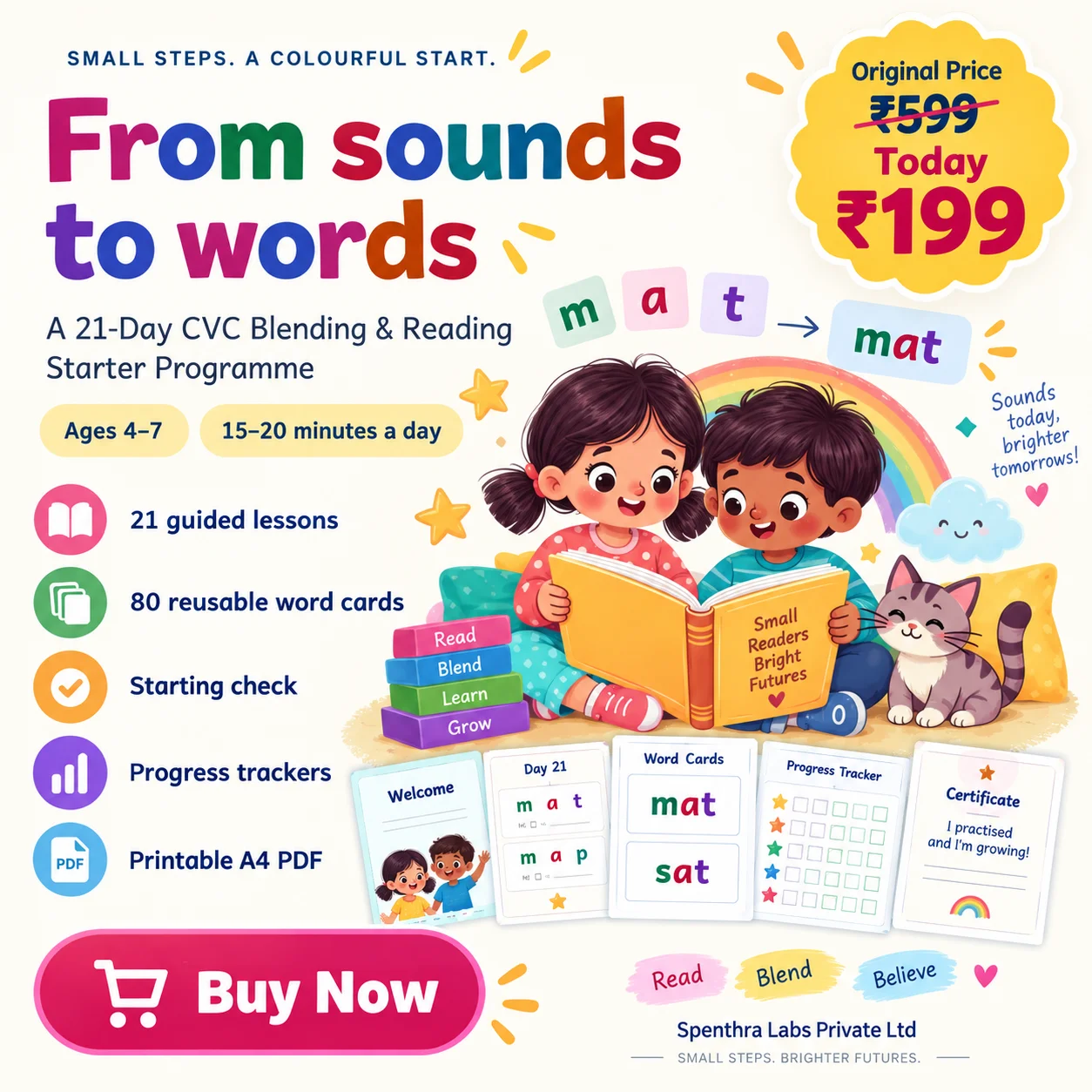



Free · no sign-up · unlimited
Logic puzzles sized for children. Start with 4 by 4 grids, move to 6 by 6, then full 9 by 9. Every puzzle is checked to have exactly one solution, so it can always be reasoned out rather than guessed.
A few things worth knowing before you print a stack of them.
A four by four grid uses only the numbers one to four and can be solved by elimination in a couple of minutes. It teaches the rule and the scanning habit without the intimidation of a full grid.
A puzzle with two valid answers cannot be reasoned to a conclusion, and a child who is working correctly can still end up marked wrong. Clues are only removed here while a check confirms the solution is still unique.
Sudoku is a logic exercise, not an arithmetic one. Switching to letters removes the numerical appearance for children who find it off-putting, and the puzzle is identical.
The digits are labels, not quantities — a sudoku works identically with nine letters or nine colours. This is worth telling children explicitly, because those who think it is a maths puzzle try to add and get stuck, and those who dislike maths avoid it for no reason. What it trains is constraint reasoning: deducing what must be true from what cannot.
A four-by-four sudoku using the digits one to four has the complete logic of the full puzzle at a size a five-year-old can hold in mind. Rows, columns and boxes all work the same way. Children who start on 9×9 usually bounce off, not because the reasoning is too hard but because the grid is too big to scan. Six-by-six is a sensible middle step.
Almost every easy sudoku falls to two moves: a cell where only one digit can go, and a digit that can only go in one cell of a row, column or box. Children often find the first and never the second, then stall. Naming both and pointing them out a few times is the difference between guessing and solving.
Writing the possible digits small in a corner externalises the working, which matters because holding candidates in mind is where children run out of capacity. It also makes their thinking visible to you — a wrong pencil mark shows exactly which constraint was missed, which a wrong final digit does not.
A properly constructed sudoku has exactly one answer reachable by logic alone, and a child should never need to guess. If they are guessing, they have missed a deduction rather than met an unfair puzzle. Saying this up front changes how they approach a stall — from trying something to looking again.
Genuinely unlimited
No monthly cap and no premium tier. Make fifty worksheets in an afternoon if you need to.
Nothing is uploaded
Questions, names and PDFs are all built in your browser. No worksheet content is ever sent to a server.
Several exercises per sheet
Combine arithmetic, tracing and a quiz on one page instead of printing three separate worksheets.
Edit every question
Retype any question, replace just one, or delete it — your edits survive when you change the settings.
The 4x4 grid works well from around six. It uses only four symbols and is solved by elimination, with no arithmetic at all.
Yes. Clues are removed only while a solver check confirms the solution is still unique, so every puzzle can be reasoned out.
Yes, the letters option fills the grid with A, B, C and so on.
Between one and eight, in one or two columns.
No, despite using digits. The numbers are just nine distinct symbols and the puzzle works identically with letters or colours. No arithmetic is involved at any point — what it trains is logical deduction from constraints.
Around five or six with a 4×4 grid using the digits one to four, which has the same logic at a size young children can scan. Six-by-six suits seven to eight, and the full 9×9 grid from about nine, depending on persistence more than ability.
Teach two techniques by name: finding a cell where only one digit fits, and finding a digit that fits in only one cell of a row, column or box. Most children discover the first alone and never find the second, which is where they get stuck.
A properly made one does, and it is always reachable by logic without guessing. Telling children this changes how they respond to being stuck — they look for the deduction they missed rather than trying a digit to see what happens.