The number line is where negatives finally make sense
Set the range to cross zero, for example minus ten to ten. Seeing the numbers continue past zero in the same regular steps does more than any explanation of what a negative number is.
From our digital bookshelf
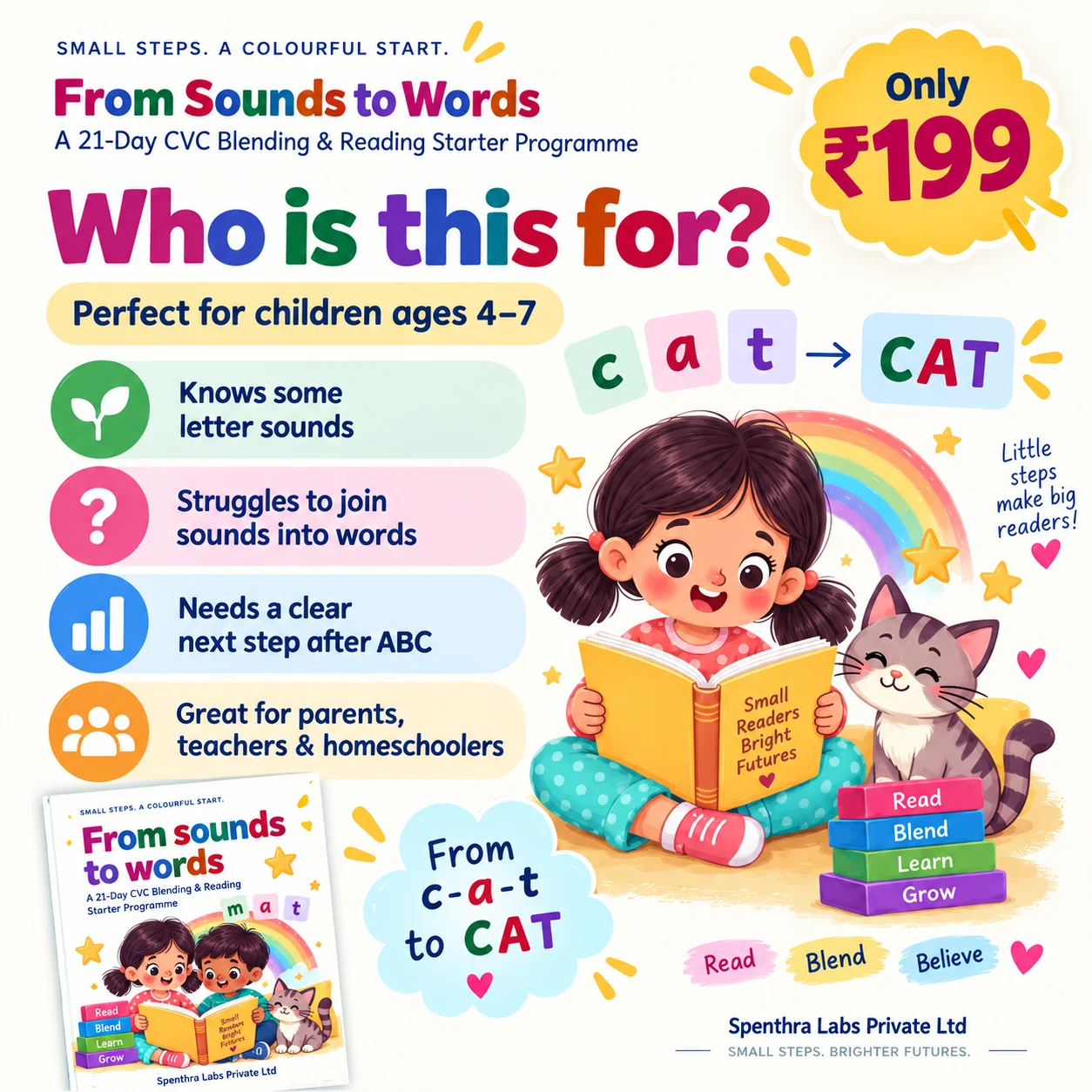
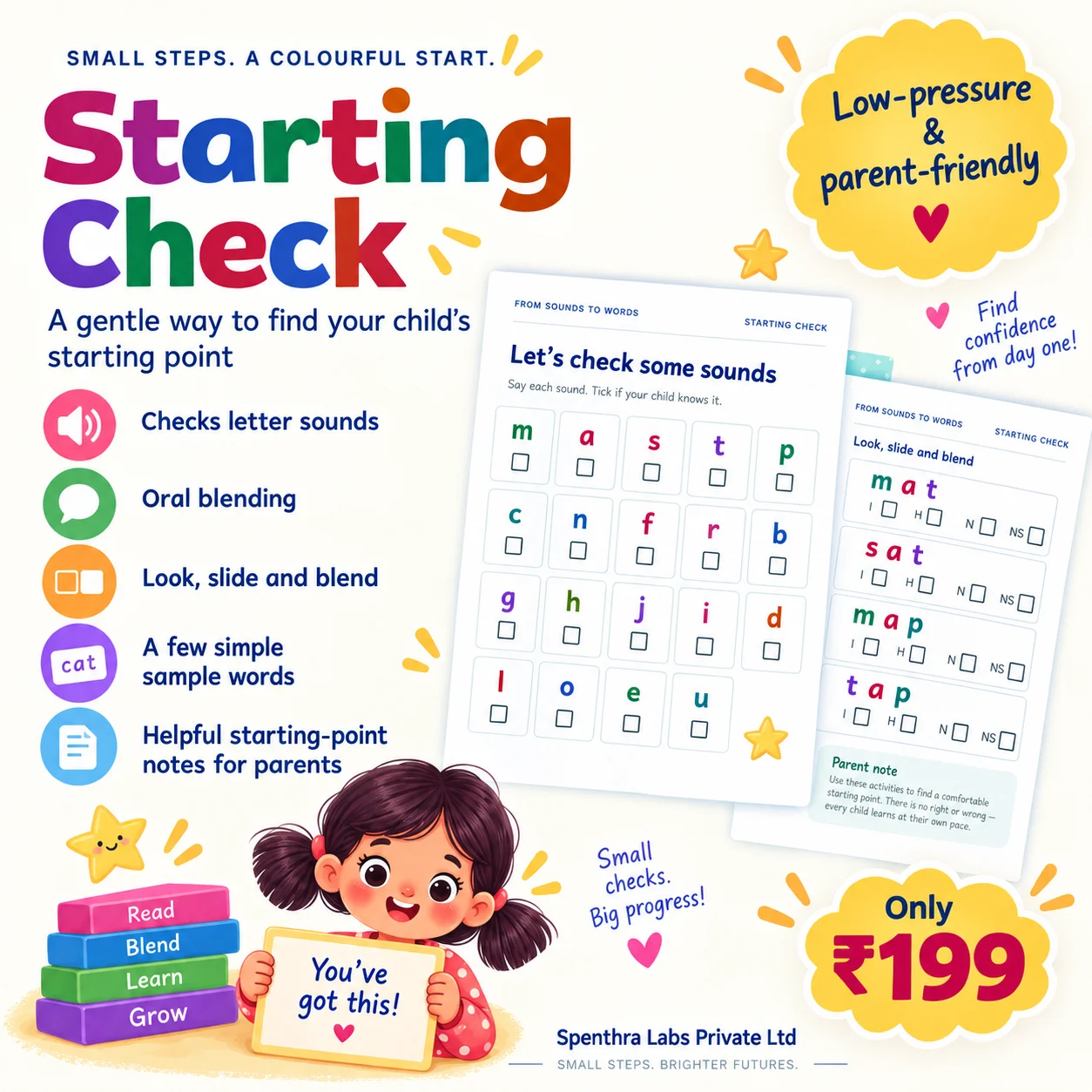
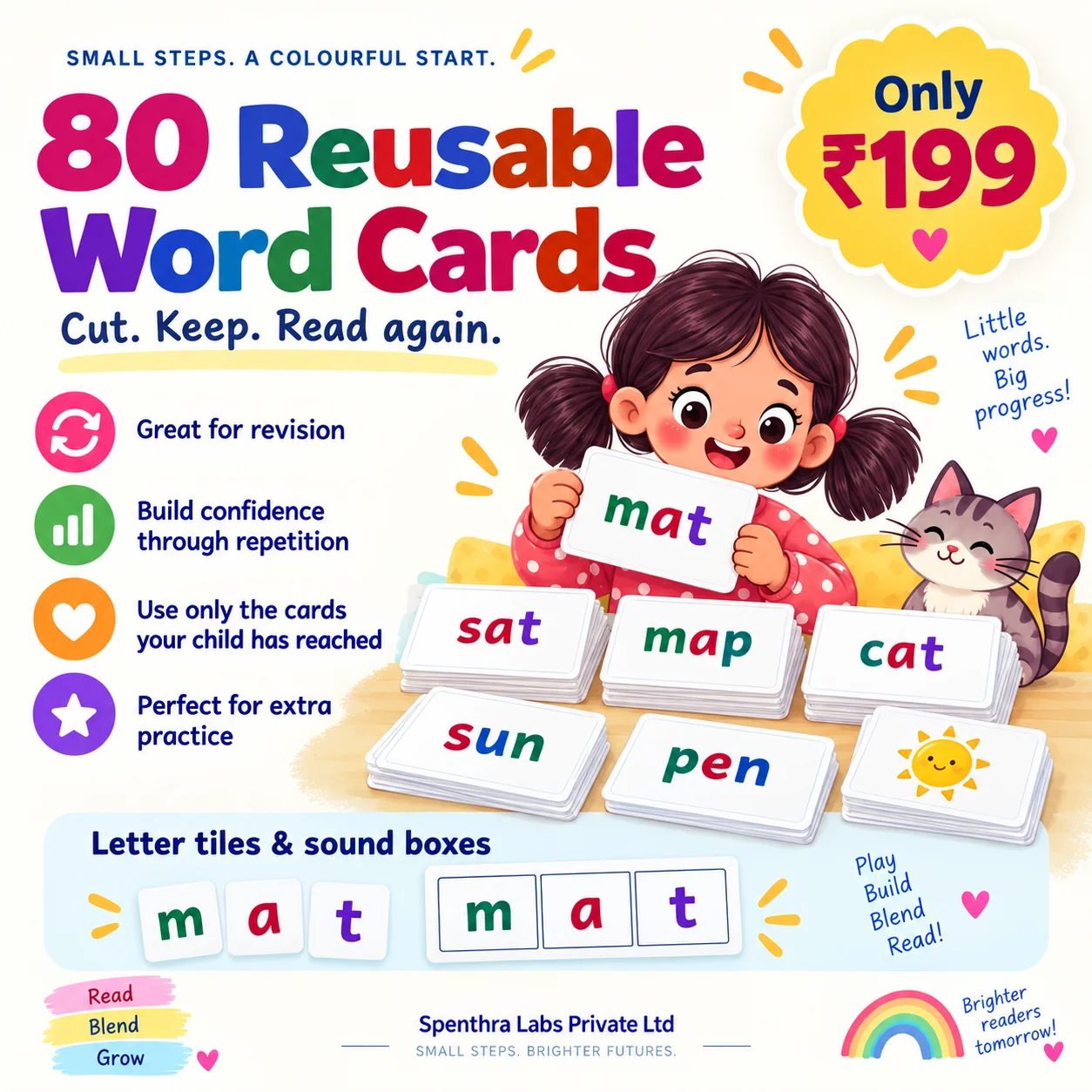
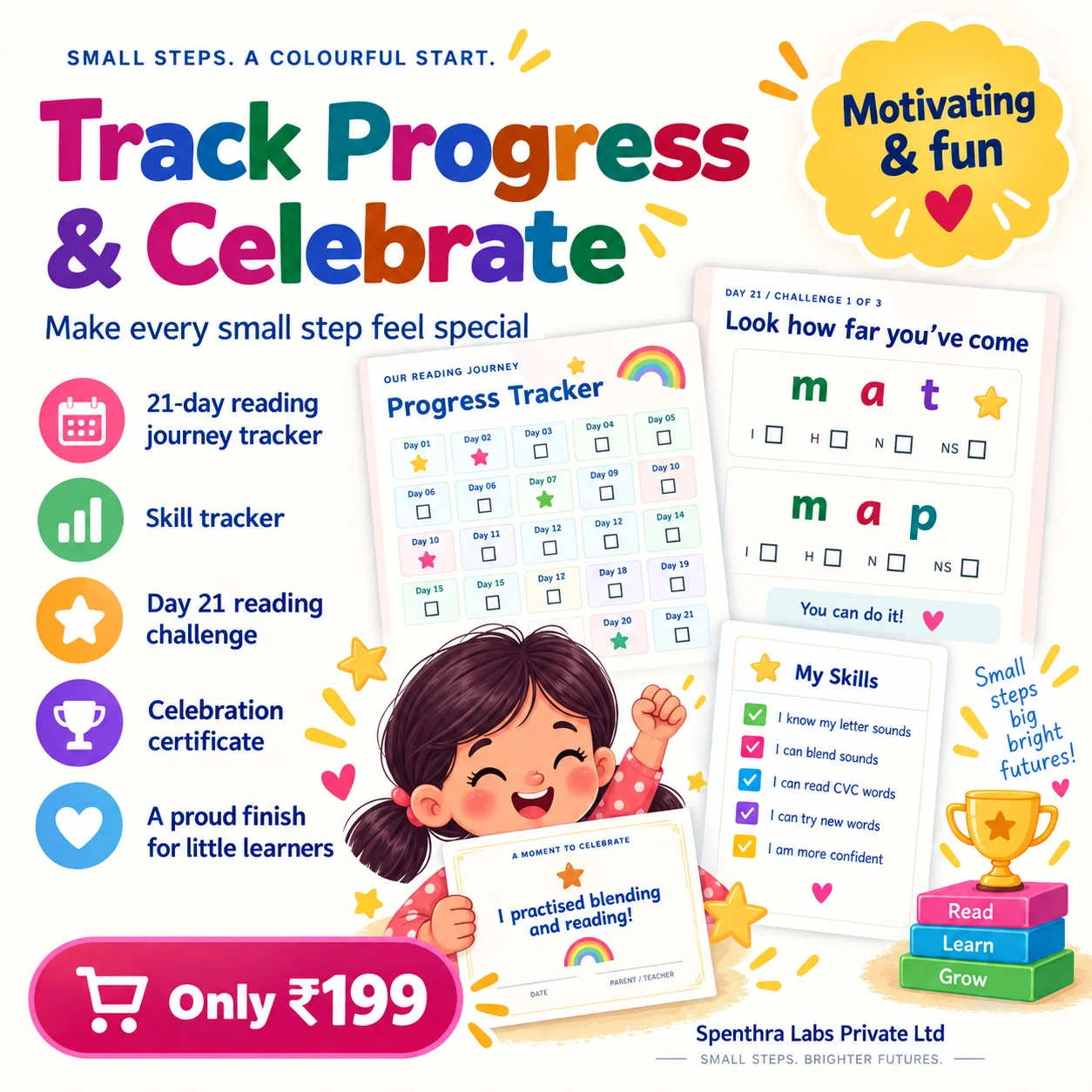
21 days of guided reading practice for little learners.
Ages 4–7 · English · Printable PDF
See MoreTake a look inside
Select an image to enlarge




Free · no sign-up · unlimited
Number lines at any range and step. Fill in the missing numbers, hand out a blank line to label, print a fully labelled line for reference, or show a jump to work out.
A few things worth knowing before you print a stack of them.
Set the range to cross zero, for example minus ten to ten. Seeing the numbers continue past zero in the same regular steps does more than any explanation of what a negative number is.
The jump mode draws an arc from one point to another and asks what was added. It connects arithmetic to distance, which is exactly the mental model needed for mental addition later.
The distinction children miss is that the spaces carry the meaning, not the ticks. Asked to place 7 on a line from 0 to 10, a child counting labels lands correctly; asked to place 7 on a line marked only 0 and 10, the same child often puts it near the middle. The second task is the one that tests whether number is understood as quantity, and it is the one worth printing.
Showing 8 + 5 as a jump of five from eight, or 13 − 5 as a jump back, gives arithmetic a shape that column methods hide. It is particularly useful for subtraction as difference — the gap between 48 and 51 is obviously three when drawn, and obscure when set out in columns. Children who can move between the two representations are far more robust.
A blank line with only the endpoints given forces estimation, and estimation is where number sense actually lives. Children find it uncomfortable at first because there is no counting to fall back on. That discomfort is the exercise working. Start with a few marked intervals and remove them as confidence grows.
Below zero, rules learned from column arithmetic break down and the number line becomes the only reliable picture. Extending a line to the left of zero, and asking which of −3 and −7 is larger, resolves in seconds what stays confusing in the abstract for months. It is worth printing lines that cross zero before negatives are formally taught.
The number line is where a fraction stops being a piece of a pizza and becomes a number with a position. Marking halves and quarters between 0 and 1, then placing 0.5 and 0.75 on the same line, is the clearest way to show they are the same points named differently — a connection many children do not make for years.
Genuinely unlimited
No monthly cap and no premium tier. Make fifty worksheets in an afternoon if you need to.
Nothing is uploaded
Questions, names and PDFs are all built in your browser. No worksheet content is ever sent to a server.
Several exercises per sheet
Combine arithmetic, tracing and a quiz on one page instead of printing three separate worksheets.
Edit every question
Retype any question, replace just one, or delete it — your edits survive when you change the settings.
Yes. Set the start to a negative value and the scale is drawn the same way.
Yes, set the step to 2, 5, 10 or anything up to 25.
Yes, the blank mode prints the line and its ticks with every label removed.
Placing numbers by position rather than by counting labels, showing addition and subtraction as jumps, and giving fractions, decimals and negative numbers somewhere concrete to sit. They build number sense in a way column arithmetic does not.
Both, in that order. A marked line supports counting while the idea is new; a line showing only its endpoints forces estimation, which is where genuine number sense develops. The blank version is harder and more valuable once children can cope with it.
They make the order visible. Asked whether −7 or −3 is larger, children reasoning from digits often get it wrong; children reading a line get it immediately, because −3 is plainly further right. Print lines crossing zero before negatives are taught formally.
Yes, and it is one of the best uses. Marking halves and quarters between 0 and 1, then placing the equivalent decimals on the same line, shows they name the same points — a connection that is hard to make any other way.
Addition
Sums in vertical columns or horizontal rows, with carry control.
Subtraction
Take-away problems with optional borrowing and negative results.
Addition & Subtraction
Both operations shuffled together — the way real tests mix them.
Multiplication
Times tables with a focus option — drill one table or mix them all.
Division
Sharing problems built from whole facts, with optional remainders.
Addition & Subtraction Fact Families
Three numbers, four related facts — the inverse relationship made visible.