The word bank is a dial, not a switch
With a word bank the task is recognition; without it, recall. Print the same sheet twice — once with the bank for the first attempt, once without a week later — and you have a genuine measure of what stuck.
From our digital bookshelf
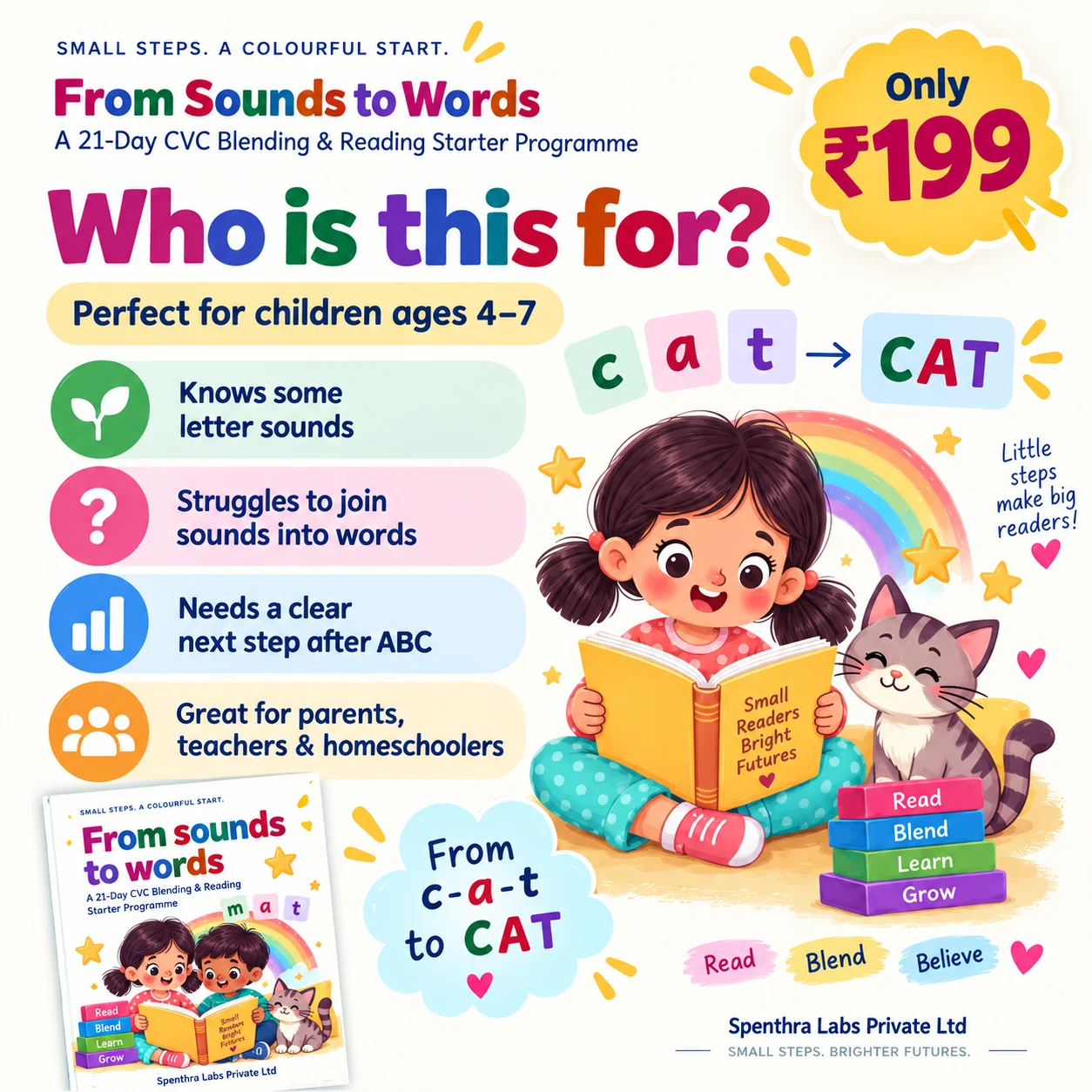
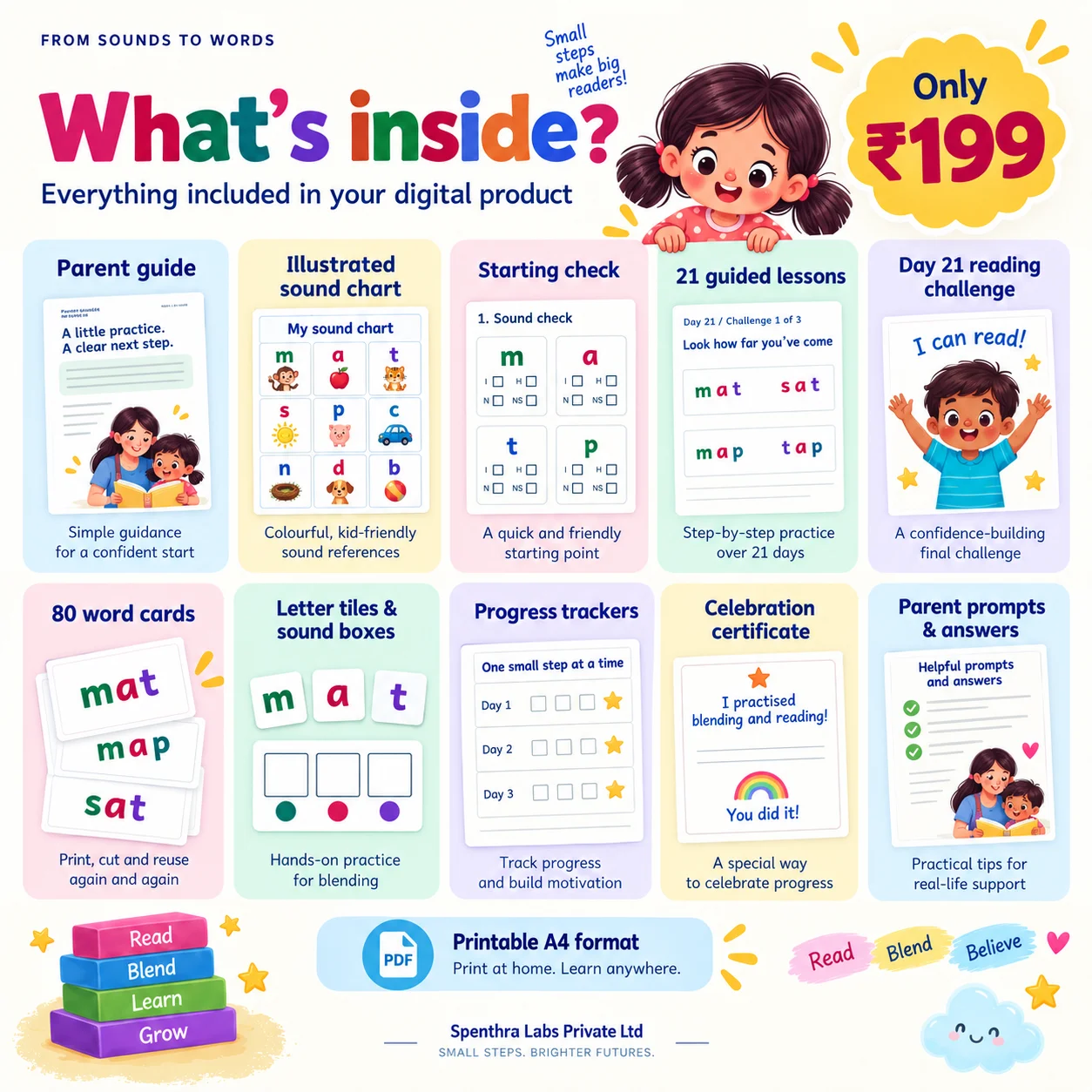
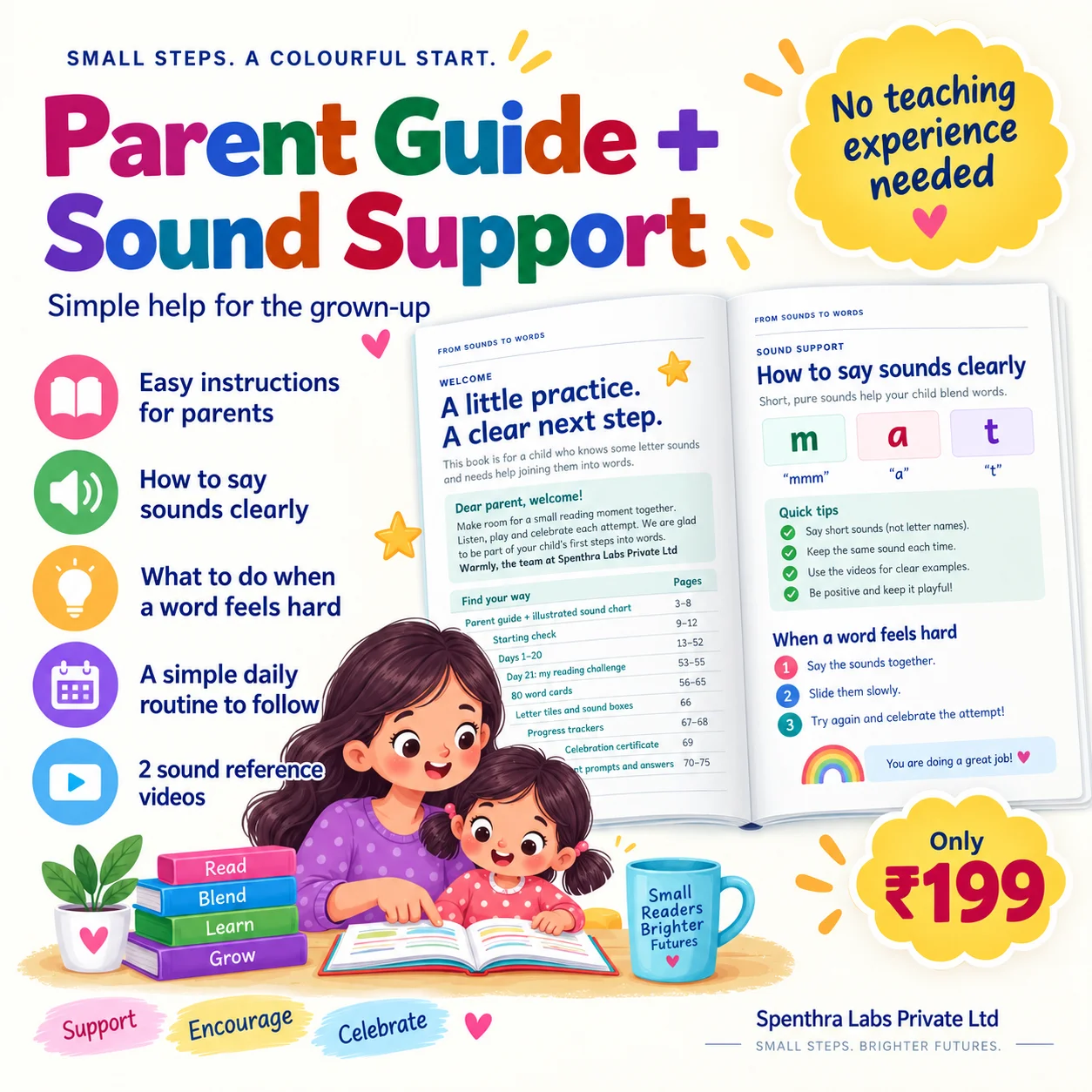
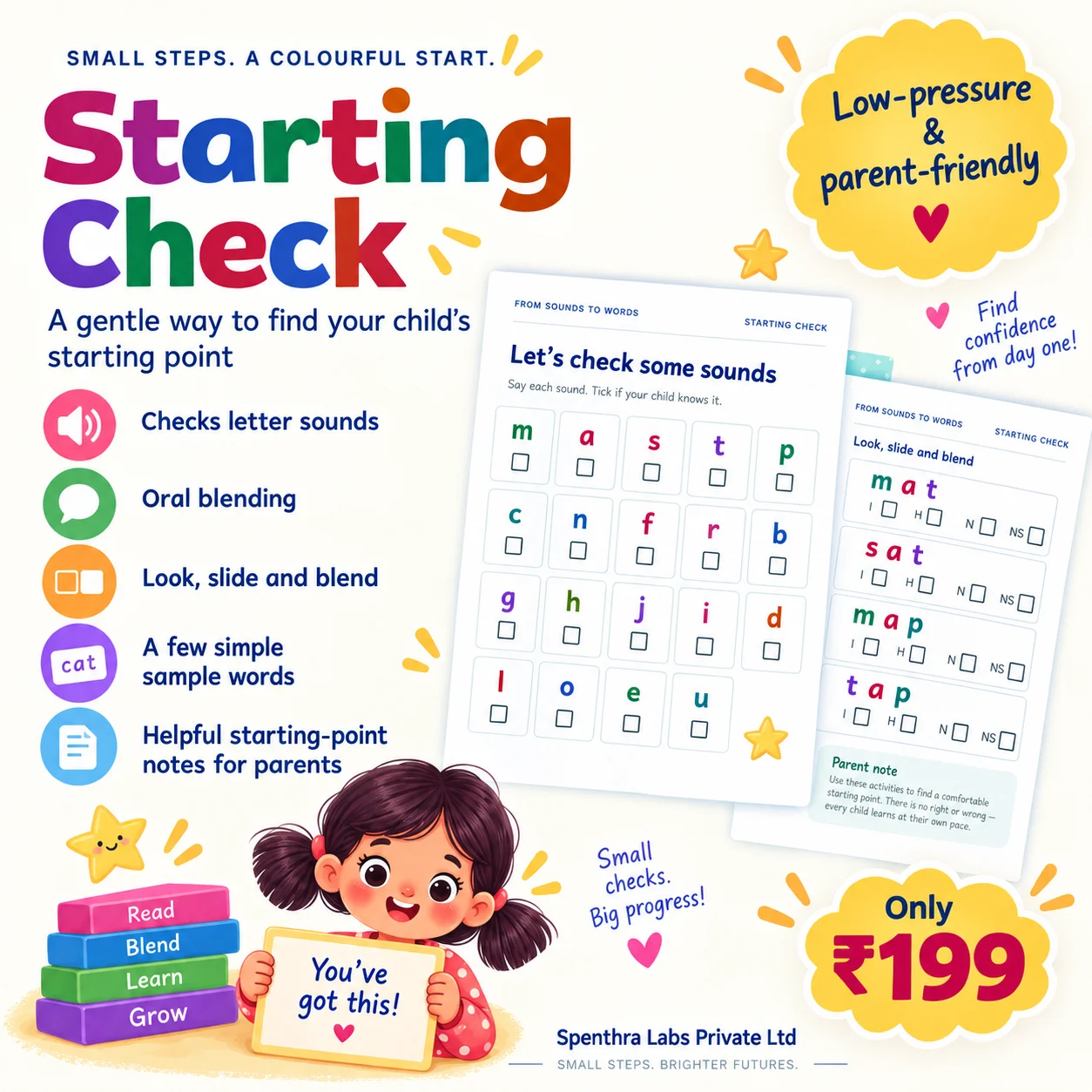
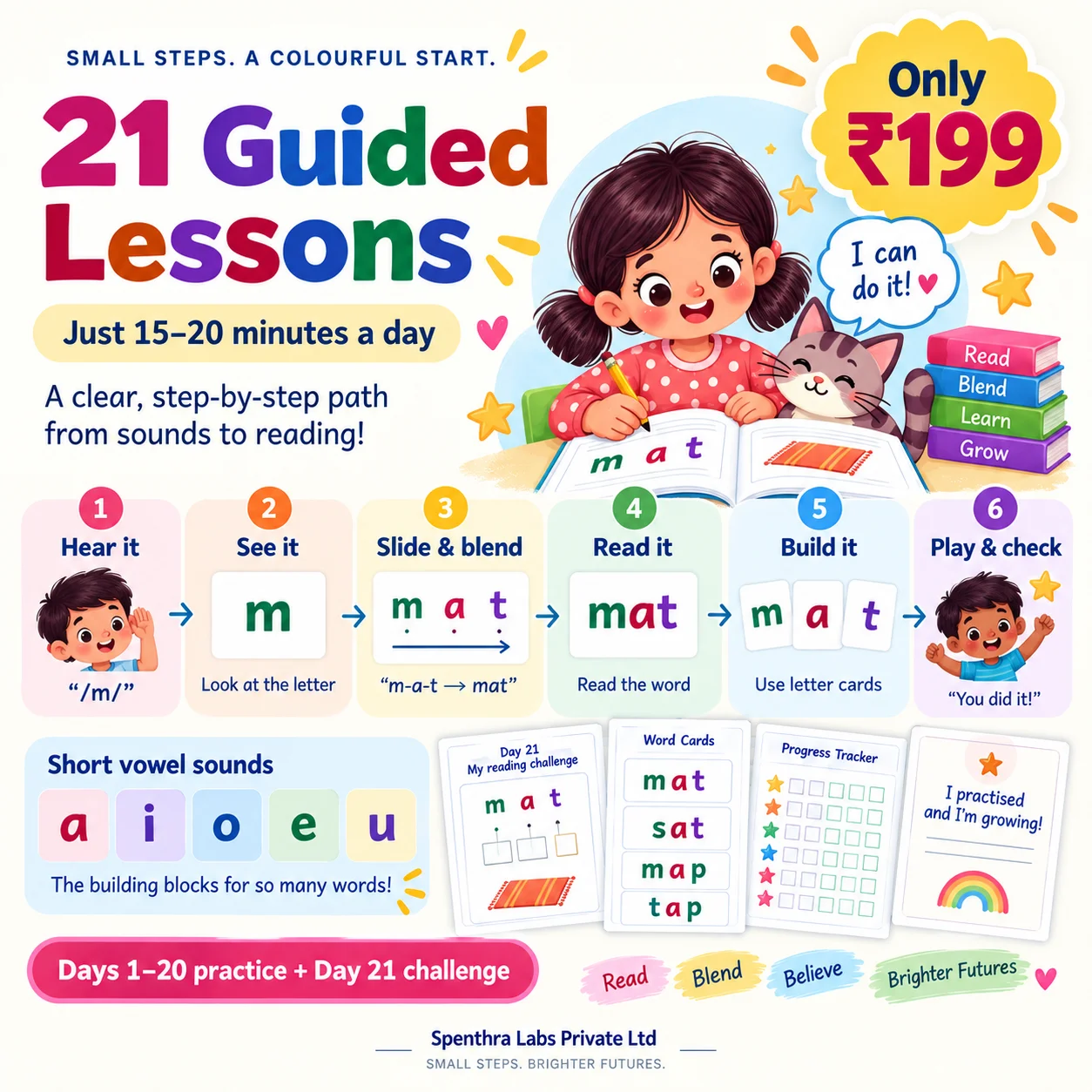
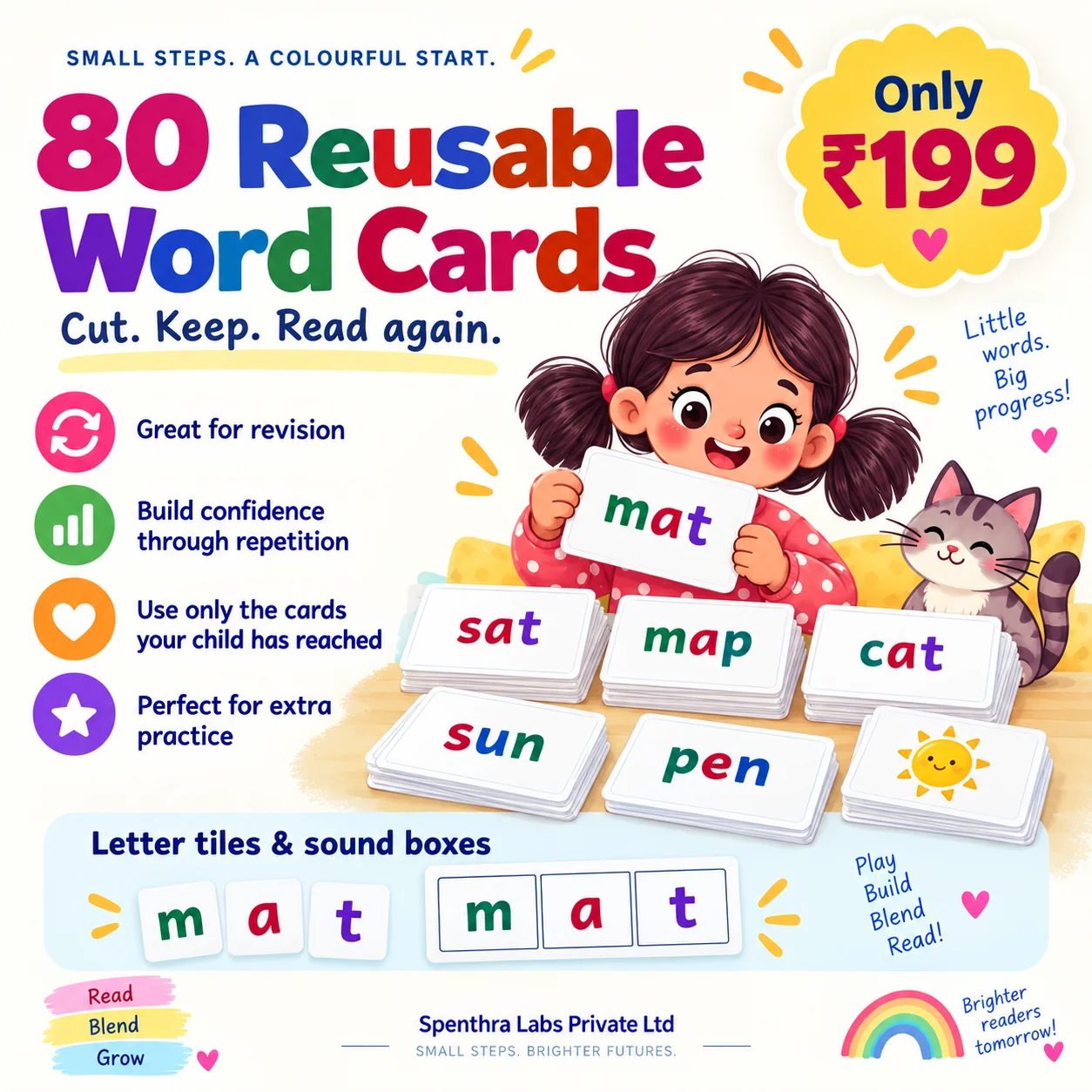
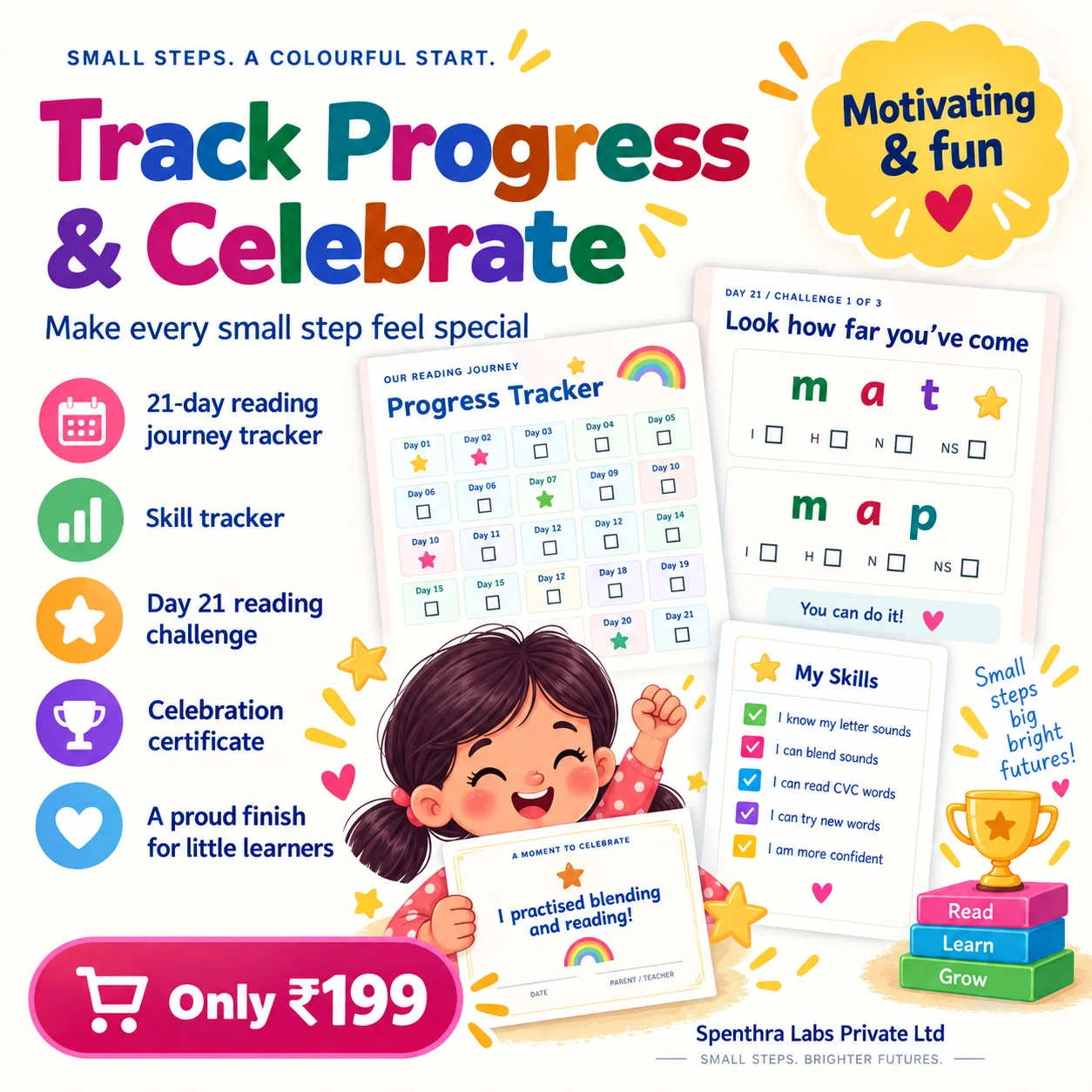
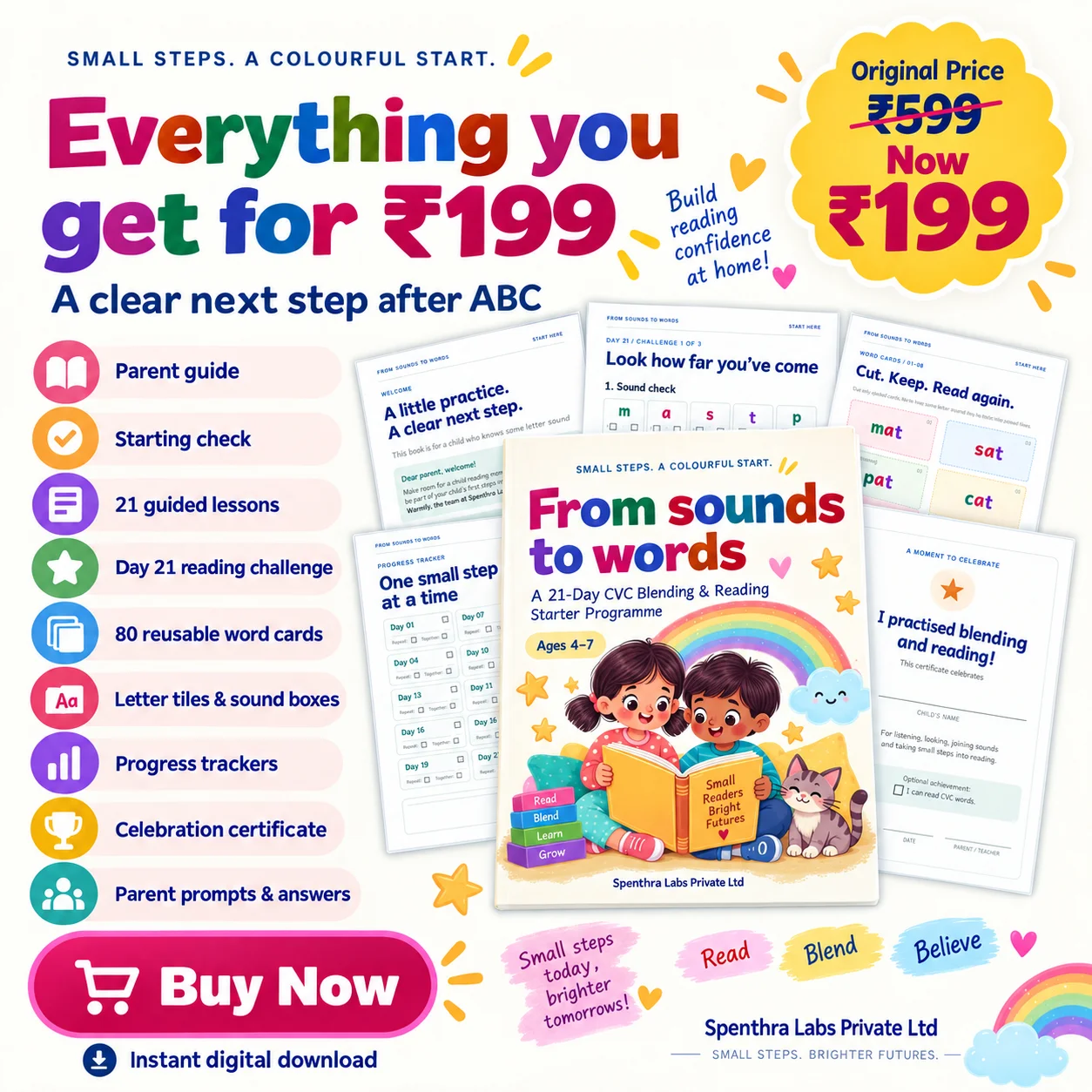
21 days of guided reading practice for little learners.
Ages 4–7 · English · Printable PDF
See MoreTake a look inside
Select an image to enlarge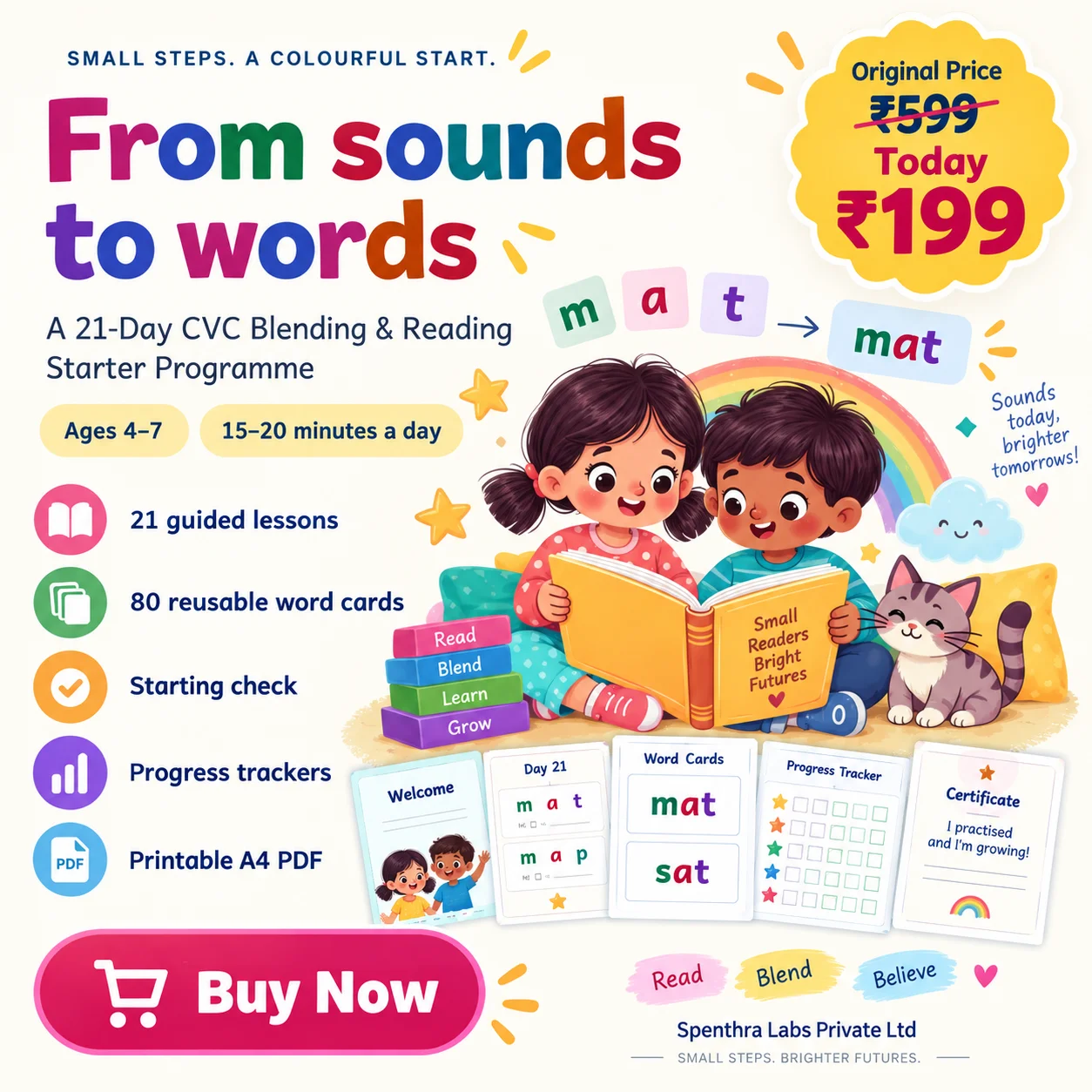
Free · no sign-up · unlimited
Three exercise styles: complete the sentence, fill the missing letters in a word, or add the missing मात्रा to a Hindi word. Add a word bank when your class needs scaffolding, and remove it when they do not.
A few things worth knowing before you print a stack of them.
With a word bank the task is recognition; without it, recall. Print the same sheet twice — once with the bank for the first attempt, once without a week later — and you have a genuine measure of what stuck.
Cloze sentences drawn from the text your class is actually reading are far more valuable than generic ones. Type them in with the answer after an equals sign.
Removing a noun tests vocabulary. Removing a verb tests tense and agreement. Removing an article or preposition tests grammatical feel and is disproportionately hard for children learning English as an additional language. Deciding which you are testing before you write the sentence produces a far more useful sheet than blanking whichever word seems convenient.
A sentence with too little around the gap has several defensible answers, and a child who supplies one and is marked wrong learns nothing except that the exercise is arbitrary. The surrounding words should narrow it to one. If you cannot say why a plausible alternative is wrong, the sentence needs more context, not a stricter mark scheme.
With a bank, the task is matching and elimination — genuinely useful, and much easier. Without one, it is recall. Both are worth doing and they are not interchangeable, so decide which you want rather than adding a bank because the sheet looks hard. A good progression is bank first, same sentences without it a week later.
Gaps in a short passage rather than in unrelated sentences test whether a child followed the meaning, because the missing word has to fit both the grammar and the sense of what came before. This is much closer to real reading than isolated sentences and it exposes children who decode fluently without understanding.
Many wrong answers are caught by the child themselves if they reread the whole sentence with their word in it. Building that as a habit — the answer is not written until the sentence has been read back — improves accuracy more than any amount of extra practice.
Genuinely unlimited
No monthly cap and no premium tier. Make fifty worksheets in an afternoon if you need to.
Nothing is uploaded
Questions, names and PDFs are all built in your browser. No worksheet content is ever sent to a server.
Several exercises per sheet
Combine arithmetic, tracing and a quiz on one page instead of printing three separate worksheets.
Edit every question
Retype any question, replace just one, or delete it — your edits survive when you change the settings.
Yes. Choose “My own sentences”, mark the blank with an underscore, and put the answer after an equals sign: The sun is _. = hot
An alphabetised box of every answer printed at the top of the sheet. It turns the exercise from recall into recognition, which suits younger or less confident classes.
Yes — the मात्रा mode removes the vowel sign from Hindi words for children to fill back in.
It depends entirely on which word is removed. Take out a noun and you test vocabulary; take out a verb and you test tense and agreement; take out a preposition and you test grammatical feel. Choosing deliberately makes the sheet far more useful than blanking a convenient word.
It depends what you are testing. A bank turns the task into matching and elimination, which is easier and still valuable. Without one, the task is recall. A good sequence is to use a bank first and repeat the same sentences without it later.
Enough that only one answer is right. If a sensible alternative also fits, the sentence is at fault rather than the child, and marking it wrong teaches only that the exercise is arbitrary.
Yes, and it works better than isolated sentences. Gaps inside a short passage require the answer to fit both the grammar and the meaning of what came before, which catches children who decode accurately without following the sense.
Alphabet Tracing
Dotted letterforms with handwriting rulers — A–Z, a–z, 0–9 or Hindi.
Word Tracing
Trace whole words — sight words, a theme, or your own spelling list.
Spelling Test
Numbered blank lines for dictation, with a teacher copy of the list.
Match the Following
Two shuffled columns joined by lines — opposites, plurals, your own pairs.
Multiple Choice
Tick-the-box questions from a maths, language or general bank.
Word Scramble
Jumbled letters to unscramble, with optional first-letter hints.