





Skip to content

From our digital bookshelf

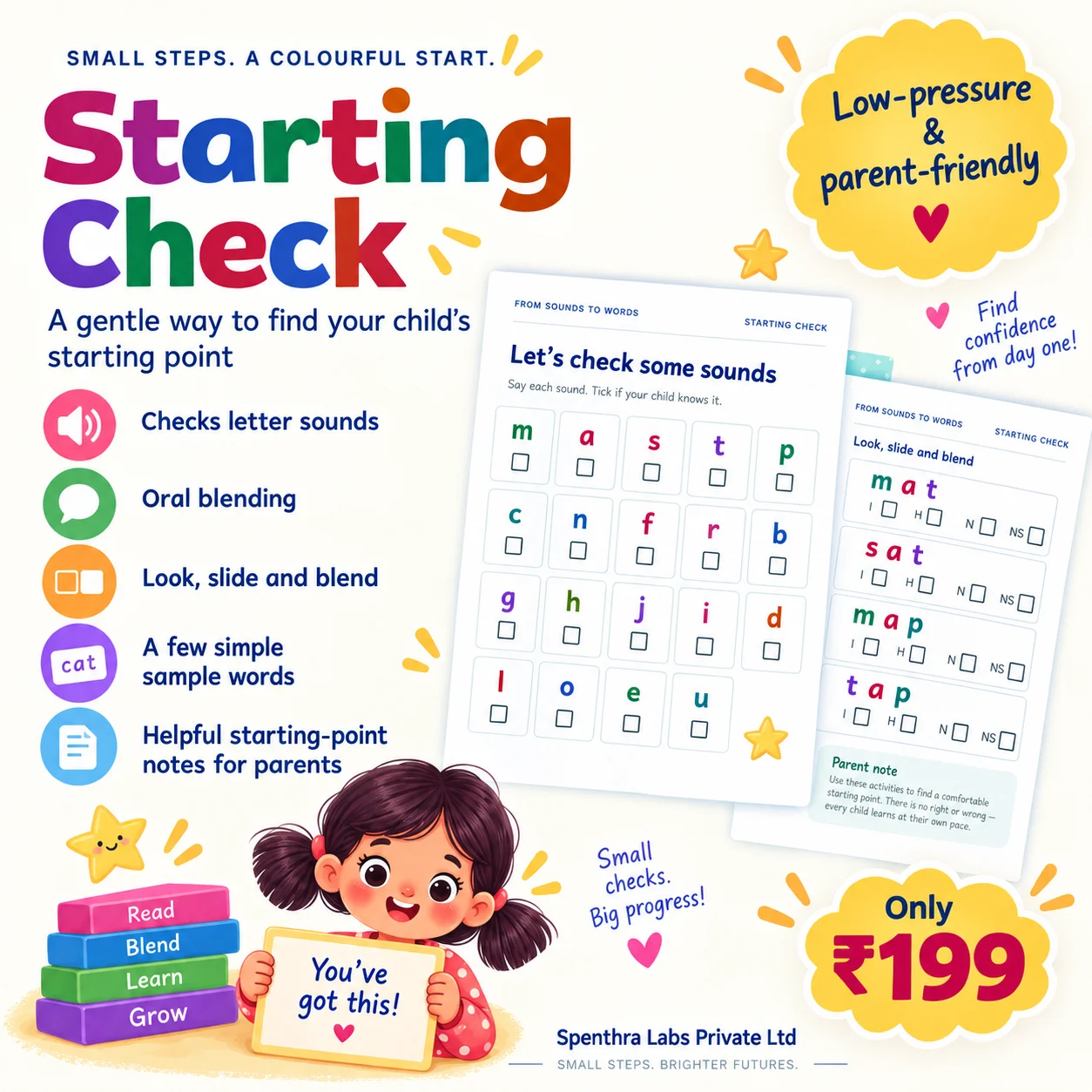
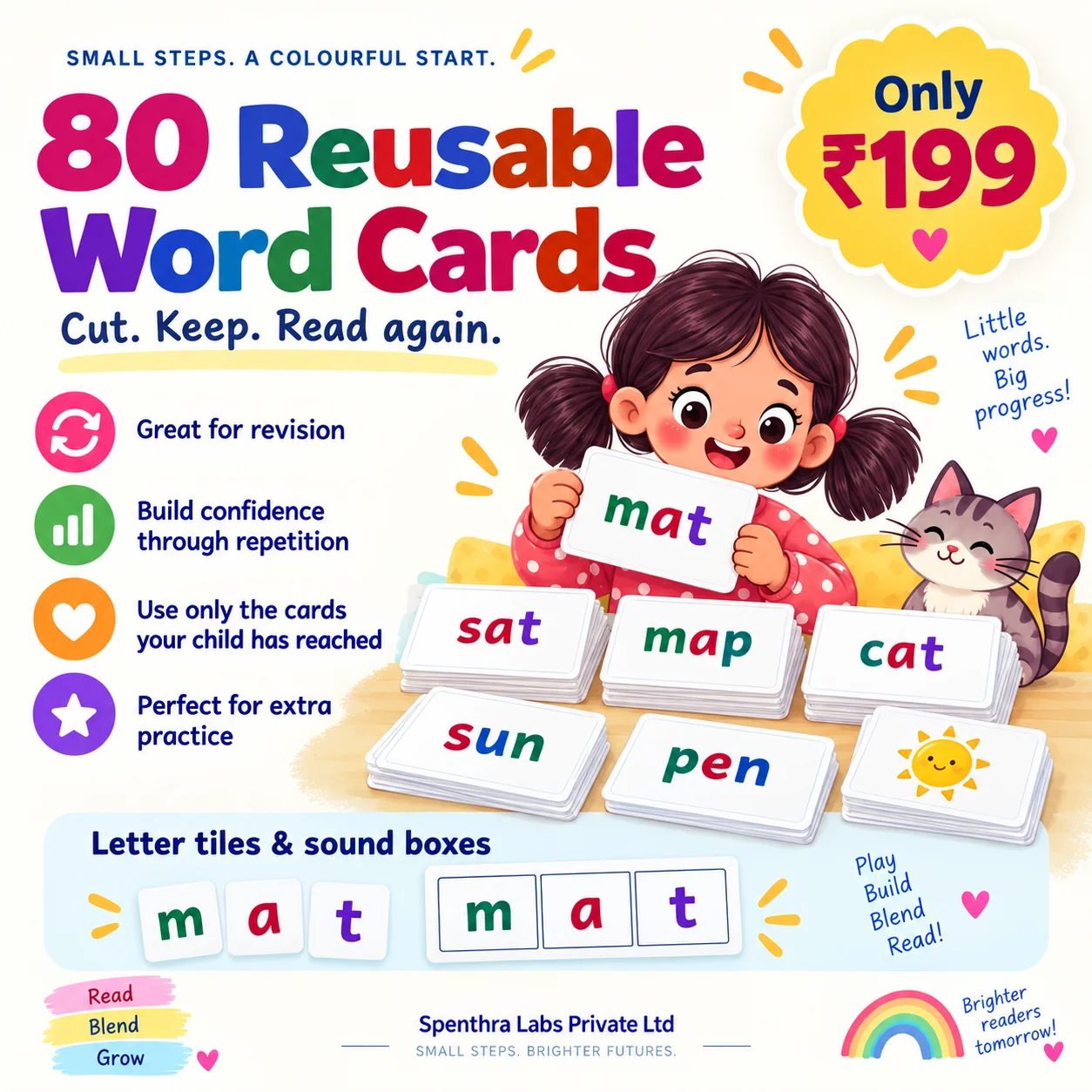
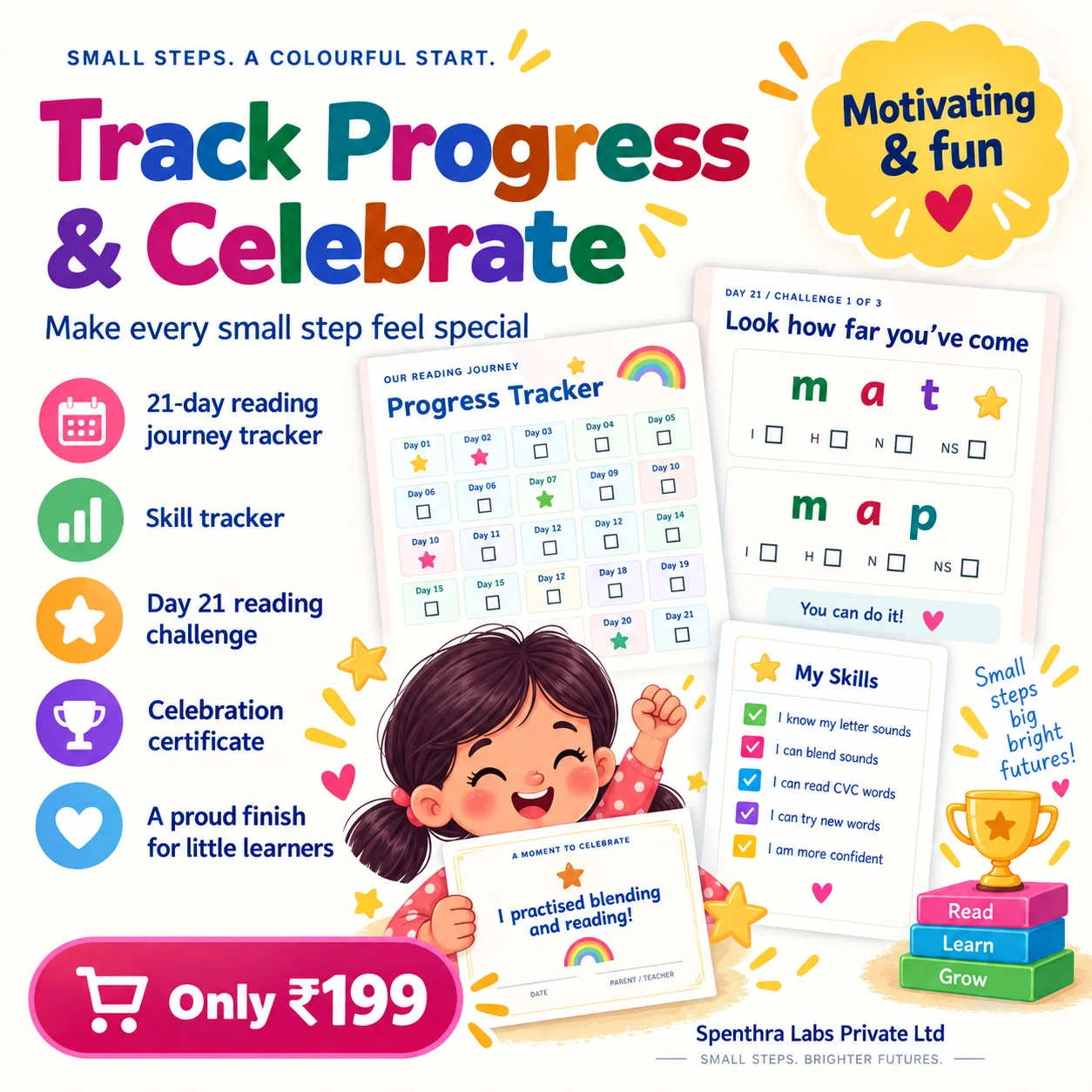
21 days of guided reading practice for little learners.

Ages 4–7 · English · Printable PDF

See More

From Sounds to Words

Free · no sign-up · unlimited

Division Worksheet Generator

Division problems built backwards from known multiplication facts, so every question is solvable by a child who knows their tables. Turn remainders on when the class is ready for them.

  • Exact division, or division with remainders
  • Focus on the tables a class already knows
  • Divisors from 1 to 20
  • Answer key shows remainders in full

How to get the most from these worksheets

A few things worth knowing before you print a stack of them.

Division is built from multiplication here

Every problem starts as a multiplication fact and is then reversed, so a child who knows their tables can always reach the answer. That matters: randomly generated division produces awkward numbers that test calculation rather than recall.

Introduce remainders separately

Remainders are a genuinely new idea, not harder arithmetic. Keep a sheet exact until the operation is secure, then switch remainders on so the new concept arrives on its own.

Sharing and grouping are not the same question

Twelve divided by three can mean share twelve between three, or how many threes are in twelve. The answer matches; the mental picture does not. Sharing suits problems about people and portions; grouping is what underlies the written method, remainders and later fractions. Children taught only sharing often stall at long division because the procedure is built on the grouping picture they were never given.

Remainders should arrive early

If every division on every sheet comes out exactly, children build a quiet expectation that division always does — and treat a remainder as evidence they got it wrong. Introducing remainders sooner than feels comfortable prevents that, and it makes the connection to fractions and decimals available when you want it, since a remainder is the part that has not been divided yet.

Division is where weak tables surface

A child who is shaky on the 7 times table will manage multiplication questions by working upwards from a fact they do know. Division gives them nothing to climb from — asked for 56 ÷ 7 they need the fact itself. So a sudden collapse in division accuracy is usually a multiplication problem wearing a different hat, and the fix is a tables sheet, not more division.

Estimate before dividing

Asking roughly how many before starting catches the order-of-magnitude errors that make long division answers absurd. A child who expects about twenty and writes 4 notices. One who has no expectation does not, and their answer can be ten times out with the working looking tidy. Building this habit is worth more than extra questions.

Divisibility rules save real time

A number is divisible by 3 if its digits sum to a multiple of 3, by 4 if its last two digits are, by 9 if its digits sum to 9. These are not tricks but structure, and they turn a page of trial division into a page of quick checks. Teach two or three and use a sheet to practise choosing between them.

What makes this different

Genuinely unlimited

No monthly cap and no premium tier. Make fifty worksheets in an afternoon if you need to.

Nothing is uploaded

Questions, names and PDFs are all built in your browser. No worksheet content is ever sent to a server.

Several exercises per sheet

Combine arithmetic, tracing and a quiz on one page instead of printing three separate worksheets.

Edit every question

Retype any question, replace just one, or delete it — your edits survive when you change the settings.

Frequently asked questions

Can I get division with remainders?

Yes, switch on Allow remainders. The answer key prints them as, for example, 17 divided by 5 equals 3 r2.

Are the divisions always exact?

By default yes, because each problem is built from a multiplication fact. Remainders only appear if you enable them.

Can I focus on one divisor?

Yes, use the table focus field the same way as the multiplication generator.

Should I teach division as sharing or grouping?

Both, and say they are the same operation. Sharing is the more intuitive picture for young children; grouping is the one the written method, remainders and fractions are all built on, so a child taught only sharing tends to stall when long division arrives.

When should remainders be introduced?

Earlier than most schemes do. If every division comes out exactly for months, children learn to treat a remainder as a mistake. Meeting them early keeps division honest and opens the route to fractions, since a remainder is simply the part not yet divided.

Why is my child worse at division than multiplication?

Usually because their tables are not secure. Multiplication lets you work upwards from a fact you know; division does not give you that foothold. If division accuracy drops suddenly, print a multiplication facts sheet before printing more division.

Can I make division worksheets without remainders?

Yes — the generator can keep every division exact, which is the right setting while the method is being taught. Switch remainders on once the procedure is secure, so they are met as a normal outcome rather than as a surprise.

Related generators

Suitable grade levels