

Skip to content

From our digital bookshelf

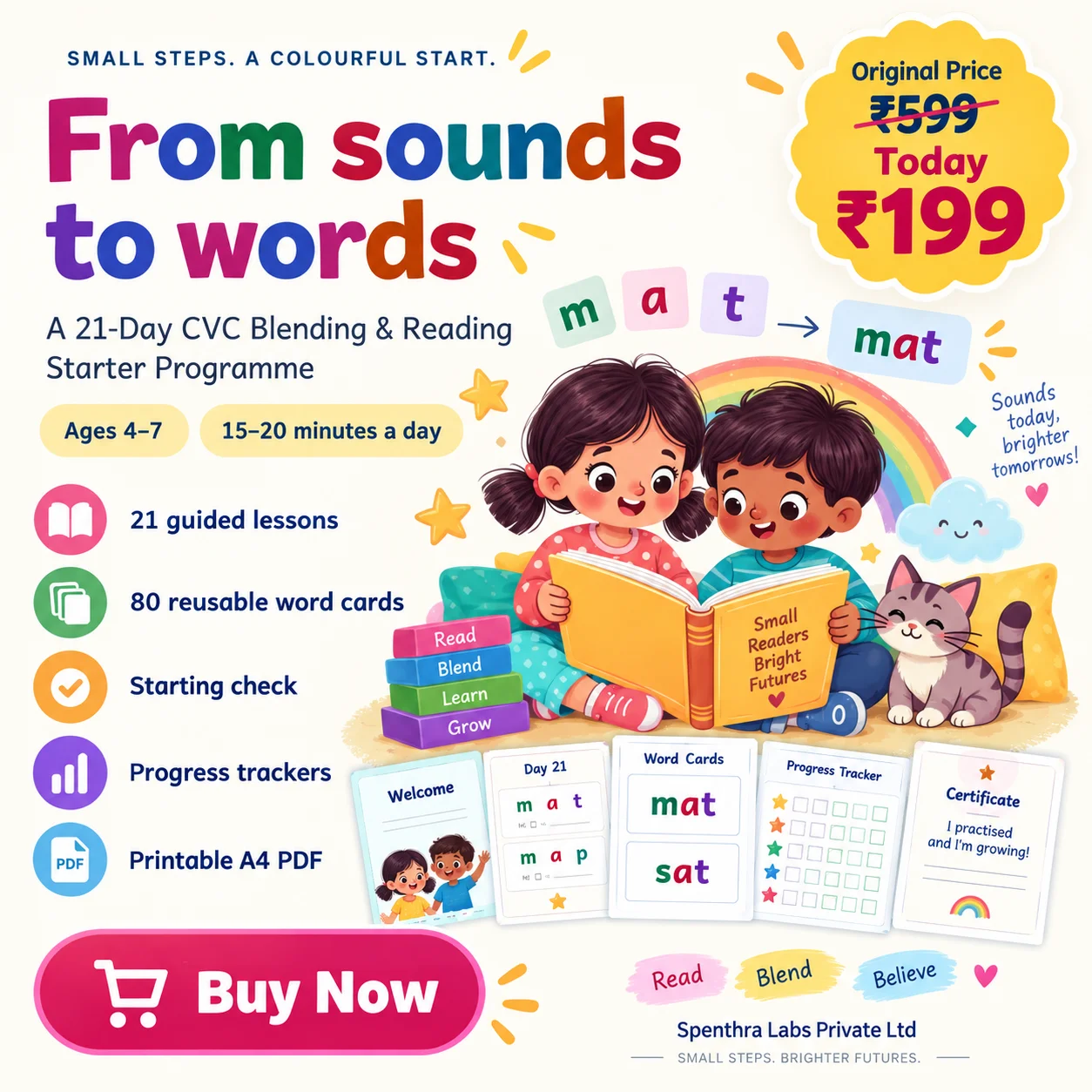
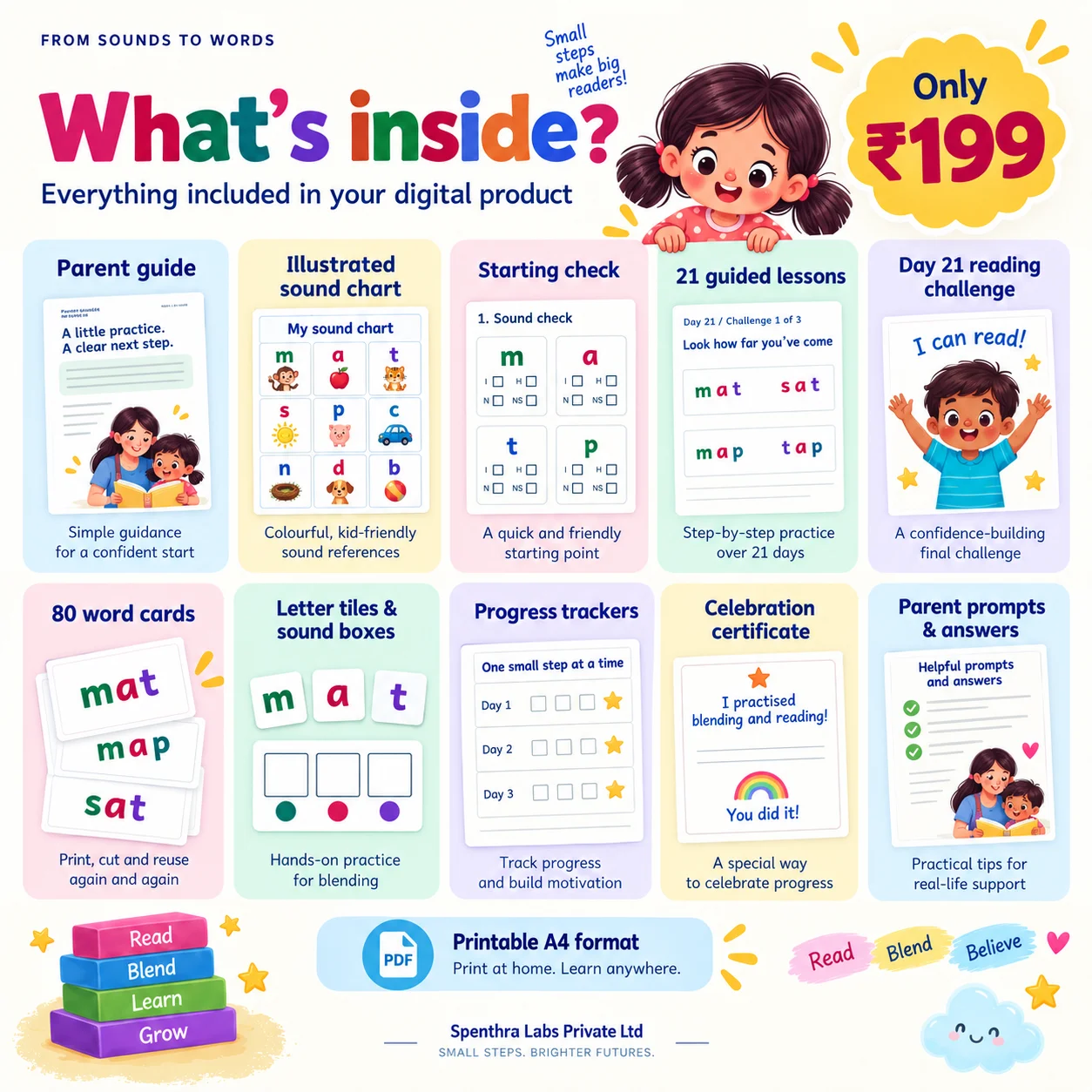
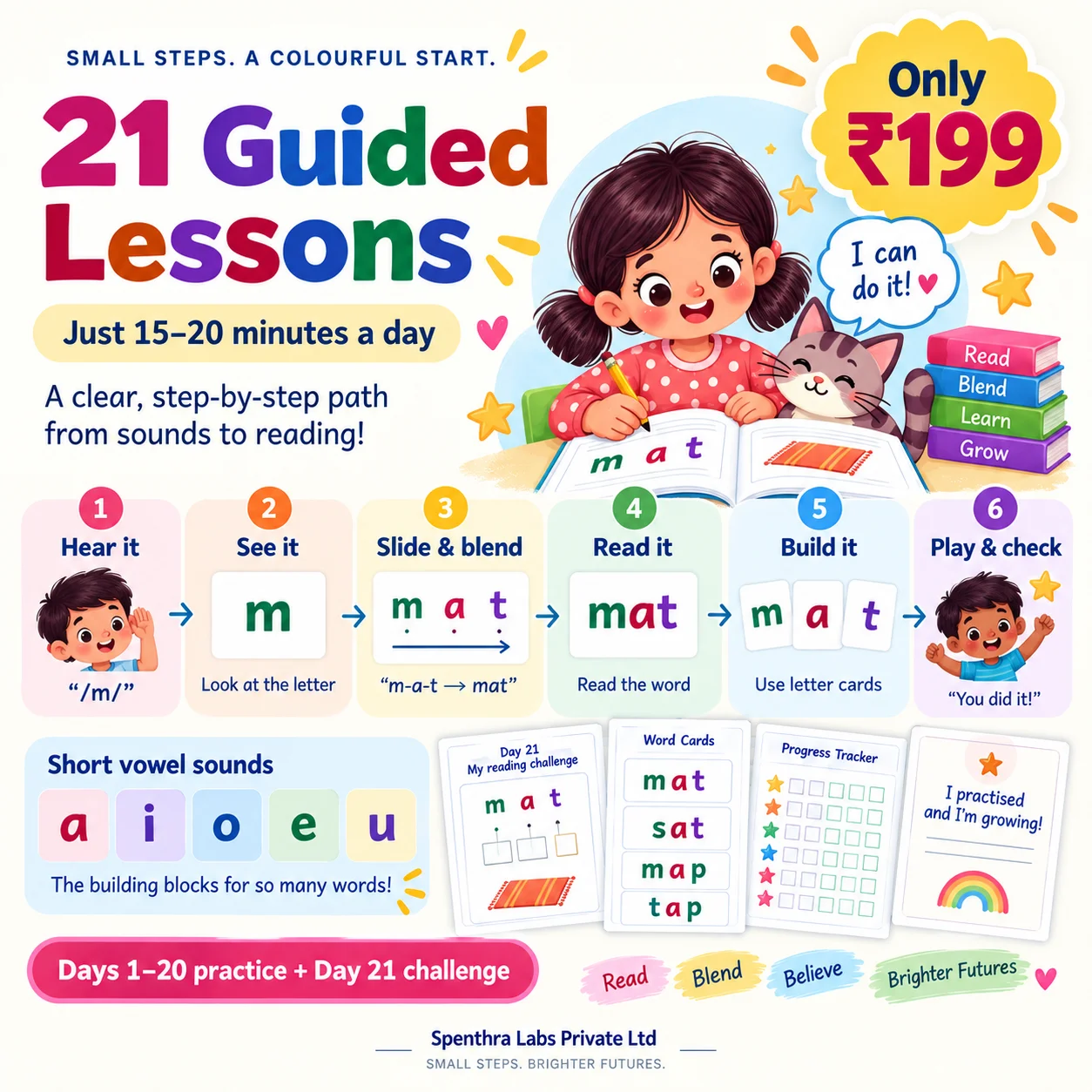
21 days of guided reading practice for little learners.

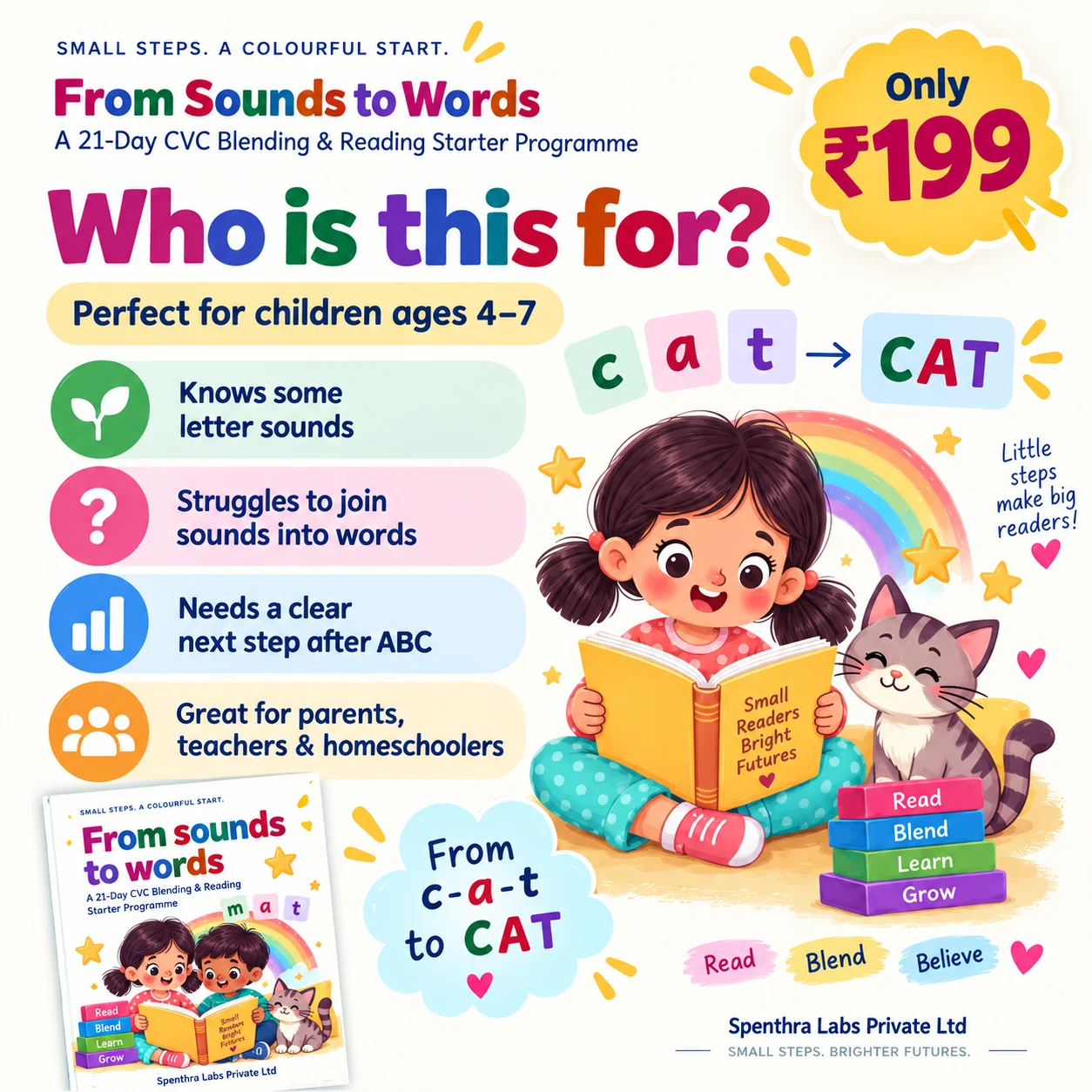
Ages 4–7 · English · Printable PDF

See More

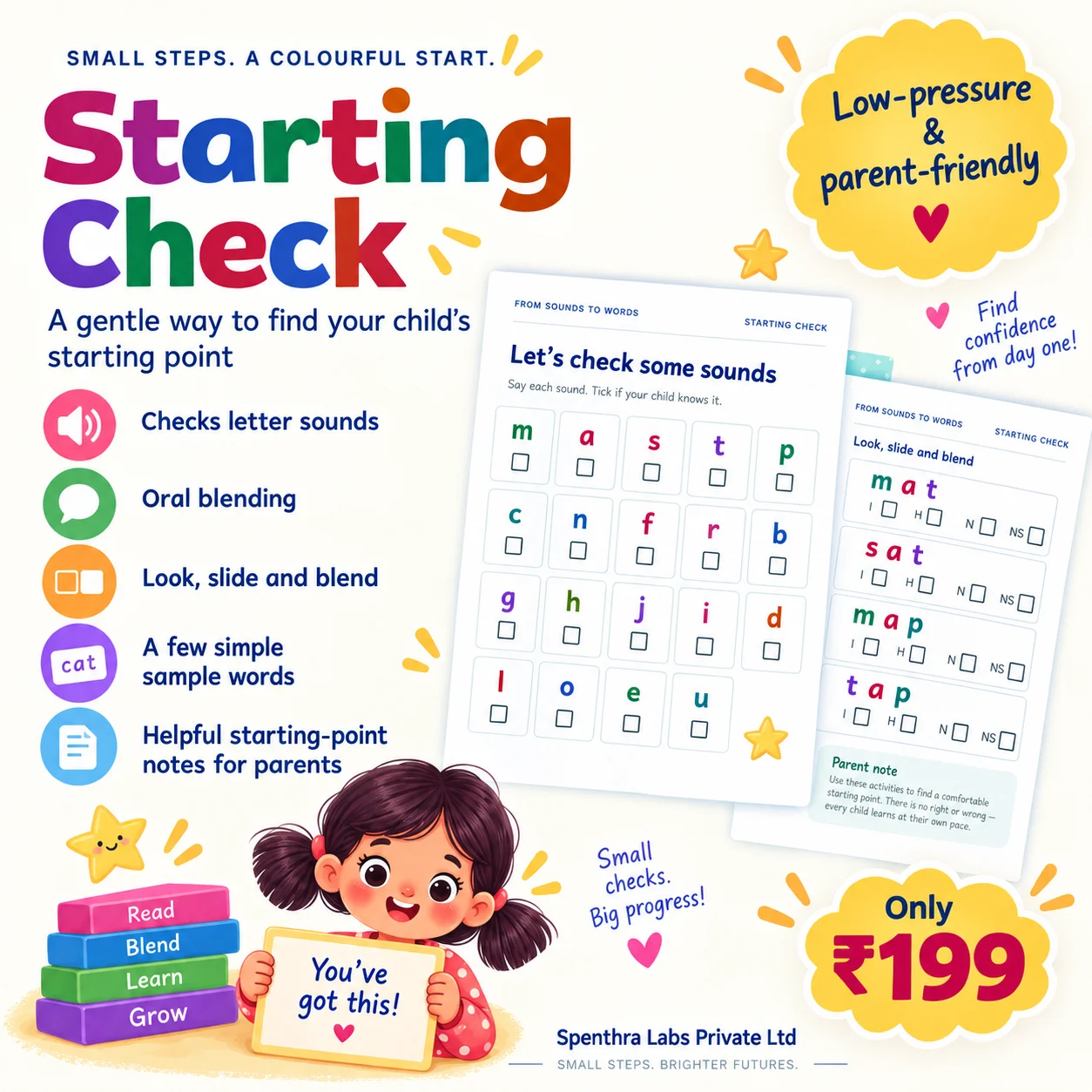
From Sounds to Words

Free · no sign-up · unlimited

Missing Number Worksheet Generator

Two exercise styles in one generator: fill the missing number in an equation (5 + __ = 12), or complete a counting sequence with any step size, forwards or backwards.

  • Missing number in an equation, or a counting sequence
  • Skip counting by any step — 2s, 5s, 10s or more
  • Count forwards or backwards
  • Choose how many blanks appear in each sequence

How to get the most from these worksheets

A few things worth knowing before you print a stack of them.

Missing numbers teach inverse operations

Solving 5 + __ = 12 requires a child to subtract, even though the sign says add. That inverse relationship is the foundation of algebra later on, and it is why these sheets are worth more than their simple appearance suggests.

Counting backwards is harder

Most children count forwards fluently long before they can count back. Backwards sequences, especially crossing a ten, expose gaps that forward counting hides entirely.

A blank in a different place is a different question

7 + __ = 12 and __ + 5 = 12 look like variations of one exercise and are not. The first can be answered by counting on from 7, which most children find straightforward. The second resists that, because there is nothing to count on from until you have reasoned backwards. Children who are fluent at one can be stuck at the other, so it is worth printing sheets where the blank sits in each position rather than assuming the skill generalises.

This is algebra, early

A missing number is an unknown, and solving 7 + __ = 12 is solving an equation. That framing matters more than it sounds: children who meet unknowns as a normal part of arithmetic at six do not experience letters standing for numbers as a rupture at eleven. Saying out loud that the box is a number we do not know yet, and that finding it is the whole job, is worth doing repeatedly.

The equals sign is the thing being taught

Many children read = as an instruction meaning write the answer next. Missing-number problems break that reading, because the answer is not at the end. A child who writes 12 in the box of 7 + __ = 12 has read the sign as a prompt rather than as balance, and that misconception will cause trouble for years. This worksheet type surfaces it earlier than almost anything else.

Say the problem aloud as a question

Children who stall on a written blank often solve the same problem instantly when it is spoken — seven and what makes twelve. The gap is in reading the notation, not in the number work. If a child is stuck, read the line aloud before offering any strategy, and watch whether the answer arrives immediately. If it does, the sheet is teaching notation and you should carry on.

Pair with a number line for the ones that stick

Where a child cannot reason backwards to the missing number, drawing the problem as a jump on a number line makes the structure visible: the whole, the part you have, and the gap. The generator has a number line type, and printing both on one page gives you the problem and the tool for it side by side.

What makes this different

Genuinely unlimited

No monthly cap and no premium tier. Make fifty worksheets in an afternoon if you need to.

Nothing is uploaded

Questions, names and PDFs are all built in your browser. No worksheet content is ever sent to a server.

Several exercises per sheet

Combine arithmetic, tracing and a quiz on one page instead of printing three separate worksheets.

Edit every question

Retype any question, replace just one, or delete it — your edits survive when you change the settings.

Frequently asked questions

Can I make skip counting worksheets?

Yes. Choose the sequence mode and set “Count by” to 2, 5, 10 or any step up to 20.

Can the sequence count backwards?

Yes — switch on “Count backwards” and the sequences will descend.

How many blanks can each sequence have?

Up to six, though two or three works best. The first number is never blanked so children always have an anchor.

What are missing number worksheets for?

They teach that arithmetic works in both directions and that the equals sign means balance rather than write the answer here. That second point is the one that pays off later — it is the foundation of reading an equation, and children who miss it struggle with algebra years afterwards.

Can I choose where the blank goes?

The generator varies the position across the sheet, including blanks in the first number, the second and the result. That variety is deliberate, because a child fluent with one position is often stuck on another and a sheet with the gap always in the same place hides it.

Is this suitable before children have met algebra?

Yes — it is the groundwork for it. A box standing for an unknown number is exactly what a letter will stand for later, and meeting the idea at six or seven inside ordinary arithmetic makes the notation at secondary school much less of a jump.

My child writes the total in the box. Why?

Because they have read the equals sign as an instruction to write the answer, so the box is where the answer goes. It is a very common misreading and worth addressing directly: cover the problem and ask what number would make both sides the same.

Related generators

Suitable grade levels