Print both versions from the same list
Generate the practice copy on Monday and the blank test on Friday without retyping anything. Because the list and layout are identical, the test looks exactly like what they practised on.
From our digital bookshelf
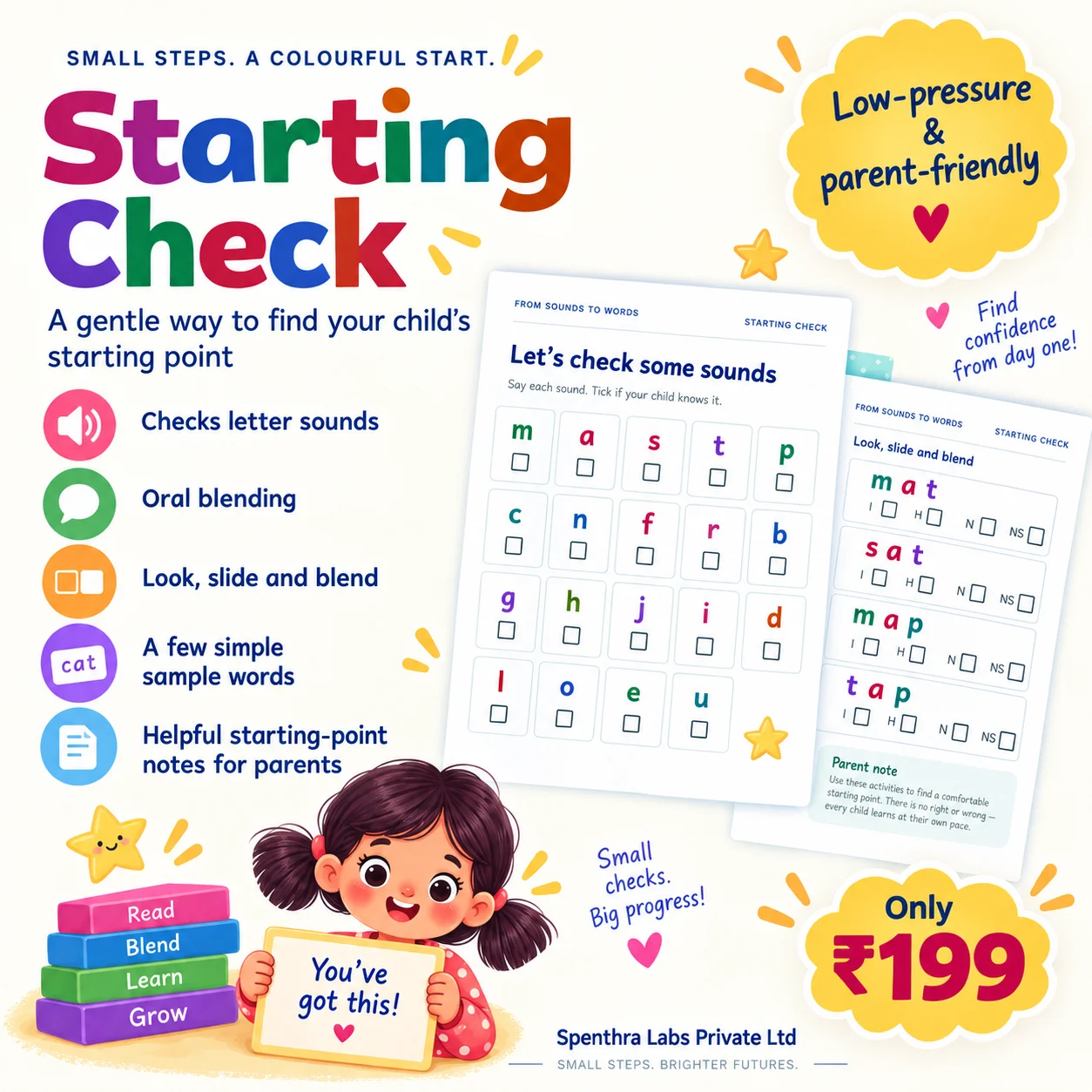
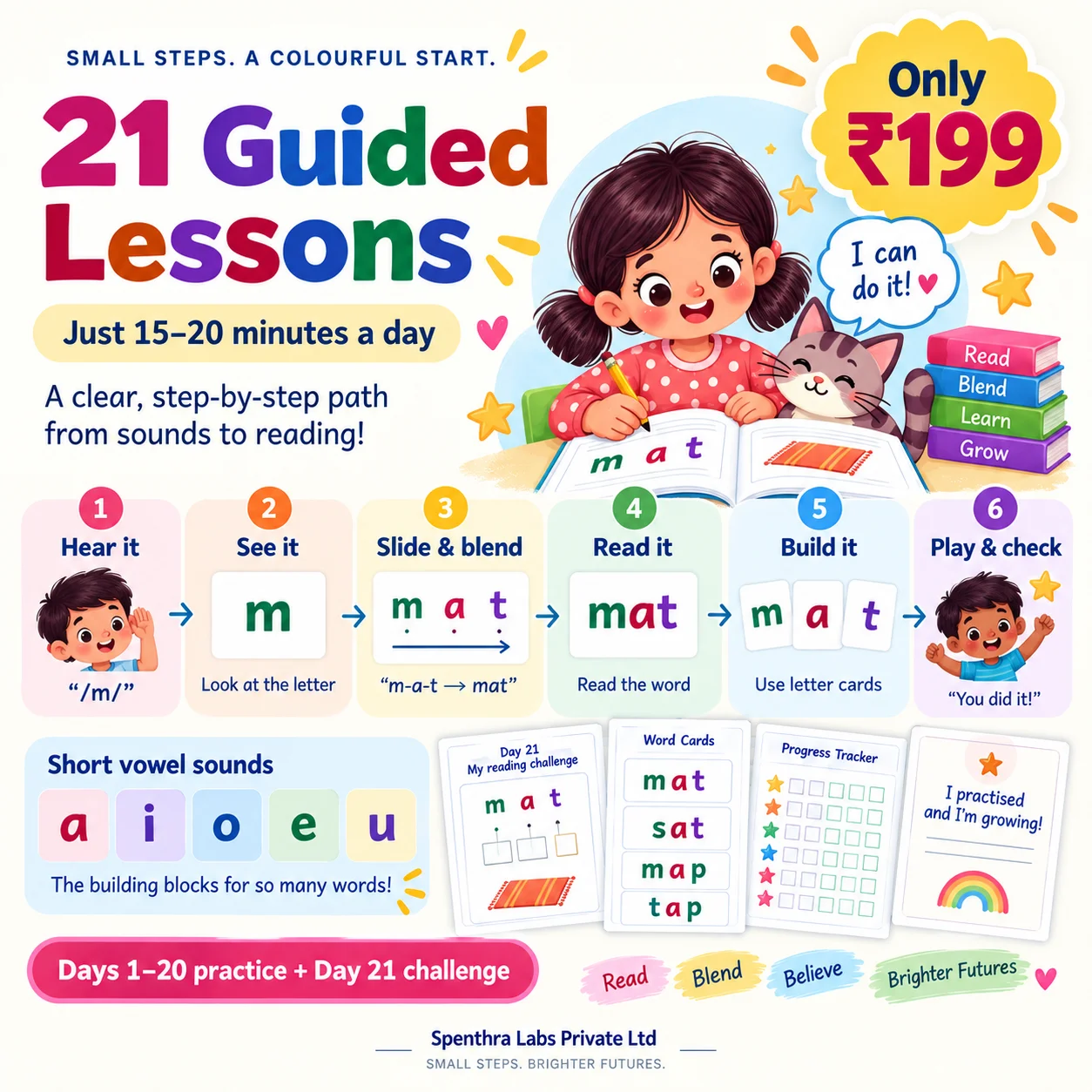
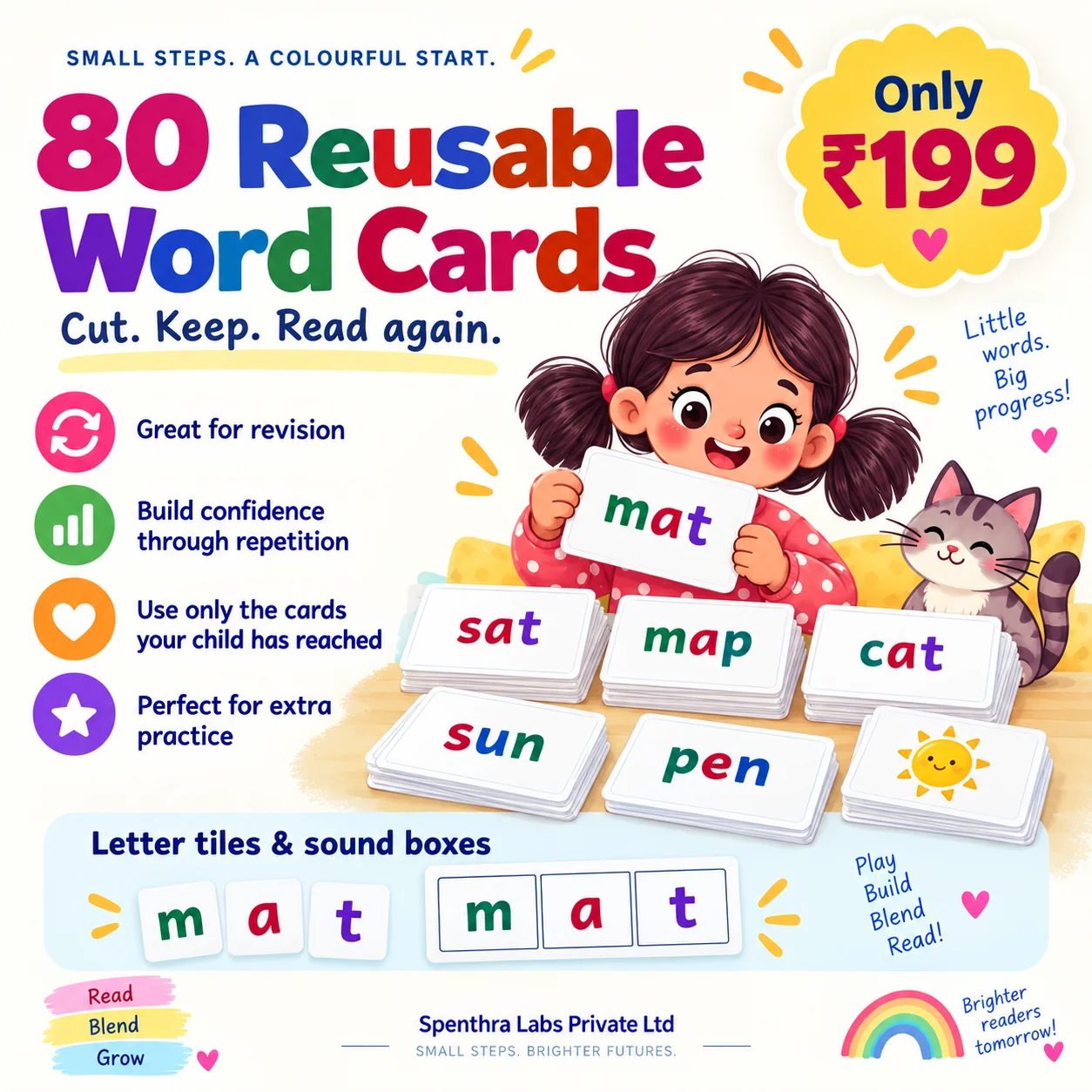
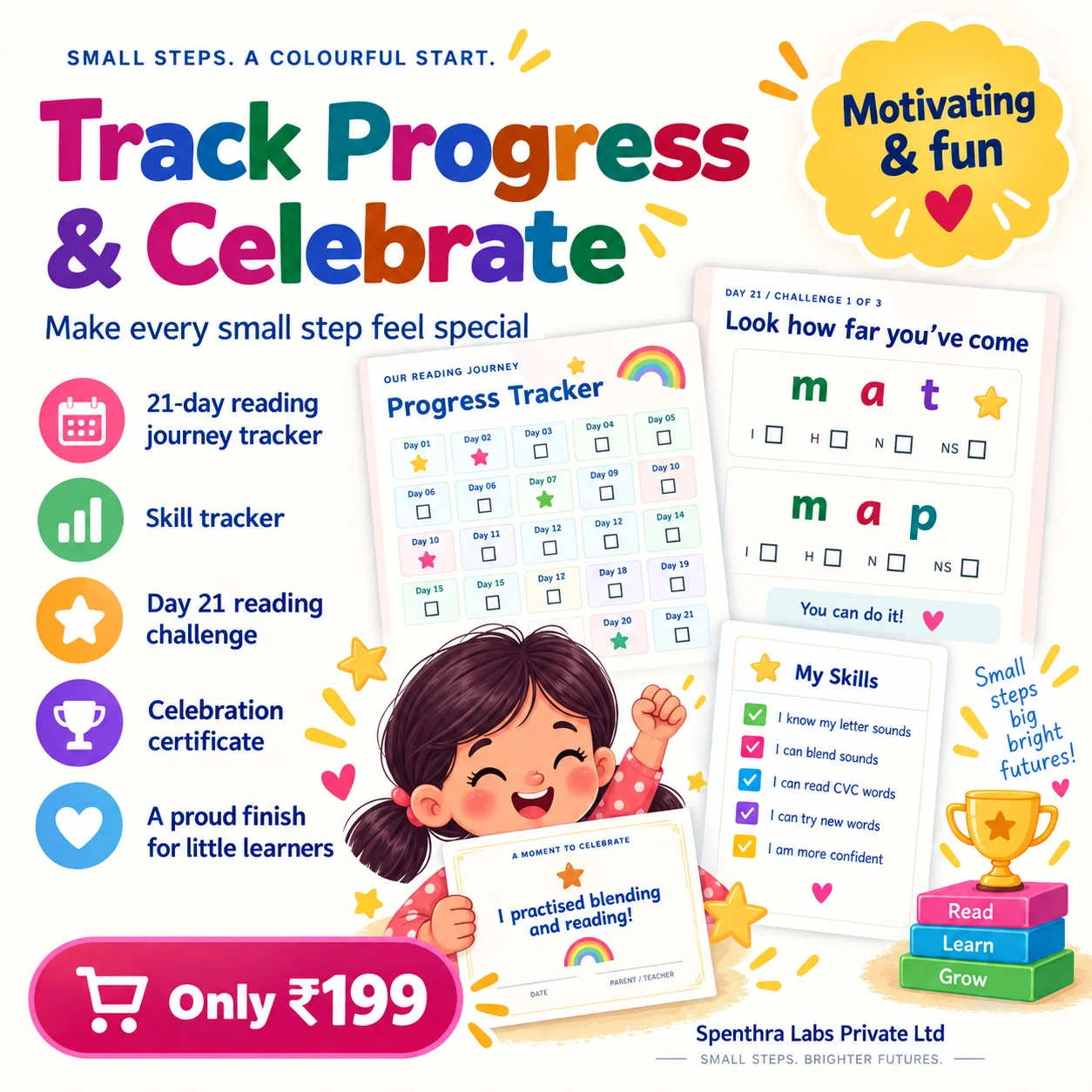
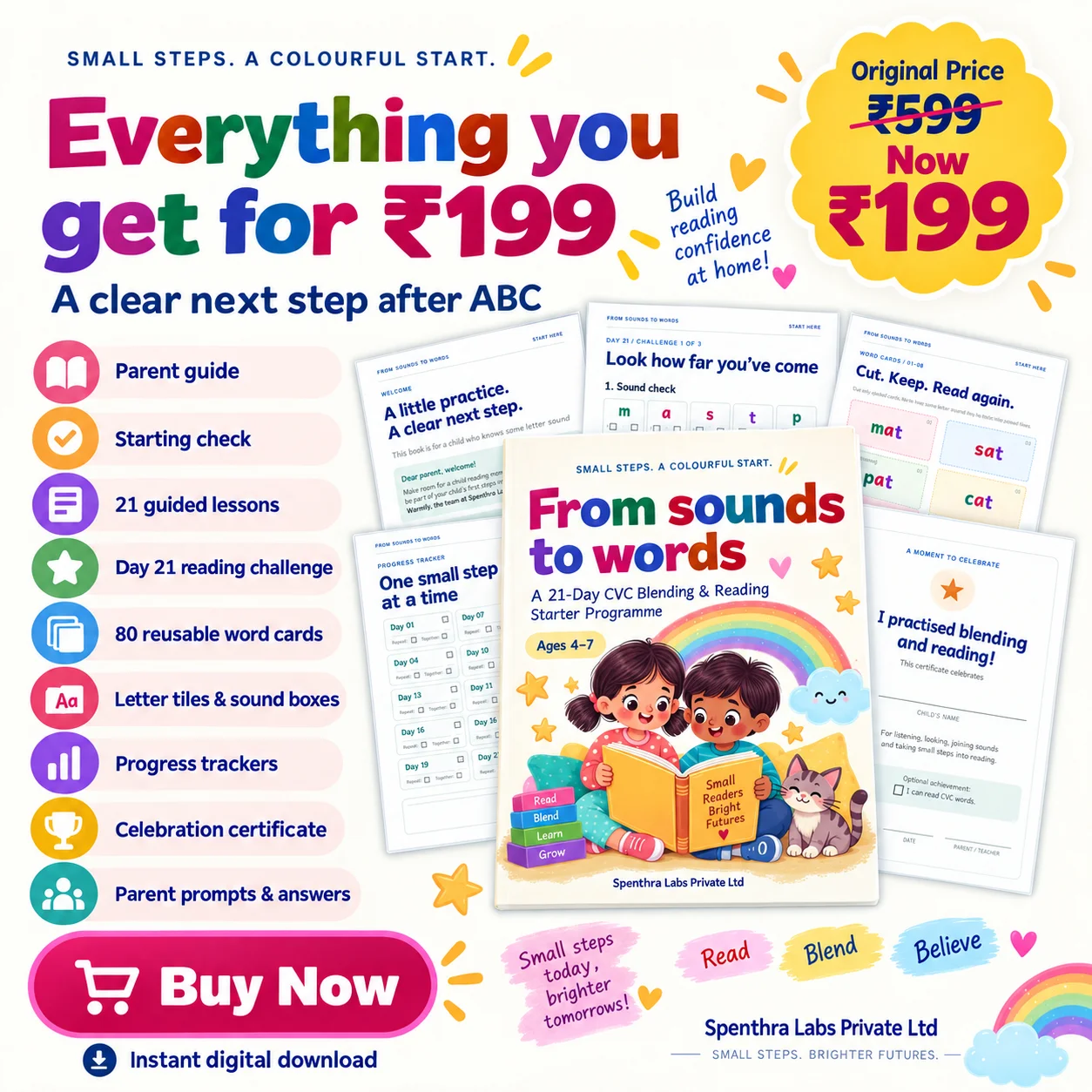
21 days of guided reading practice for little learners.
Ages 4–7 · English · Printable PDF
See MoreTake a look inside
Select an image to enlarge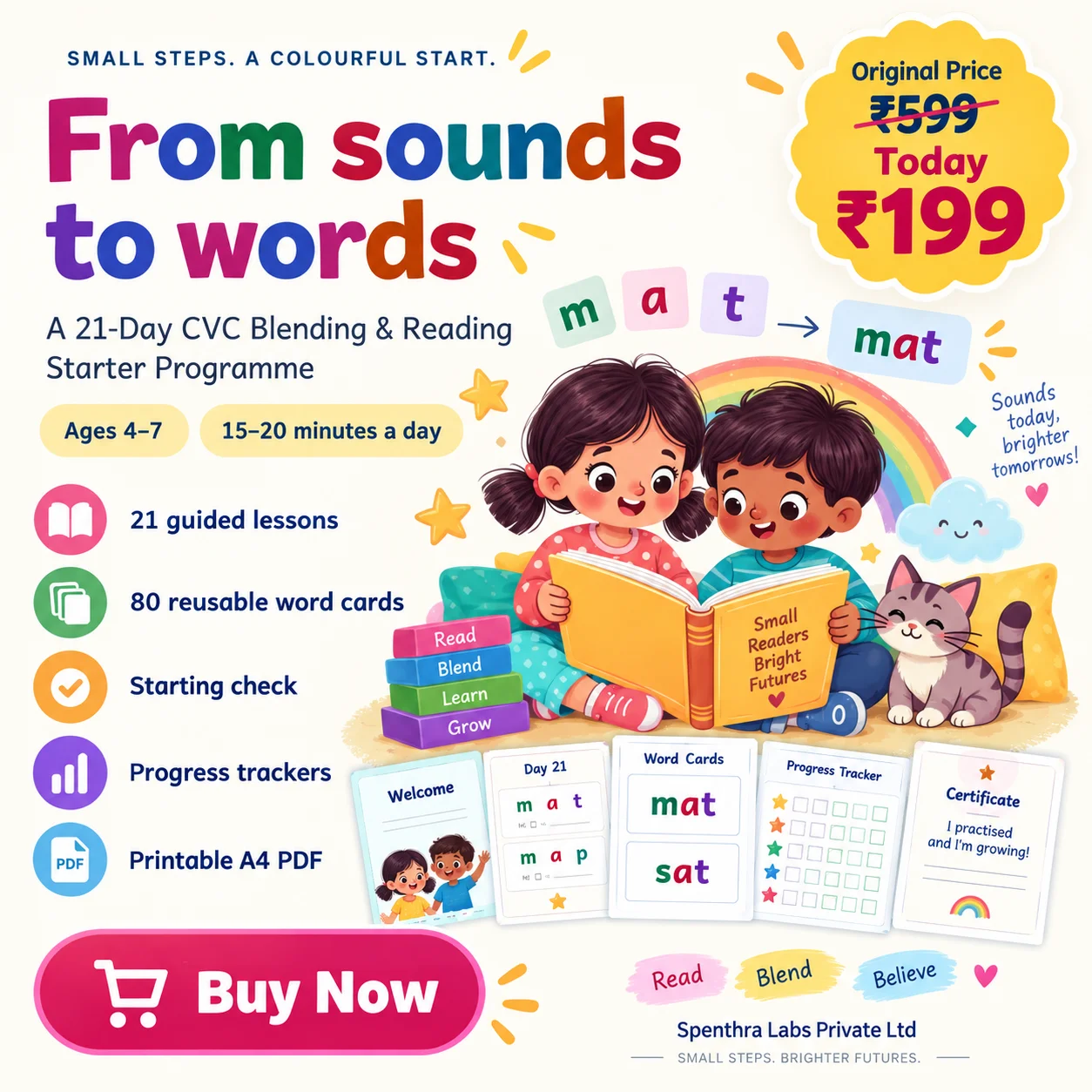
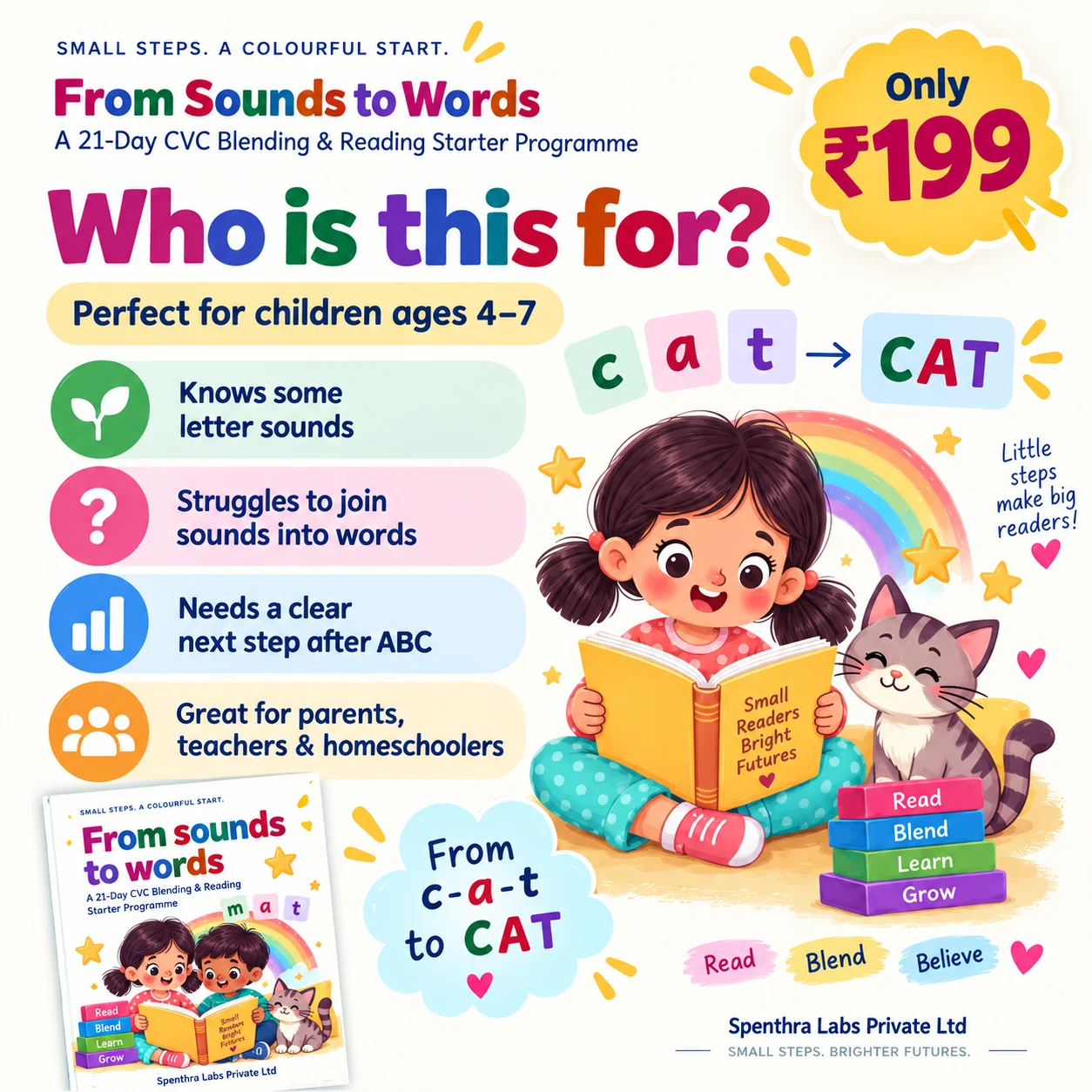
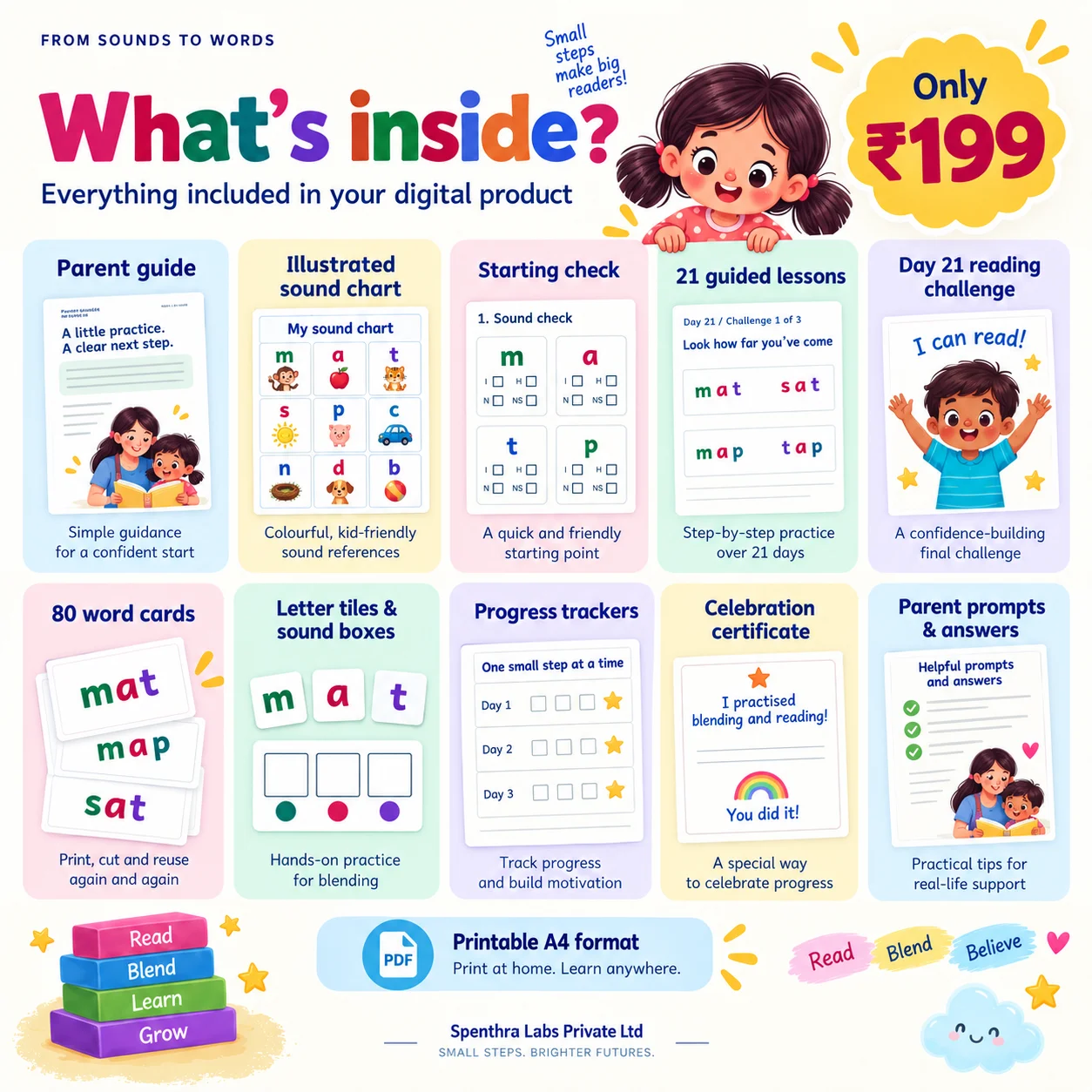
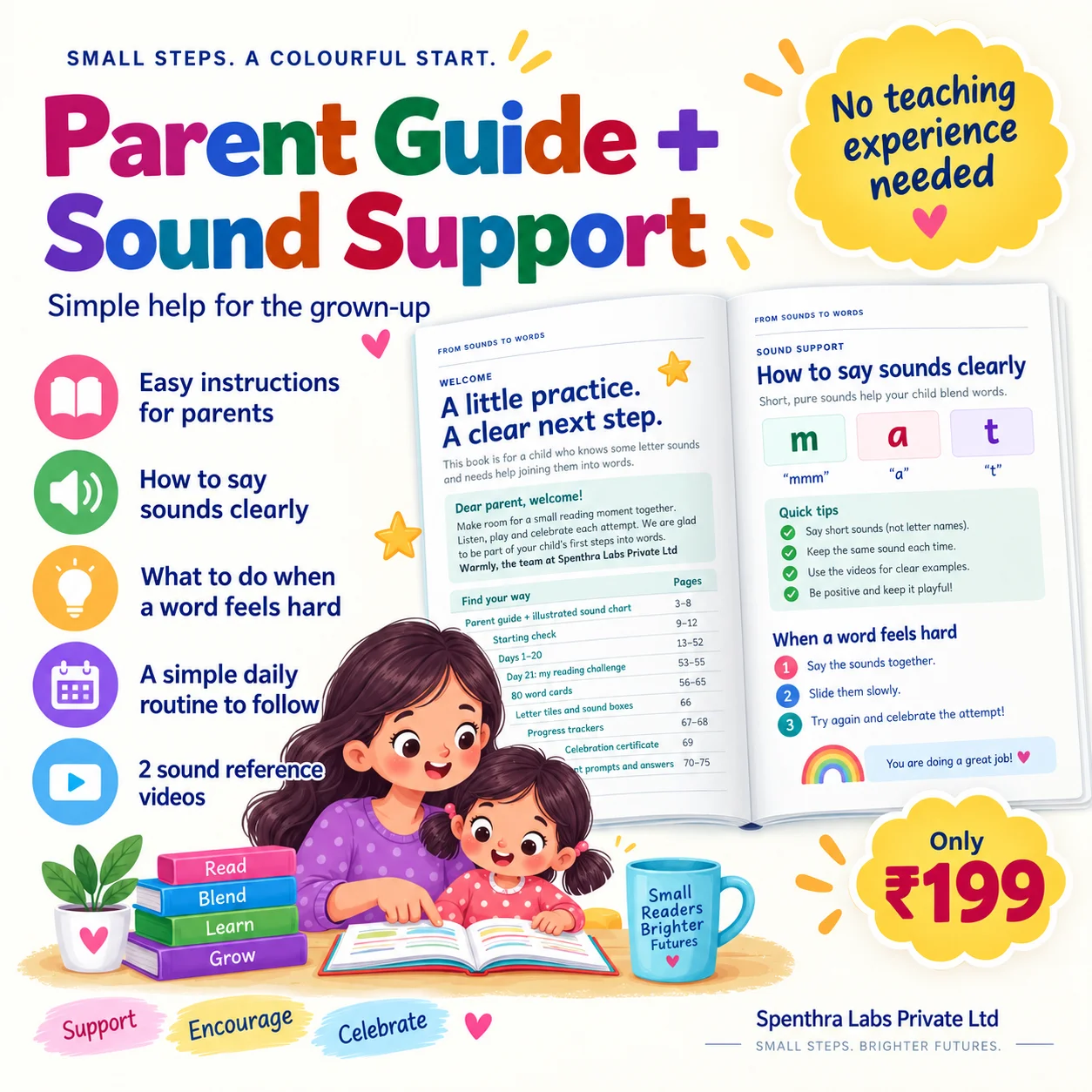
Free · no sign-up · unlimited
Numbered lines for dictation. Print a blank sheet for the test itself, or a practice copy with the words printed for children to study from beforehand. Same list, same layout, two purposes.
A few things worth knowing before you print a stack of them.
Generate the practice copy on Monday and the blank test on Friday without retyping anything. Because the list and layout are identical, the test looks exactly like what they practised on.
Below about seven, spelling and letter formation are still being learned together. The handwriting guide option gives a midline and baseline so the test does not quietly undo handwriting work.
The weekly cycle of list on Monday, test on Friday produces good Friday scores and poor retention, because it rewards cramming. Testing mid-week, when nobody has revised, shows what is actually being retained rather than what was held overnight. The difference between the Wednesday and Friday scores is more informative than either.
A list built round a theme — ten words about weather — teaches ten separate spellings. A list built round a pattern — light, night, sight, fright — teaches one rule and gives ten words for free. Children generalise from patterned lists to words they have never seen, which is the whole objective, and they cannot generalise from thematic ones.
The high-frequency words children misspell most persistently — because, friend, said, there, their, they're, which — are worth recycling into every list until they stick. They appear constantly in writing, so each one fixed pays off far more often than a rarer word learned once for a test.
A word read aloud on its own leaves homophones unresolvable: there, their and they're are the same sound. Reading each word inside a sentence makes the test about the word children will actually need to write, and it is the only way to test homophones at all.
The most useful part of a spelling test is the minute afterwards when a child writes the correct spelling beside their attempt, three times. Marking done by an adult and handed back is much weaker, because the child never engages with where their version diverged. Leave room on the sheet for corrections.
Genuinely unlimited
No monthly cap and no premium tier. Make fifty worksheets in an afternoon if you need to.
Nothing is uploaded
Questions, names and PDFs are all built in your browser. No worksheet content is ever sent to a server.
Several exercises per sheet
Combine arithmetic, tracing and a quiz on one page instead of printing three separate worksheets.
Edit every question
Retype any question, replace just one, or delete it — your edits survive when you change the settings.
Leave Print the words switched off. You get numbered lines only.
Switch Print the words on for a practice or copy-out sheet.
Yes, choose My own words and paste it in, one word per line.
The answer key prints the words in order, so it works as the read-aloud copy.
Usually eight to twelve for primary-age children. More than that and most of the list gets crammed and forgotten; fewer and there is not enough to establish a pattern. The number matters less than whether the words share a spelling rule.
By pattern rather than by topic. Ten words sharing a rule teach the rule and generalise to words the child has never seen; ten words about a theme teach ten unrelated spellings. Mix in the high-frequency words children reliably get wrong.
Yes. A word read alone makes homophones impossible — there, their and they're sound identical. A sentence fixes which word is meant and tests the spelling a child will actually need when writing.
Short daily practice rather than one long session, look-cover-write-check rather than passive reading, and correcting mistakes by writing the right version immediately. Testing mid-week as well as at the end shows what is retained rather than what was crammed.
Alphabet Tracing
Dotted letterforms with handwriting rulers — A–Z, a–z, 0–9 or Hindi.
Word Tracing
Trace whole words — sight words, a theme, or your own spelling list.
Match the Following
Two shuffled columns joined by lines — opposites, plurals, your own pairs.
Fill in the Blanks
Cloze sentences or missing letters, with an optional word bank.
Multiple Choice
Tick-the-box questions from a maths, language or general bank.
Word Scramble
Jumbled letters to unscramble, with optional first-letter hints.