One table at a time
A sheet mixing all twelve tables tests recall of facts a child has not met yet, and the resulting failure teaches nothing. Use the table focus to drill the one being taught this week, then widen it once that table is fluent.
From our digital bookshelf
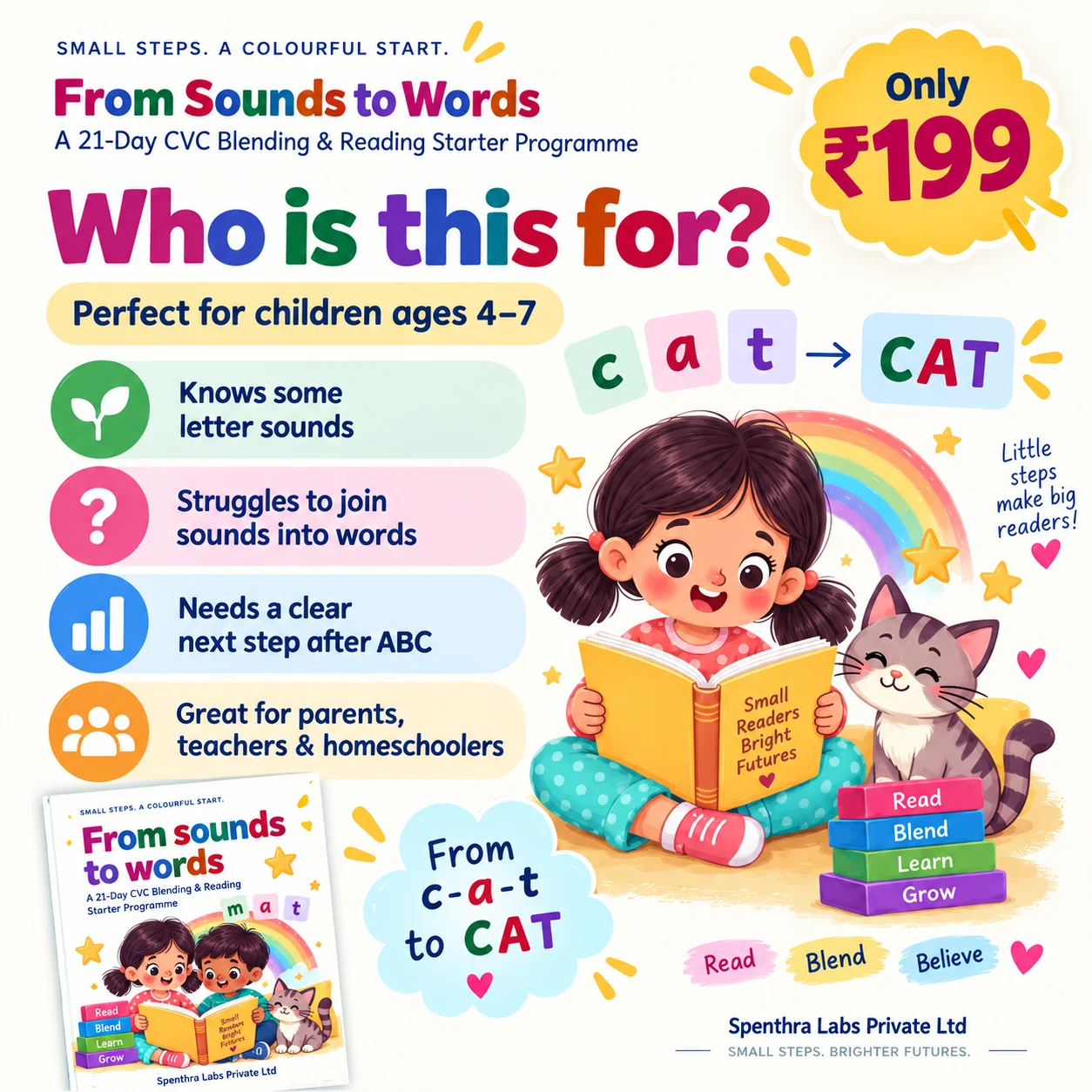
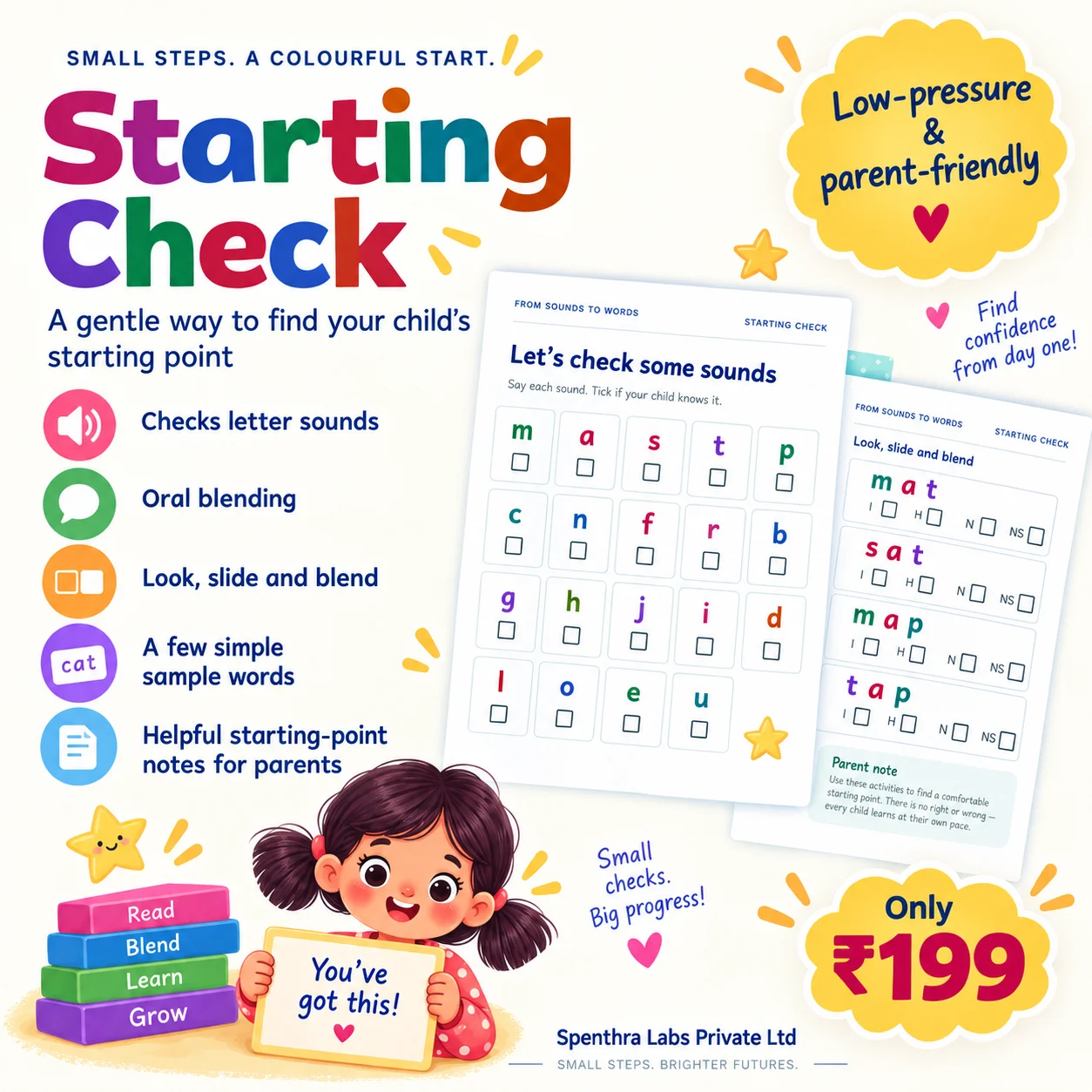
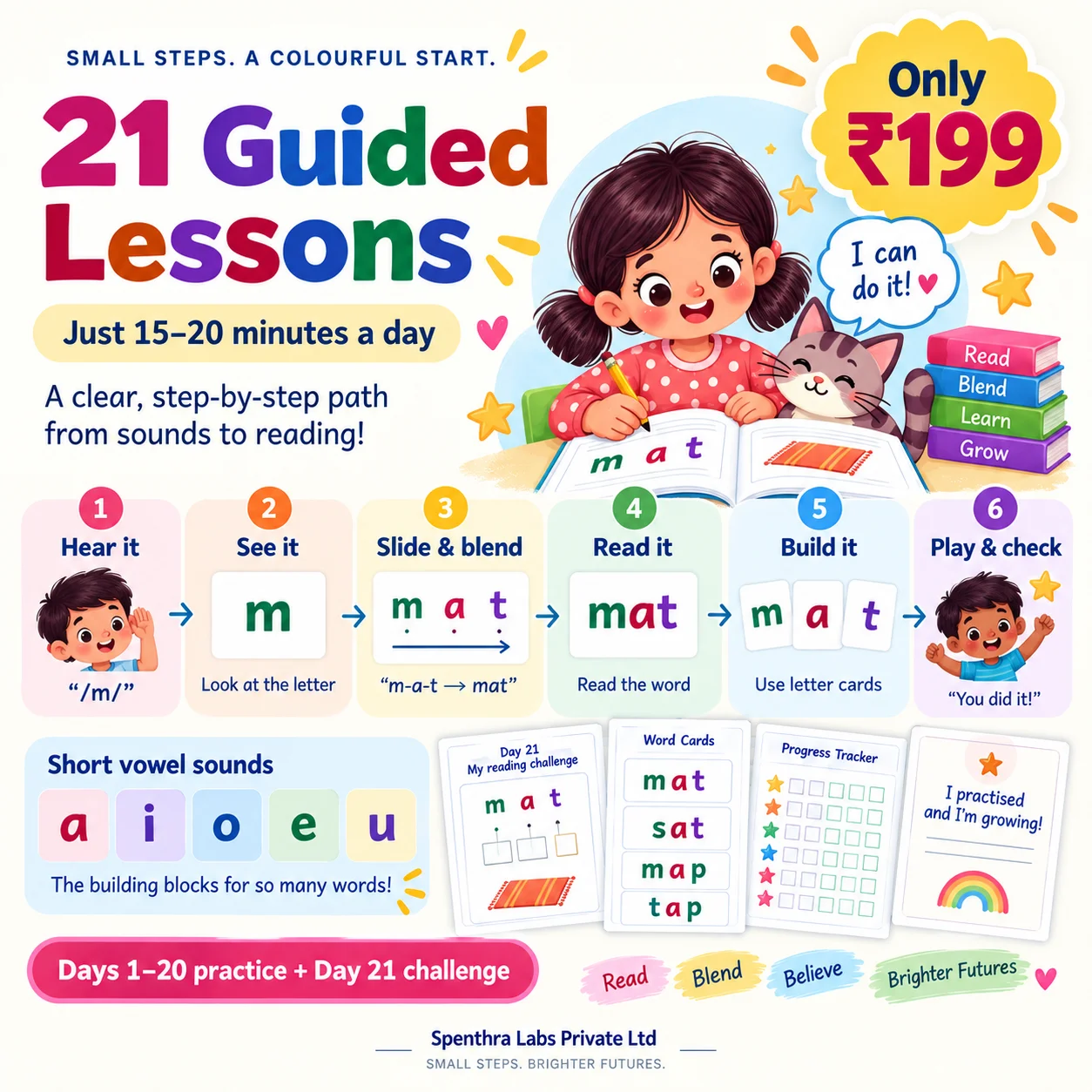
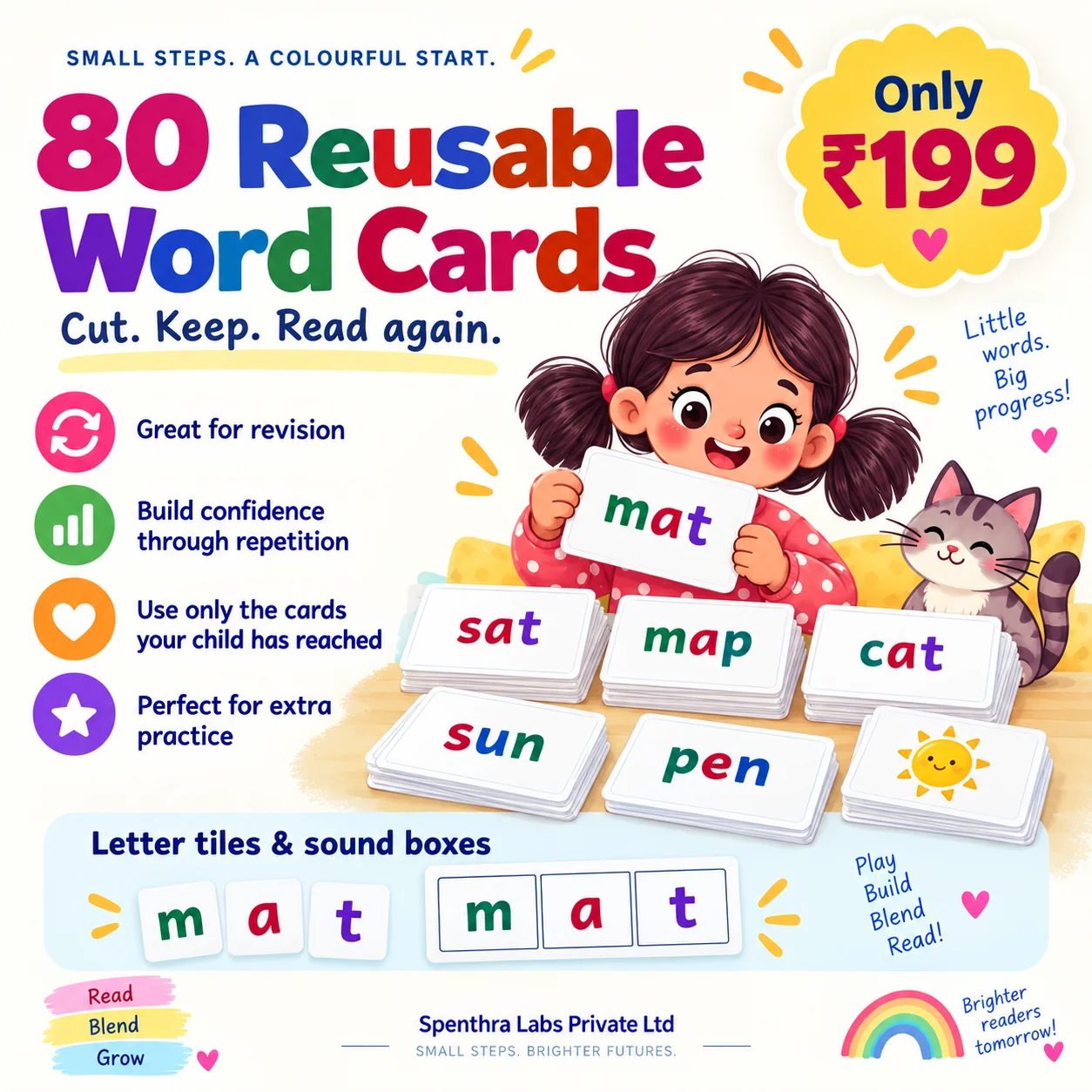
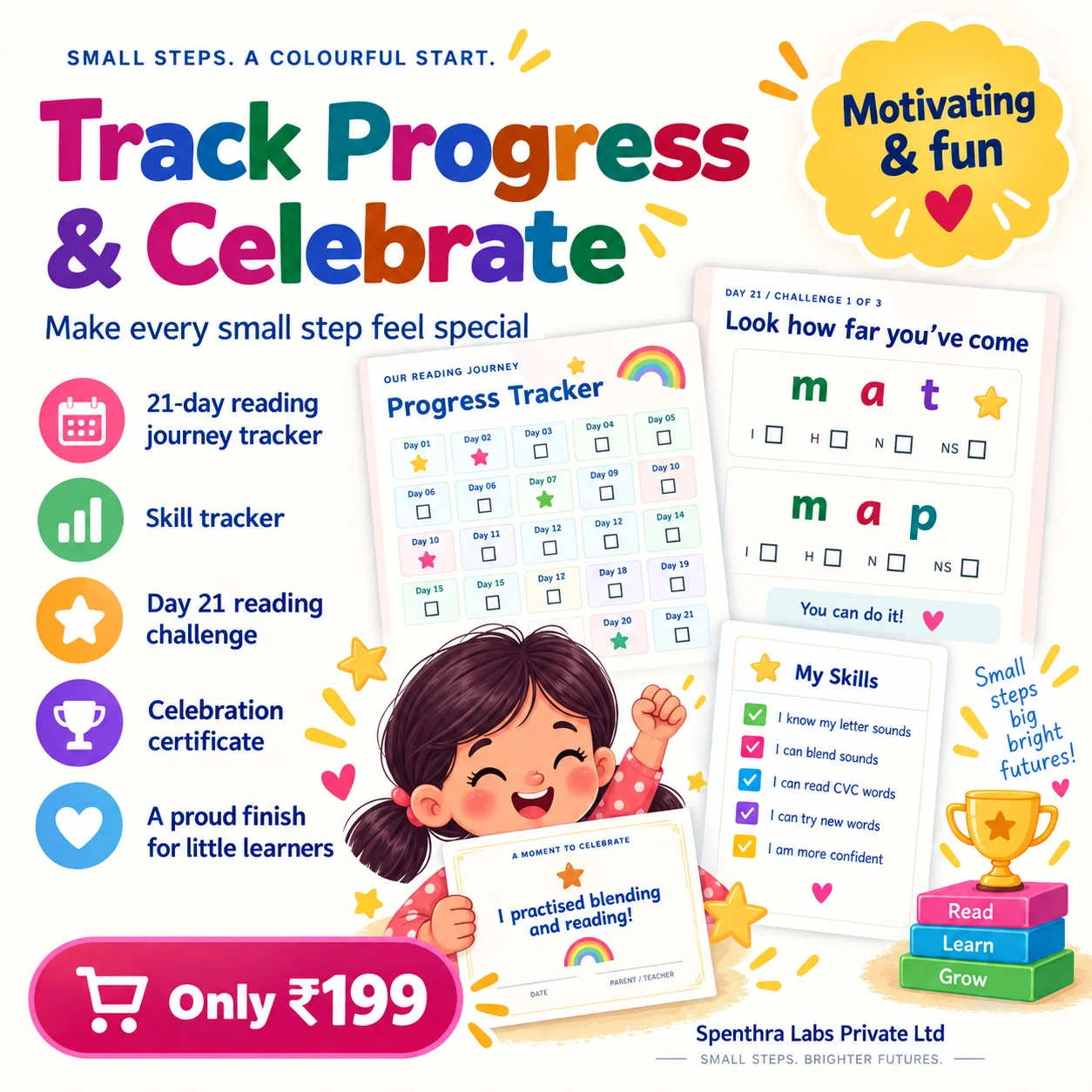
21 days of guided reading practice for little learners.
Ages 4–7 · English · Printable PDF
See MoreTake a look inside
Select an image to enlarge



Free · no sign-up · unlimited
Times-table practice you can aim precisely. Drill a single table while a class is learning it, or mix every table once they are secure. Set the factor range yourself, or let the difficulty pick it.
A few things worth knowing before you print a stack of them.
A sheet mixing all twelve tables tests recall of facts a child has not met yet, and the resulting failure teaches nothing. Use the table focus to drill the one being taught this week, then widen it once that table is fluent.
Once a child knows that order does not matter, 7 x 8 and 8 x 7 are one fact, not two. The genuinely difficult set is far smaller than the full grid, so target it directly rather than reprinting the whole table.
Timing a sheet before the facts are secure trains guessing. Get accuracy first with a short untimed sheet, then use the same settings as a timed test.
Teaching the times tables one to twelve in sequence is the traditional order and close to the worst one. The 2s, 5s and 10s are easy because of the patterns in their last digits; the 3s and 4s follow from doubling; the 9s have a finger trick and a digit-sum pattern. What is left — 6×7, 7×8, 8×6 and their partners — is a handful of genuinely hard facts that most children learn late because they are buried at the end of a sequence. Print those directly rather than waiting to reach them.
A child who knows 7 × 8 also knows 8 × 7, but only if someone has said so. Told explicitly, the hundred and forty-four facts in the tables to twelve collapse to about seventy-eight worth learning, and the hard residue to roughly ten. This is the single most useful thing to tell a child struggling with tables, and it is frequently never said because it seems obvious to the adult.
Knowing 6 × 7 instantly and being able to work out 34 × 6 on paper are separate abilities, and a sheet that mixes them measures neither well. Fact recall should be short and, if you like, timed. Written method should be untimed with room to set the work out. A child can be fluent at one and lost in the other, and only separate sheets will tell you which.
In long multiplication the second partial product is shifted one place, usually written by placing a zero. Children who have not understood why produce right answers for weeks and then, under pressure, drop the zero and get everything wrong by a factor of ten. Ask a child to explain the zero rather than to produce it; if the answer is because you always do, the method is being copied, not understood.
Multiplication facts respond better to five minutes daily than to forty minutes weekly, and the difference is large. Generate several short sheets rather than one long one, keep them to the two or three tables currently being learned, and revisit facts that were secure a month ago — recall decays quietly and a mixed revision sheet is how you find out.
Genuinely unlimited
No monthly cap and no premium tier. Make fifty worksheets in an afternoon if you need to.
Nothing is uploaded
Questions, names and PDFs are all built in your browser. No worksheet content is ever sent to a server.
Several exercises per sheet
Combine arithmetic, tracing and a quiz on one page instead of printing three separate worksheets.
Edit every question
Retype any question, replace just one, or delete it — your edits survive when you change the settings.
Yes. Type the table number into the focus field, for example 7, and every problem will involve 7.
Yes, enter them comma separated, such as 3, 4, 8.
Up to 20 x 20. The difficulty setting picks a sensible default, and you can override both ends.
Not one to twelve. Start with 10s, 5s and 2s for their obvious patterns, then 4s and 8s by doubling, then 3s, then 9s, which have a digit-sum pattern worth showing. That leaves 6s, 7s and 12s, which are genuinely the hard ones and benefit from being tackled directly rather than reached last.
Twenty-five to forty for a one- or two-minute drill, restricted to the tables being practised. Timing is for facts that are already understood — a child still working them out is being tested on speed of calculation, which is not what the drill is for.
Yes. Restrict the number range to the table you are working on and the sheet covers just that. Short, focused sheets on two or three tables beat broad ones for learning, though a mixed sheet is the right way to check what has stuck.
Consistently 7 × 8, with 6 × 7 and 8 × 6 close behind. They sit in no obvious pattern, they come late in the usual teaching order, and they get less practice as a result. Worth generating a sheet of just those rather than hoping they arrive by repetition.
Addition
Sums in vertical columns or horizontal rows, with carry control.
Subtraction
Take-away problems with optional borrowing and negative results.
Addition & Subtraction
Both operations shuffled together — the way real tests mix them.
Division
Sharing problems built from whole facts, with optional remainders.
Addition & Subtraction Fact Families
Three numbers, four related facts — the inverse relationship made visible.
Multiplication & Division Fact Families
The same idea for × and ÷ — the fastest route to division fluency.