Use your own spelling list
The single most useful thing you can do here is paste in the actual words your class is learning this week. Generic word lists are convenient; the words on Friday's test are what children need to practise.
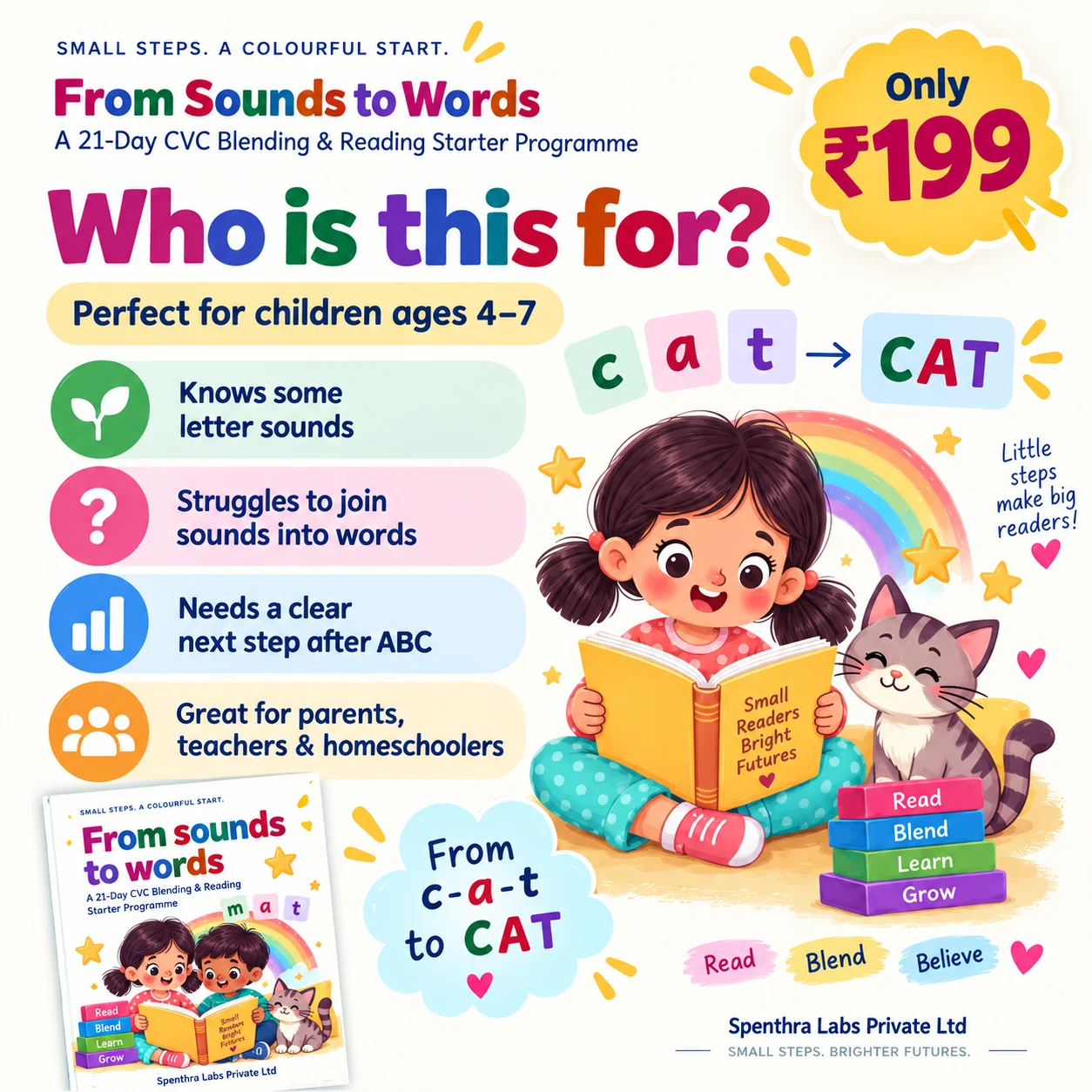
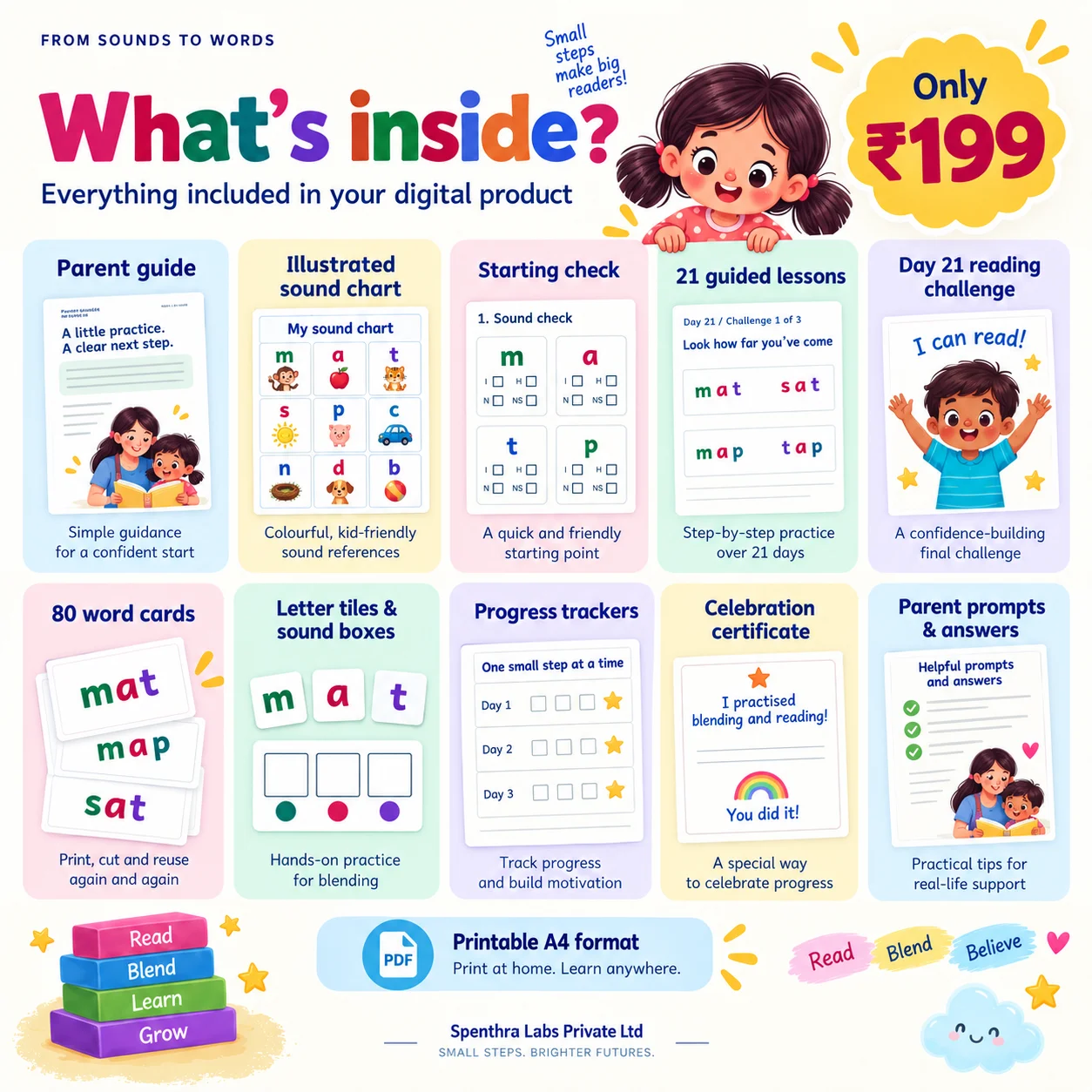
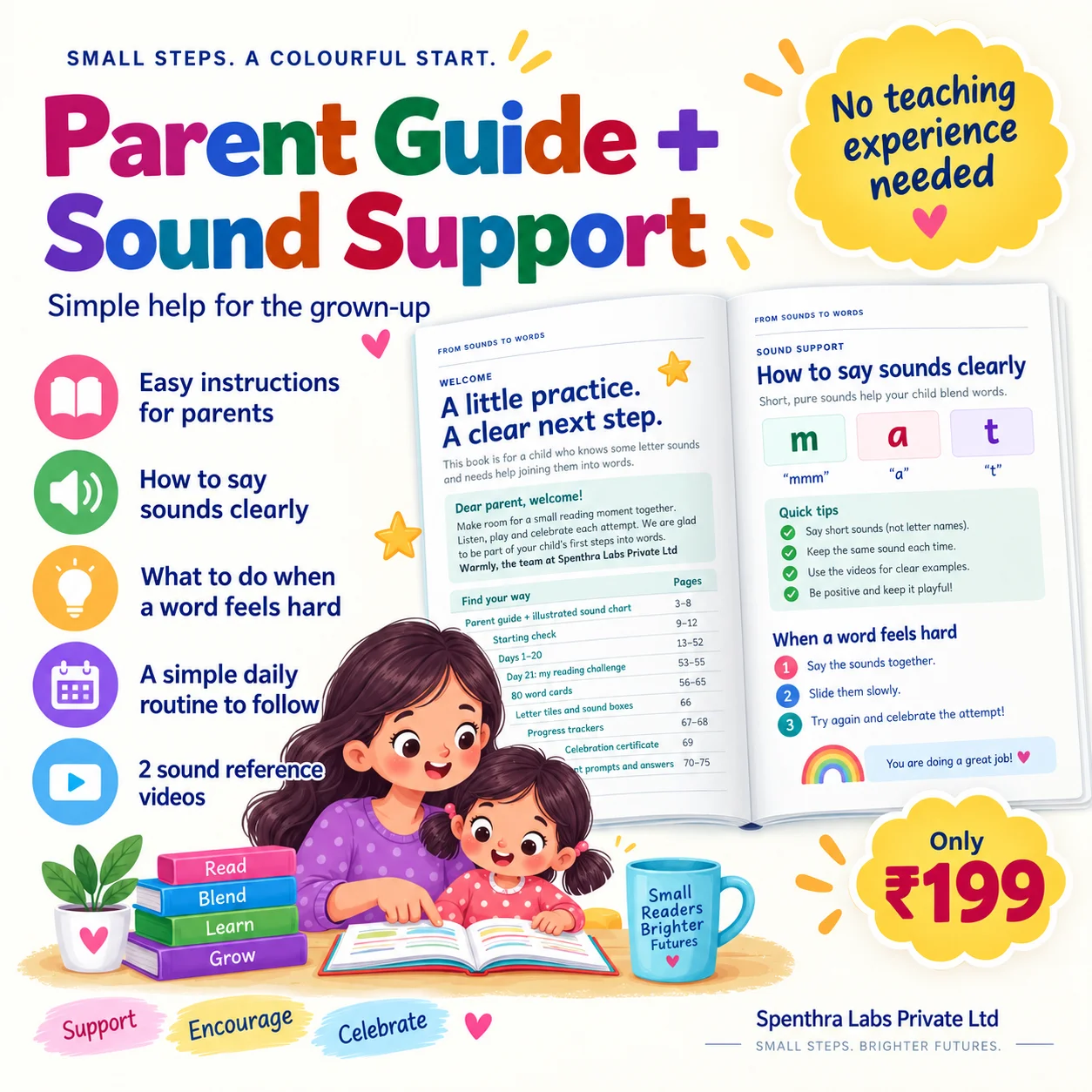
From our digital bookshelf
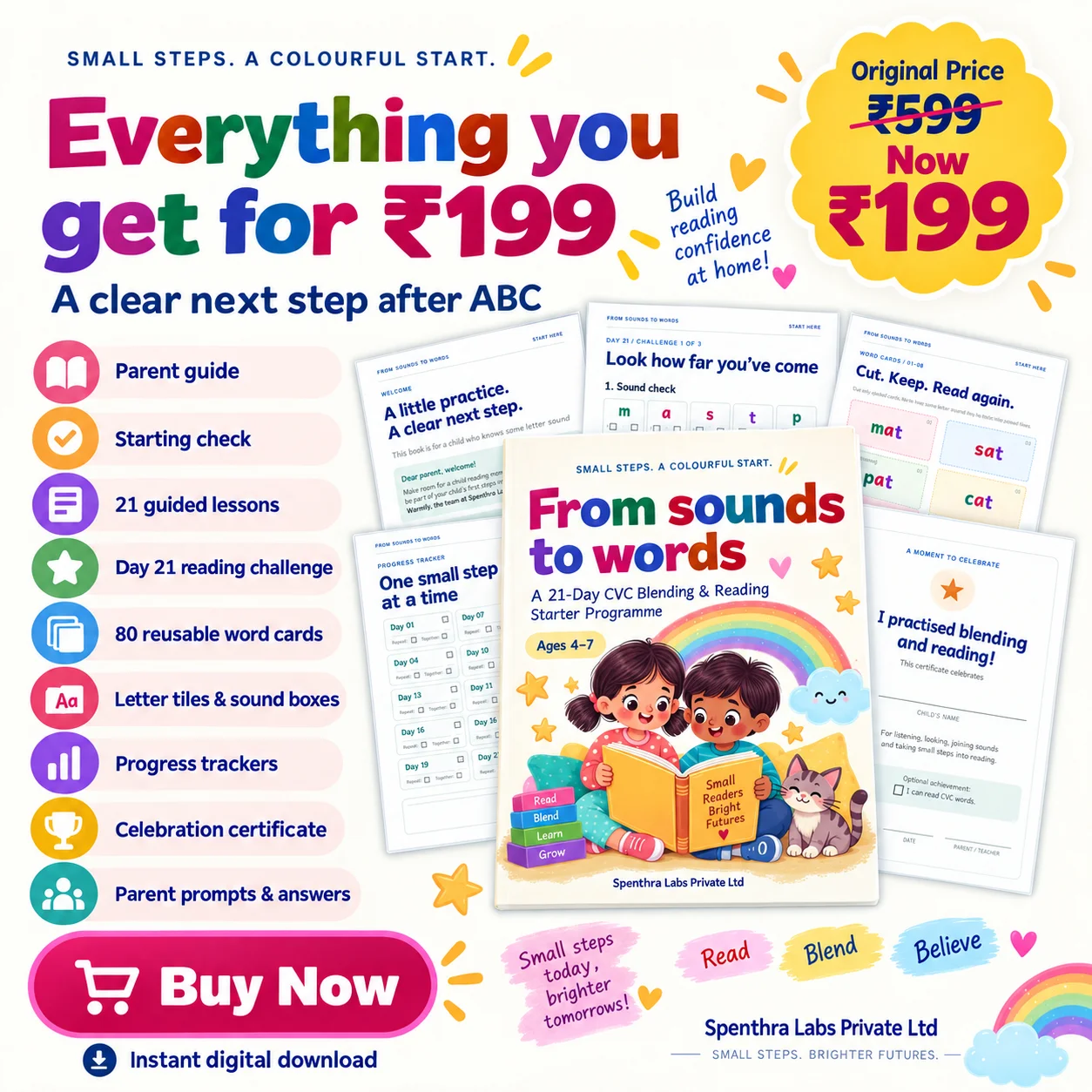
21 days of guided reading practice for little learners.
Ages 4–7 · English · Printable PDF
See MoreTake a look inside
Select an image to enlarge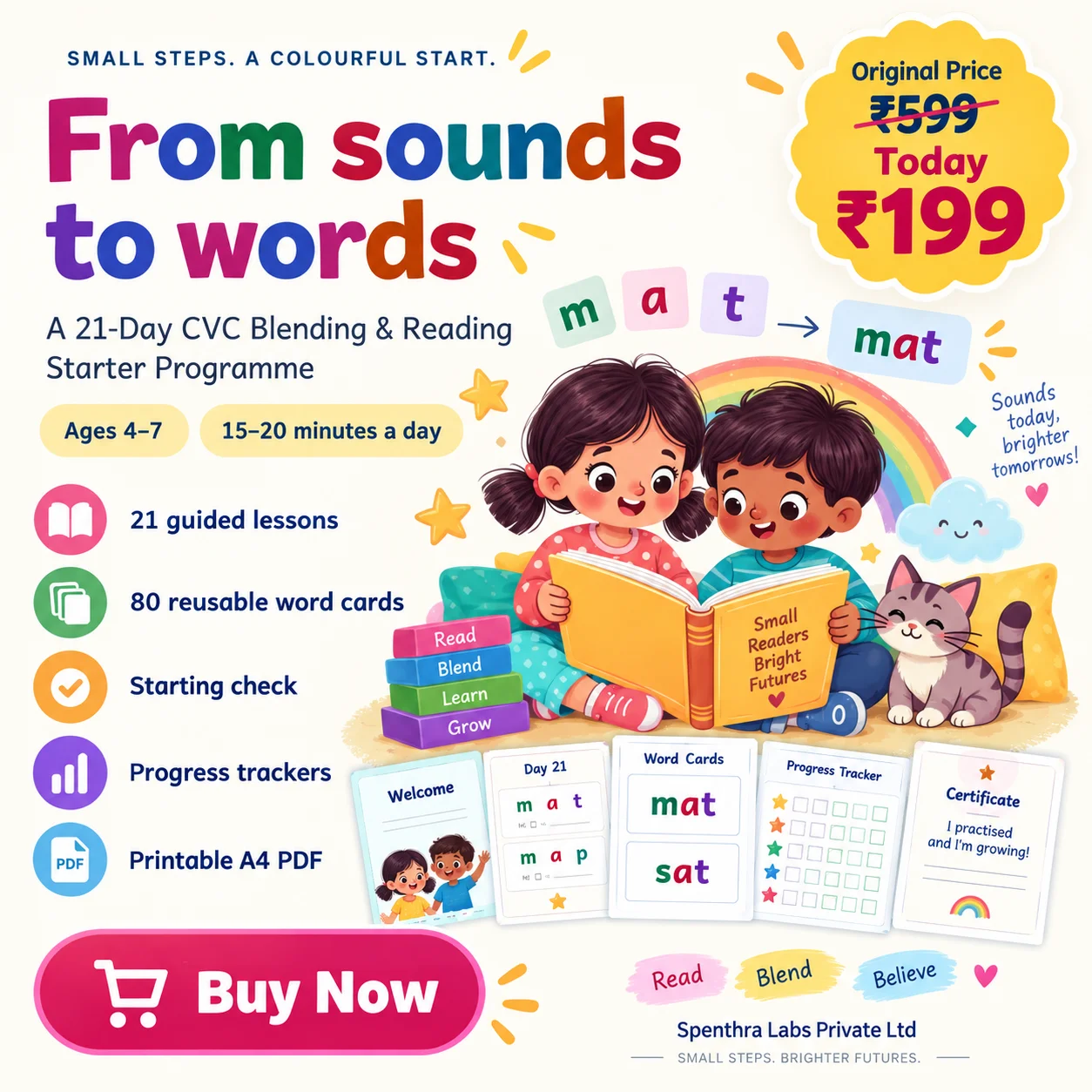
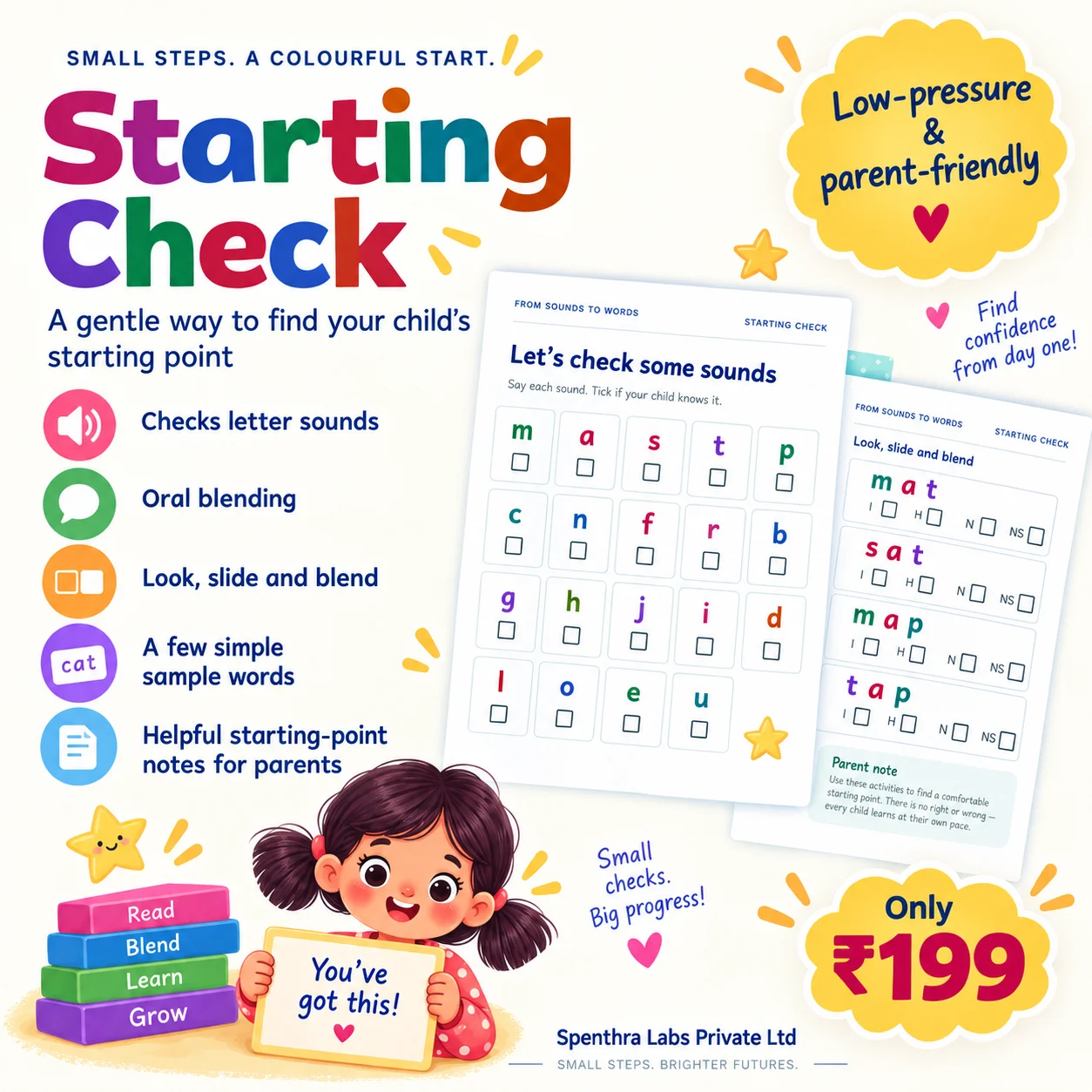
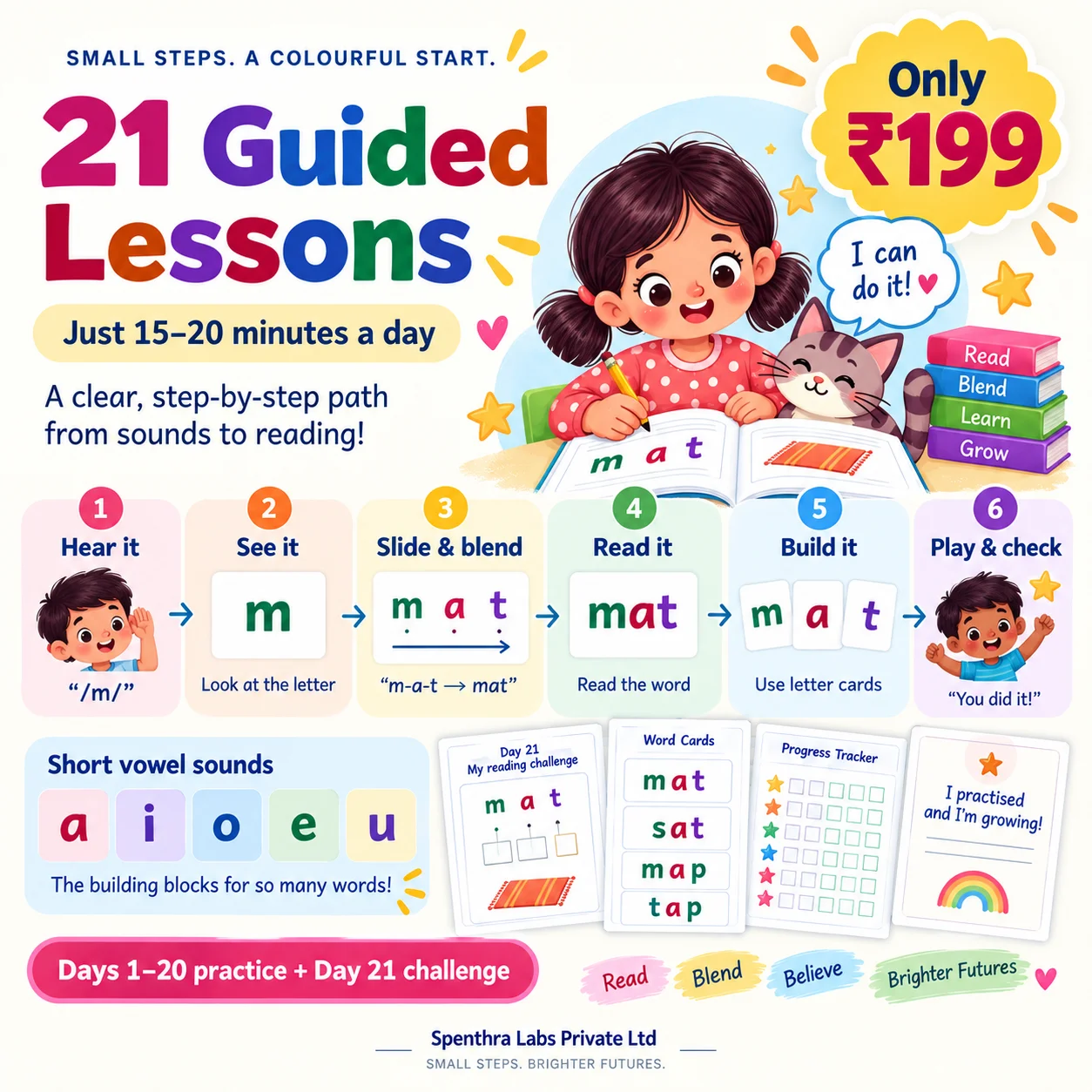
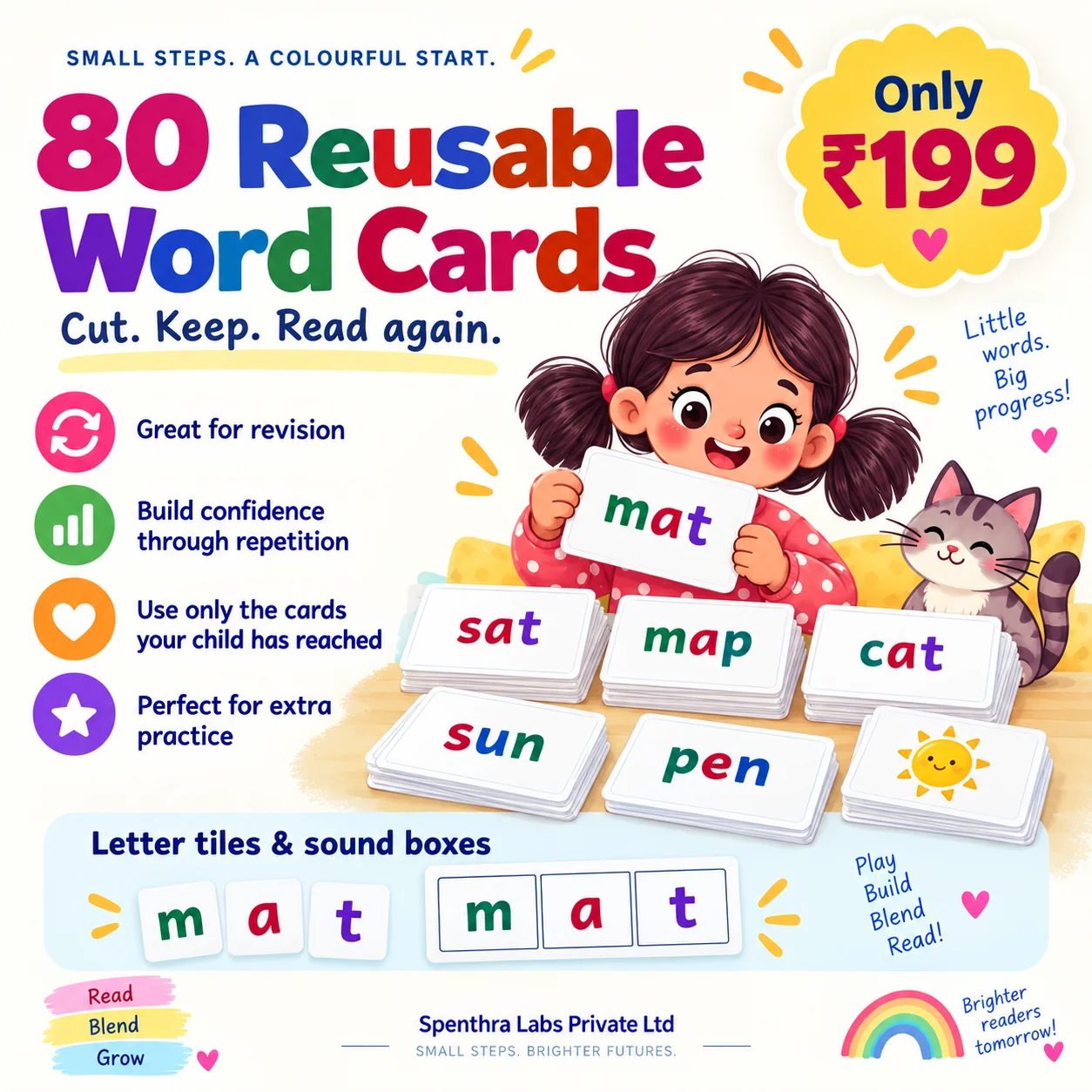
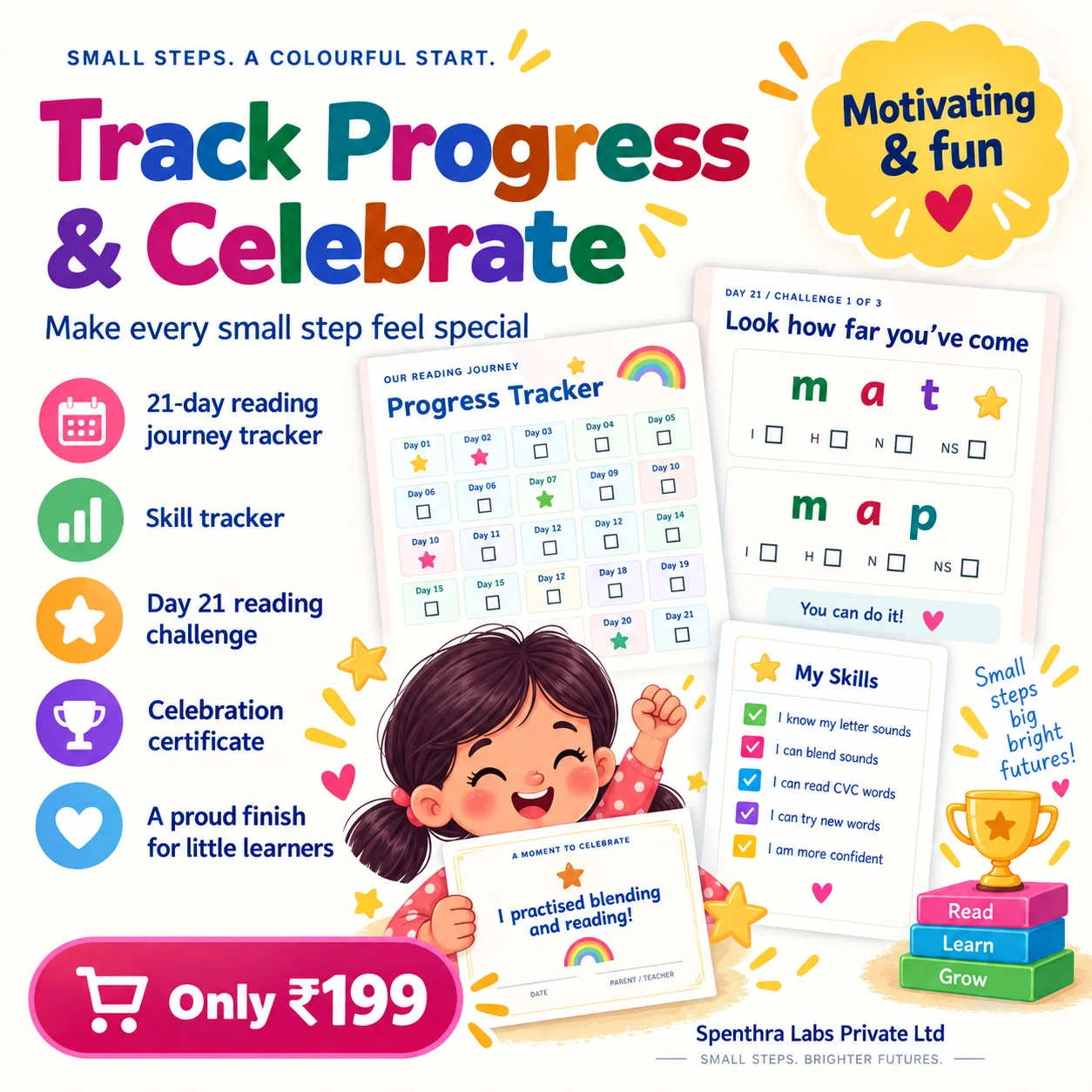
Free · no sign-up · unlimited
Move from single letters to whole words. Trace grade-level sight words, a themed vocabulary set, Hindi words, or paste in this week's spelling list.
A few things worth knowing before you print a stack of them.
The single most useful thing you can do here is paste in the actual words your class is learning this week. Generic word lists are convenient; the words on Friday's test are what children need to practise.
Tracing alone is copying. Set at least one blank practice row so children have to reproduce the word without a model — that is what moves a spelling into memory.
Tracing is handwriting practice, not reading practice, and combining the two makes both harder. A child working out what the word says has no attention left for how the letters are formed. Choose words they read without hesitation — their name, high-frequency words, this week's spellings once learned — so the whole task is the motor one.
Single letters can be practised in isolation indefinitely without a child ever learning to join. Words are where the exit stroke of one letter has to meet the entry of the next, which is a separate skill. Short words with straightforward joins — in, an, am — are the natural starting point, and they matter more than the number of letters covered.
Two of the commonest complaints about children's handwriting — letters crowded together, words running into each other — cannot be practised on single letters at all. Tracing whole words, and then whole short phrases, is the only way to build a sense of the gap. A finger space between words is the usual rule and works because it is physical.
The useful progression is trace, then copy from a model beside the line, then write from memory. Going straight from full tracing to independent writing loses most of what was gained, because tracing never required the child to recall the letter shape. Building one line of each into a sheet makes the fade automatic.
Five or six words repeated across a page beats twenty different ones. Repetition is what builds the motor pattern, and a long word list turns the sheet back into a reading exercise. If the aim is vocabulary, that is a different worksheet type.
Genuinely unlimited
No monthly cap and no premium tier. Make fifty worksheets in an afternoon if you need to.
Nothing is uploaded
Questions, names and PDFs are all built in your browser. No worksheet content is ever sent to a server.
Several exercises per sheet
Combine arithmetic, tracing and a quiz on one page instead of printing three separate worksheets.
Edit every question
Retype any question, replace just one, or delete it — your edits survive when you change the settings.
Yes. Choose “My own words” and type or paste your list, one word per line.
Yes. Hindi words are shaped with a proper Devanagari engine, so matras and conjuncts sit correctly rather than breaking apart.
Yes — switch on “Force UPPERCASE” to print every word in capitals.
Words they can already read fluently — their own name, common high-frequency words, and spellings they have learned. If a child is working out what the word says, their attention is on reading rather than on letter formation, which is what tracing is for.
It teaches different things. Single letters build individual shapes; words build joins and spacing, neither of which can be practised in isolation. Most children need both, with word tracing following once the individual letters are reasonably secure.
Fade the support in steps: trace the word, then copy it from a model beside the line, then write it from memory. Jumping straight from tracing to independent writing tends to lose the gain, because tracing never required recalling the shape.
Five or six, repeated. Repetition is what builds the motor pattern, and a long list of different words turns a handwriting exercise back into a reading one.
Alphabet Tracing
Dotted letterforms with handwriting rulers — A–Z, a–z, 0–9 or Hindi.
Spelling Test
Numbered blank lines for dictation, with a teacher copy of the list.
Match the Following
Two shuffled columns joined by lines — opposites, plurals, your own pairs.
Fill in the Blanks
Cloze sentences or missing letters, with an optional word bank.
Multiple Choice
Tick-the-box questions from a maths, language or general bank.
Word Scramble
Jumbled letters to unscramble, with optional first-letter hints.