The shuffle is never accidental
Items are shuffled so that no word ever sits directly opposite its own match. Without that guarantee a random shuffle regularly gives away two or three answers for free.
From our digital bookshelf
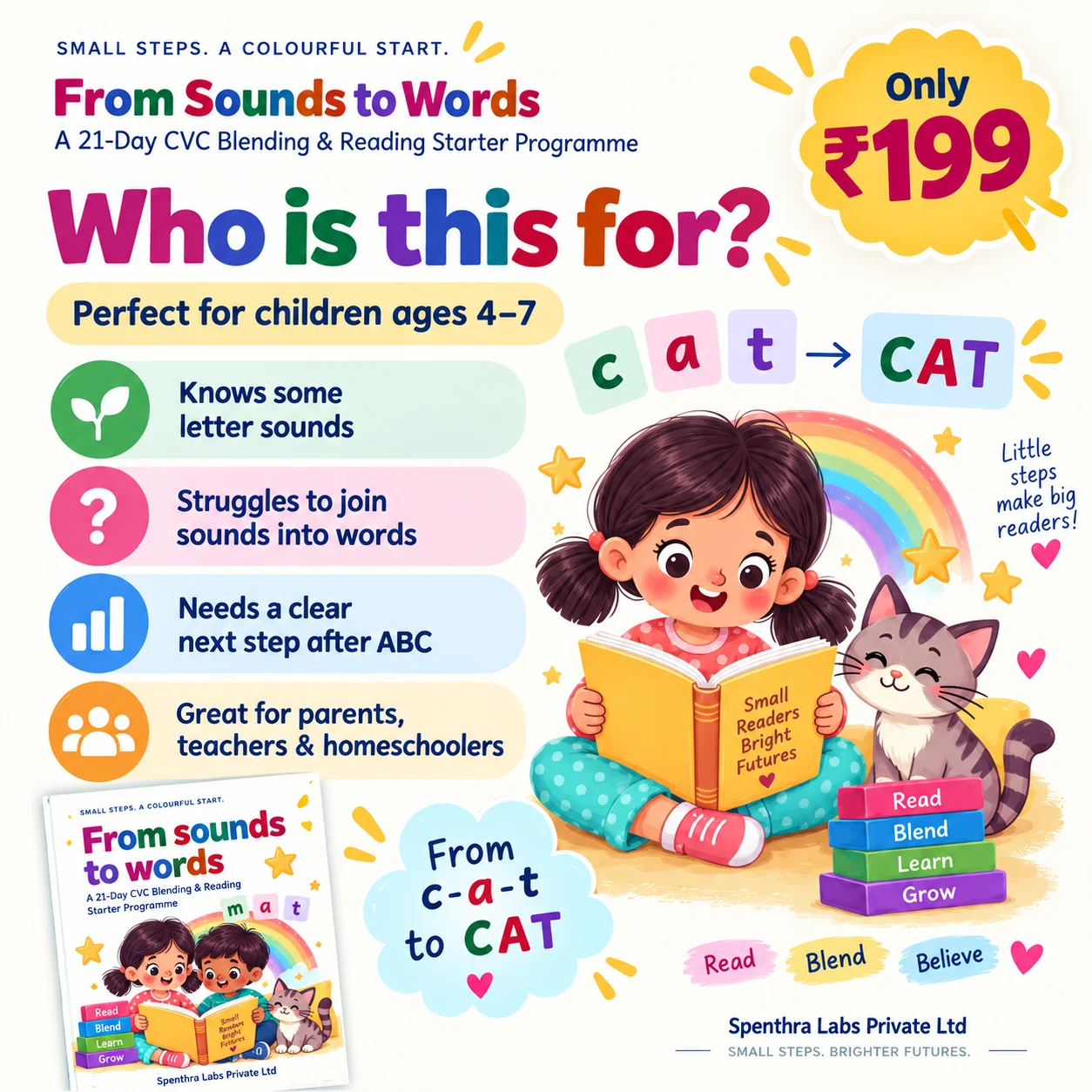
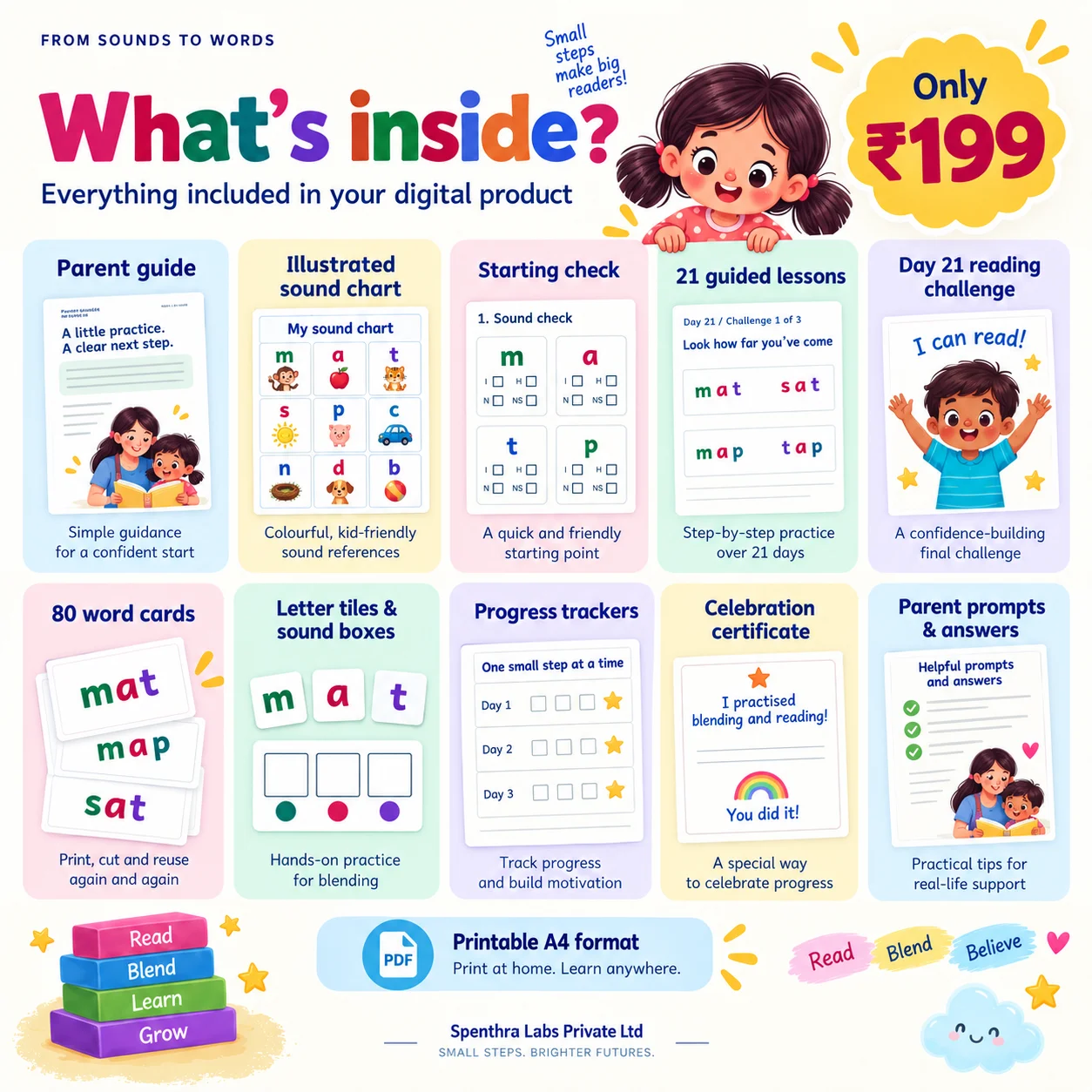
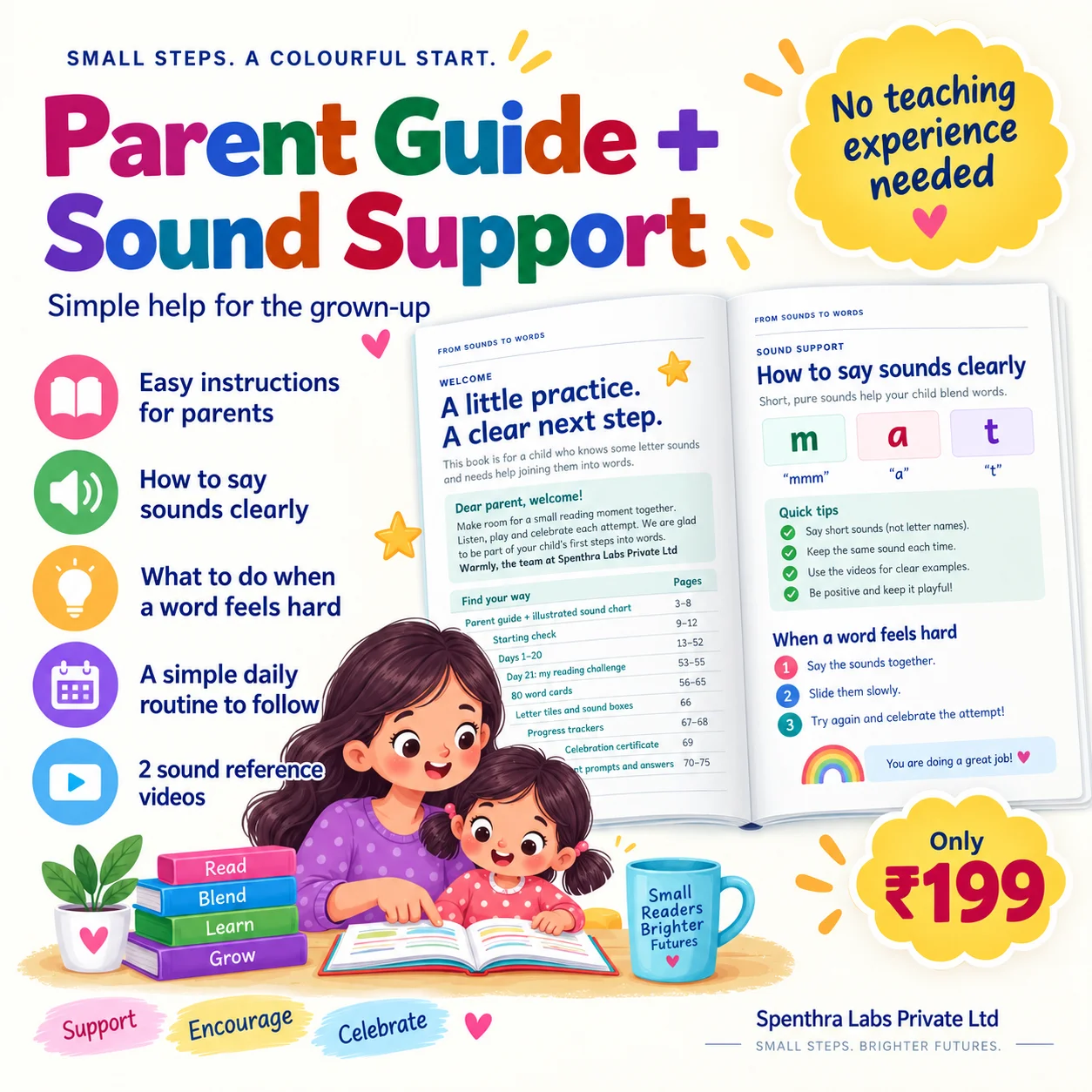
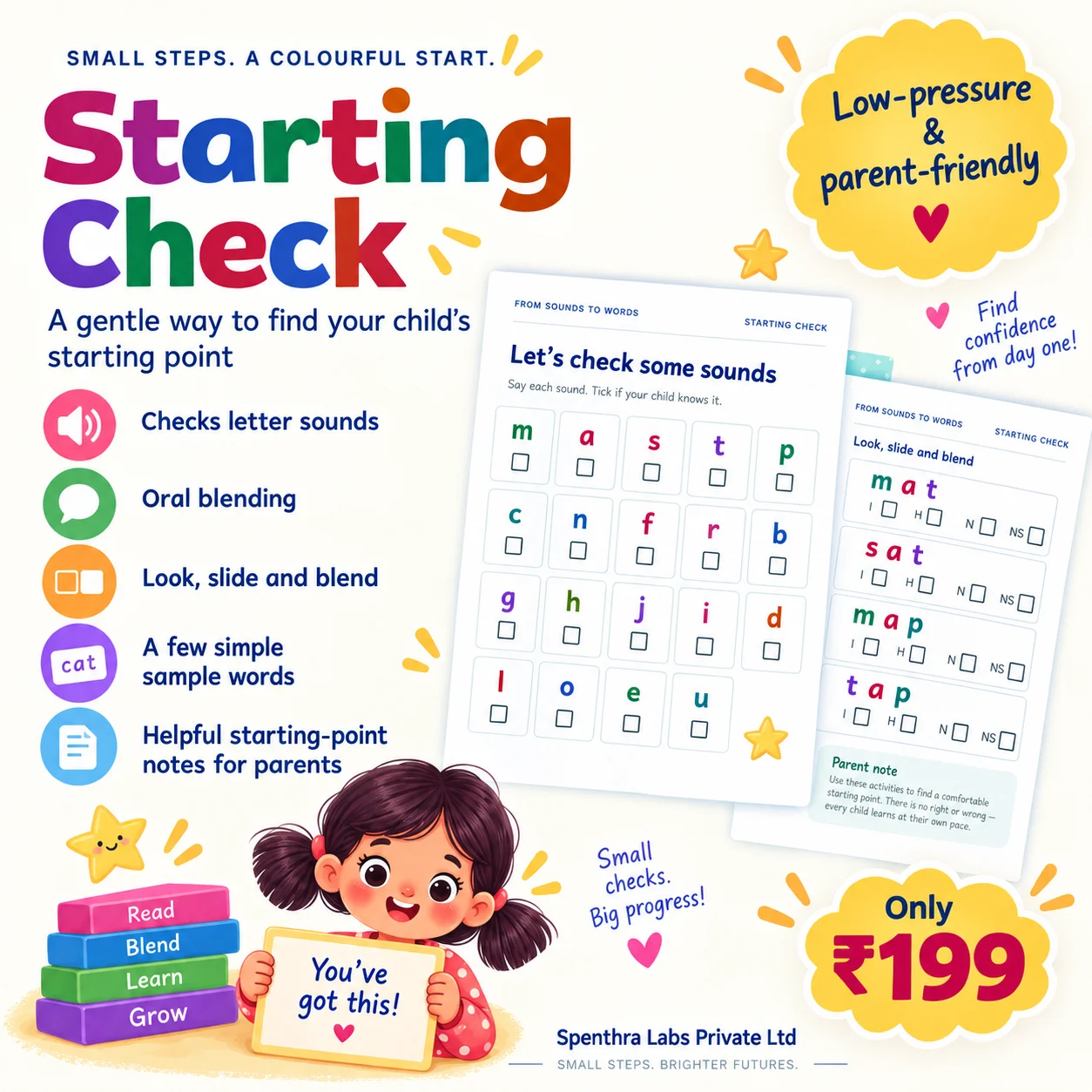
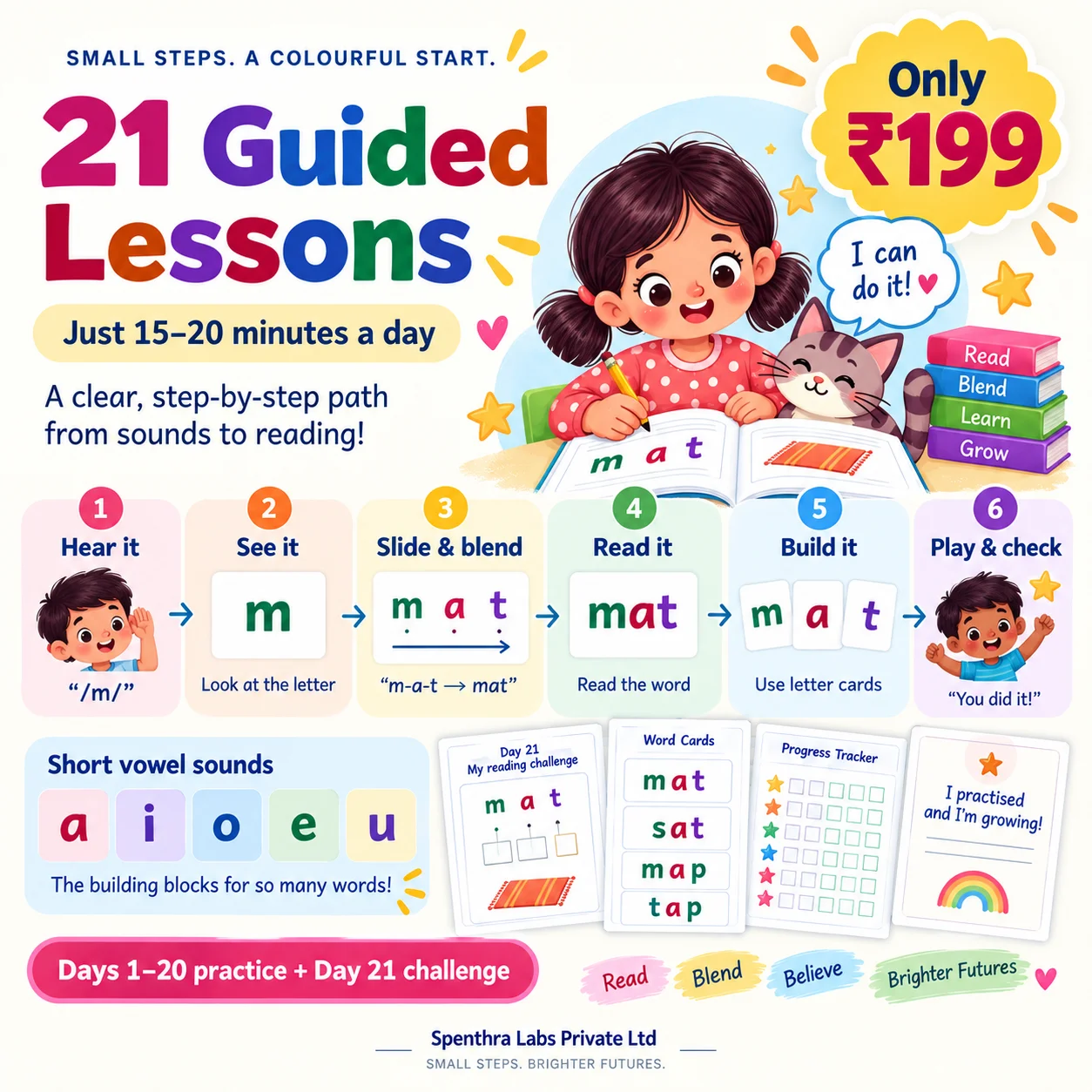
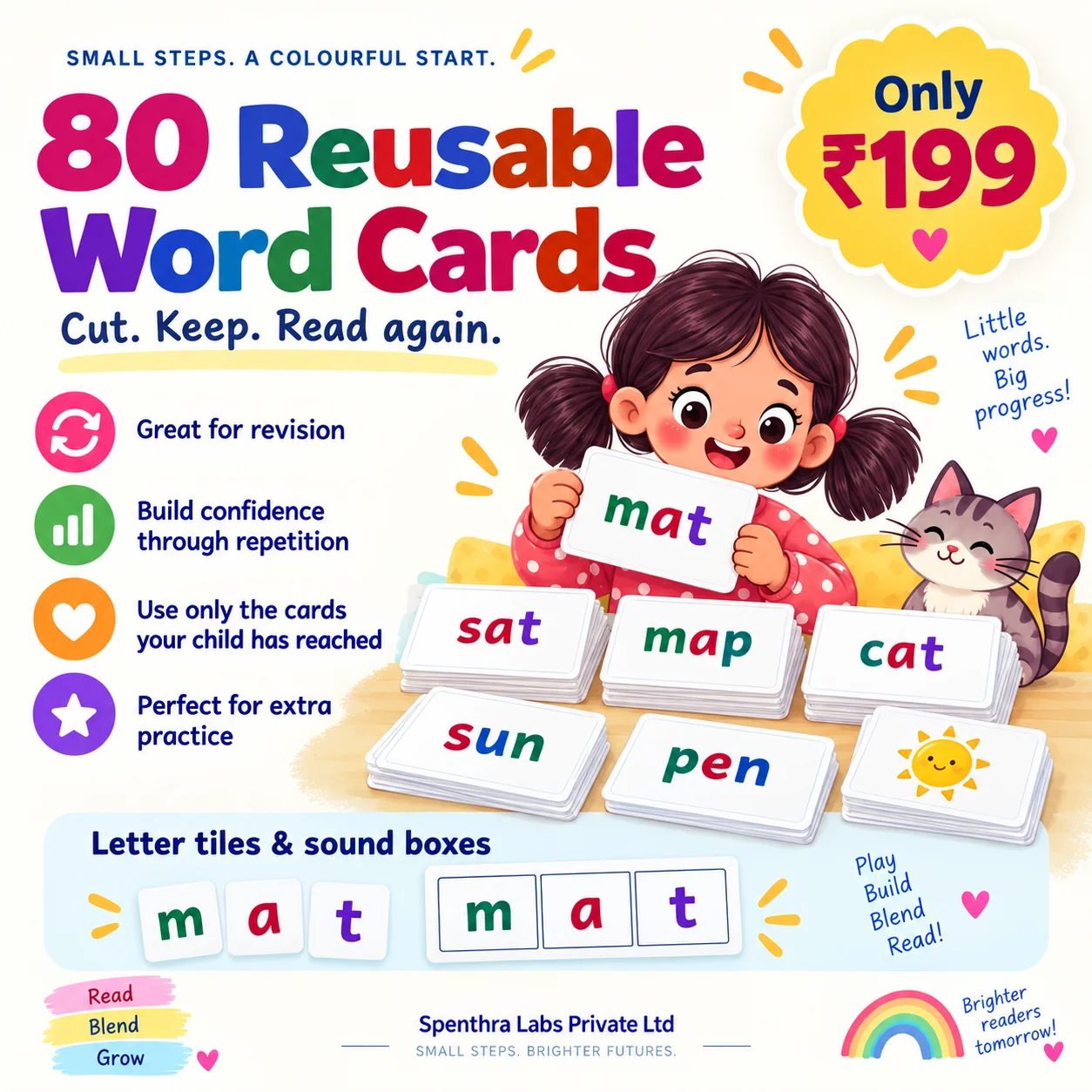
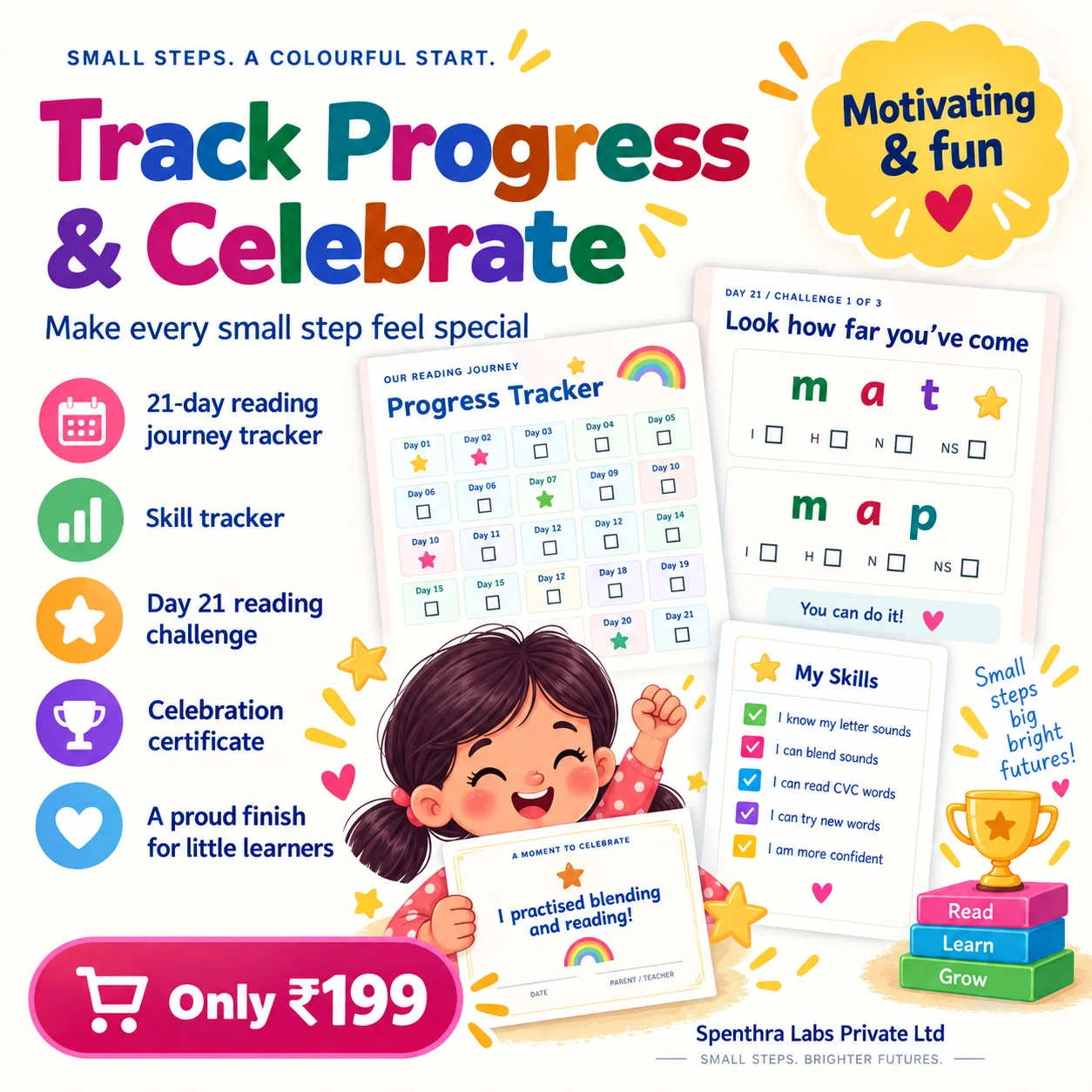
21 days of guided reading practice for little learners.
Ages 4–7 · English · Printable PDF
See MoreTake a look inside
Select an image to enlarge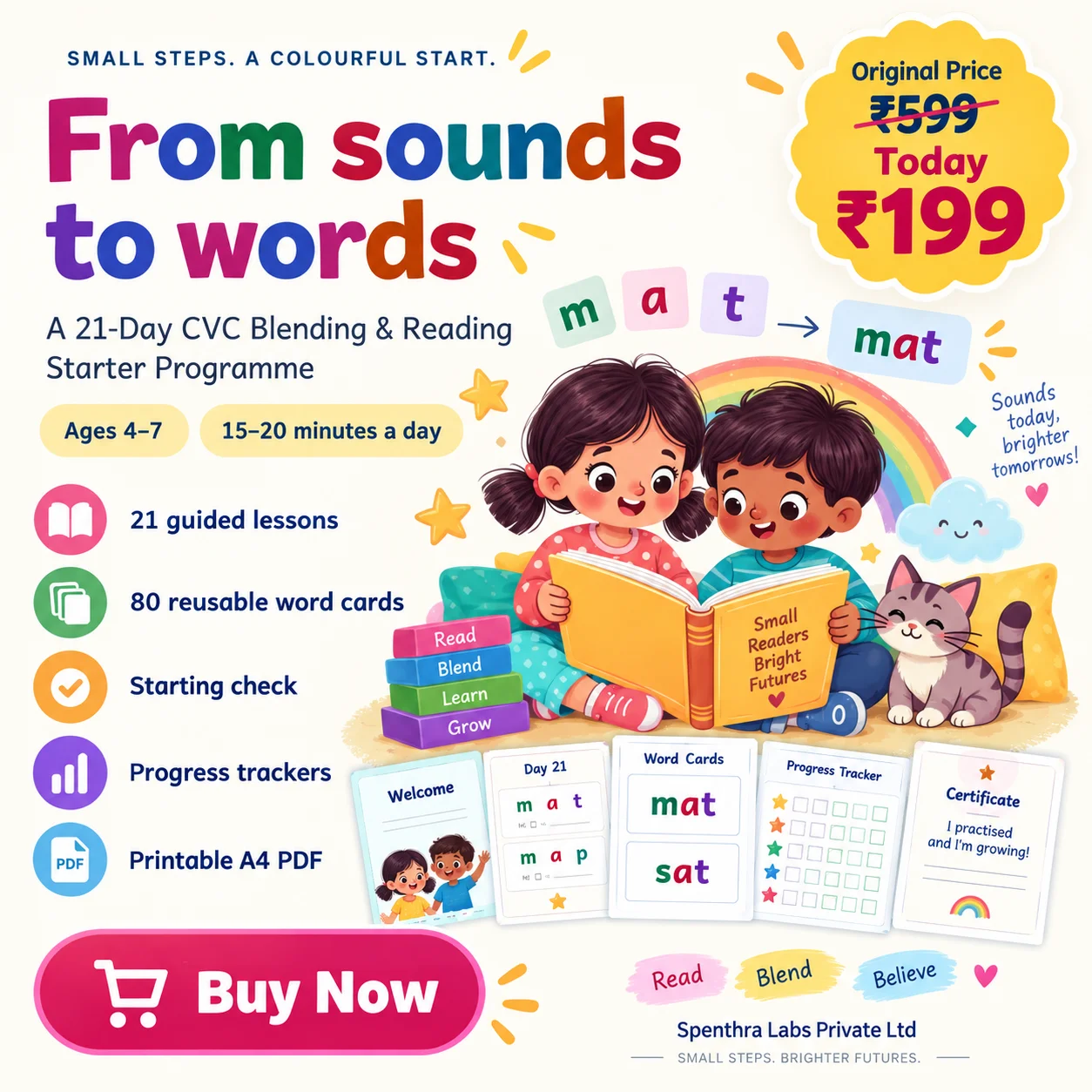
Free · no sign-up · unlimited
Two shuffled columns joined by lines. Choose a ready-made pair set — opposites, plurals, rhyming words, animals and their young — or type your own pairs for any subject at all.
A few things worth knowing before you print a stack of them.
Items are shuffled so that no word ever sits directly opposite its own match. Without that guarantee a random shuffle regularly gives away two or three answers for free.
This type is the fastest way to build a revision sheet for anything paired: capitals and countries, terms and definitions, characters and books. Type one pair per line separated by an equals sign.
With ten items matched to ten, a child who gets nine right gets the tenth without thinking, and the final pair tests nothing. Adding two or three extra items to the right-hand column removes the free answer and forces every line to be a decision. It is a small change that measurably increases what the sheet tells you.
A child who matches every capital city correctly may be unable to name one unprompted. That is not a flaw in the exercise as long as you know which you measured. Matching suits early learning and revision; if you need to know whether something can be produced from nothing, the same content needs a fill-in-the-blank or a short-answer format.
A left column mixing words, dates and pictures against a right column mixing definitions and names produces a puzzle about the exercise rather than about the content. One kind of thing on each side, one relationship between them. If a sheet needs two relationships, it needs two sections.
If the items are varied enough, a child can often match by ruling out rather than by knowing — the only date goes with the only historical event. Items that are similar to each other make this harder and the exercise more honest, which is the opposite of the instinct to spread the content widely.
Matching is particularly useful early in language learning, where recognition arrives well before production and asking for recall too soon just produces blanks. Word to translation, word to picture, or word to definition all work, and the format gives a child something to succeed at while vocabulary is still fragile.
Genuinely unlimited
No monthly cap and no premium tier. Make fifty worksheets in an afternoon if you need to.
Nothing is uploaded
Questions, names and PDFs are all built in your browser. No worksheet content is ever sent to a server.
Several exercises per sheet
Combine arithmetic, tracing and a quiz on one page instead of printing three separate worksheets.
Edit every question
Retype any question, replace just one, or delete it — your edits survive when you change the settings.
Yes. Choose “My own pairs” and enter one pair per line, separated by =, like: big = small
Yes — the key draws each correct joining line, so it can be marked at a glance.
Yes. Set the answer style to “Write the matching letter”, which is easier to mark for larger classes.
Eight to twelve pairs is comfortable. Beyond that the columns get long and children lose their place. Adding two or three extra unmatched items on one side is worth doing, because it stops the last pair being answerable for free.
Usually not. With equal columns the final pair is determined by everything before it, so it tests nothing. A few extra options on one side keep every line a real decision.
Recognition — vocabulary, definitions, pairs of related facts. It is not a good test of recall, since a child who matches every item may not be able to produce any of them unprompted. Use it for revision and early learning, and a different format when recall is what you need.
Very. Recognition develops well before production, so matching a word to its translation or picture gives real practice at a stage when asking for recall would mostly produce blanks.
Alphabet Tracing
Dotted letterforms with handwriting rulers — A–Z, a–z, 0–9 or Hindi.
Word Tracing
Trace whole words — sight words, a theme, or your own spelling list.
Spelling Test
Numbered blank lines for dictation, with a teacher copy of the list.
Fill in the Blanks
Cloze sentences or missing letters, with an optional word bank.
Multiple Choice
Tick-the-box questions from a maths, language or general bank.
Word Scramble
Jumbled letters to unscramble, with optional first-letter hints.