





Skip to content

From our digital bookshelf

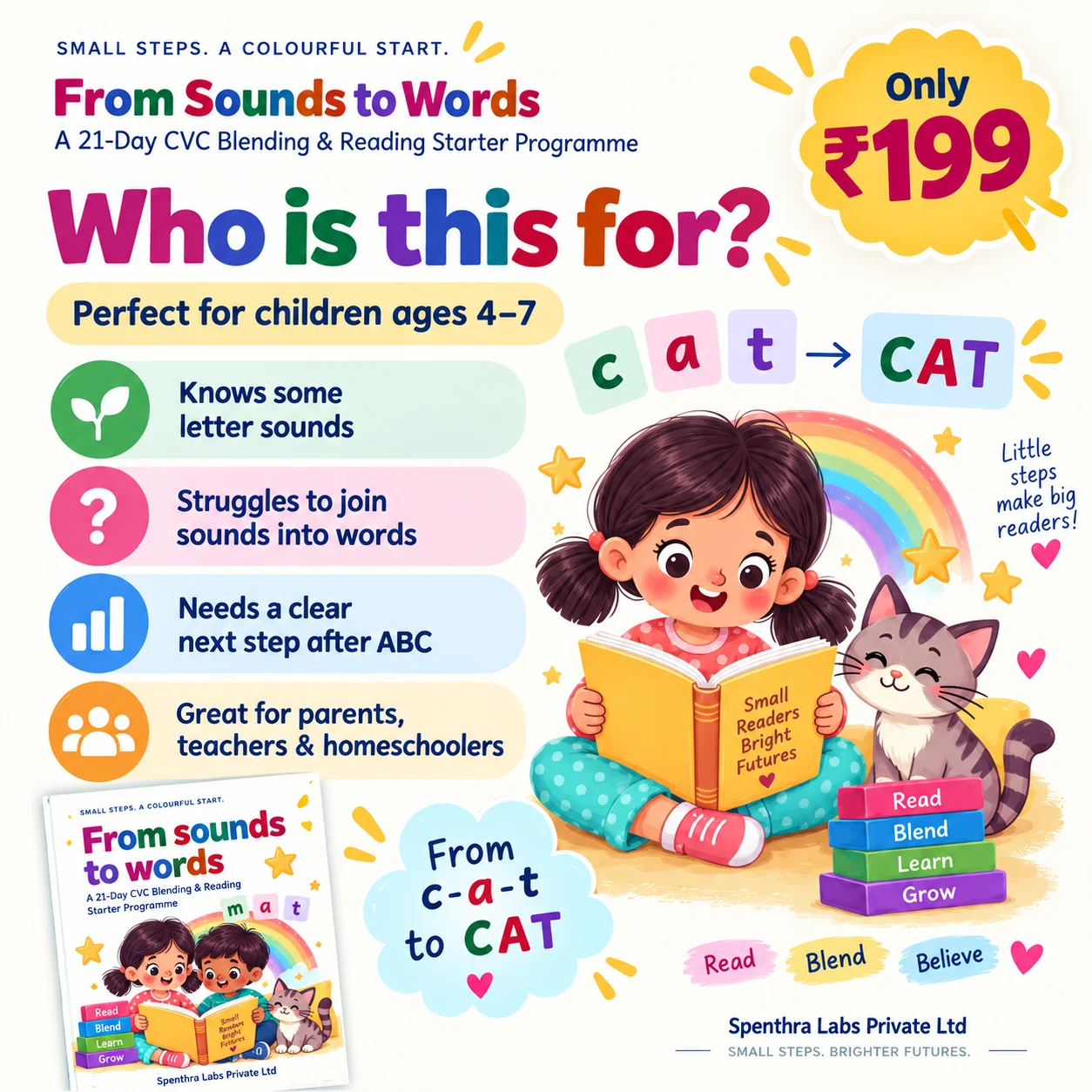
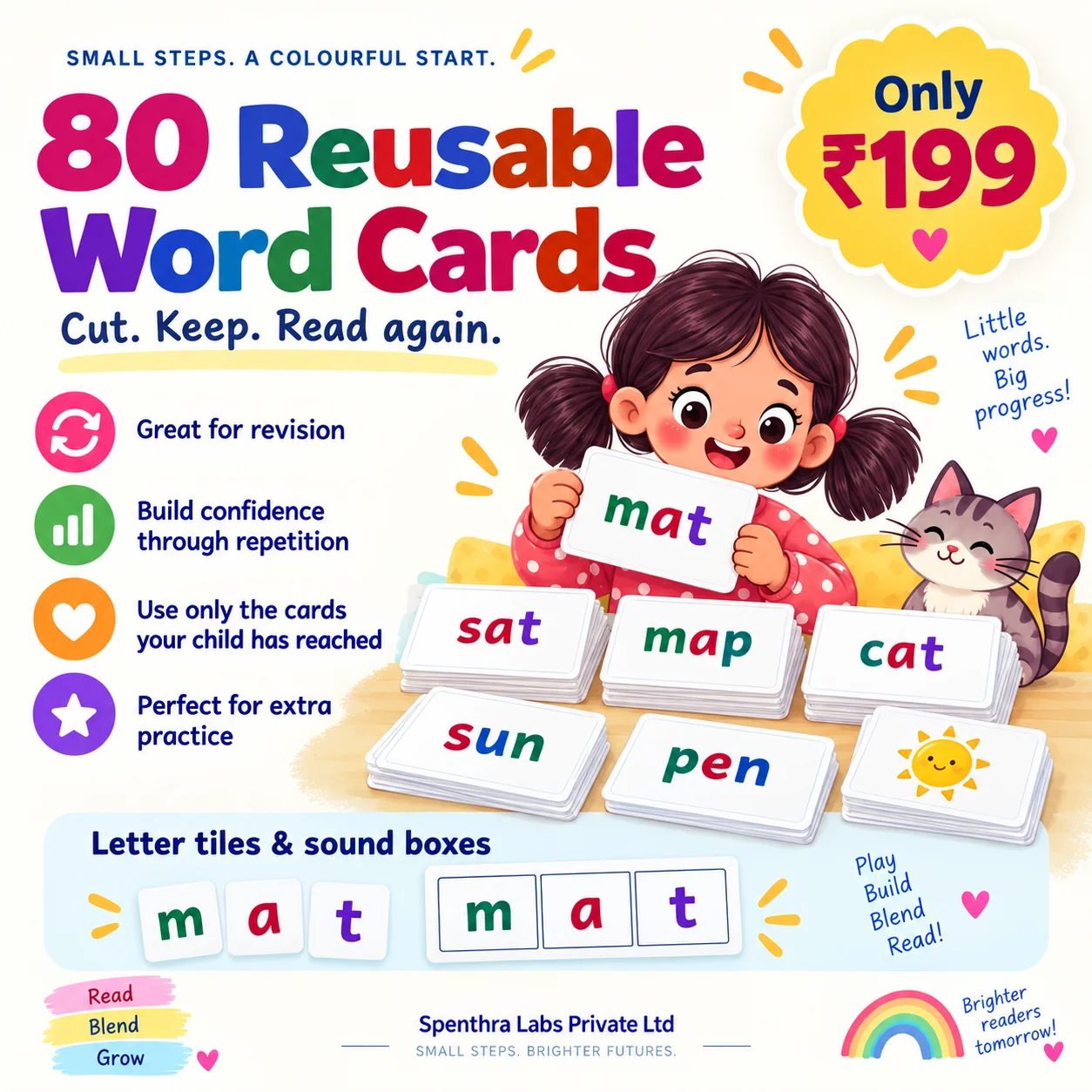
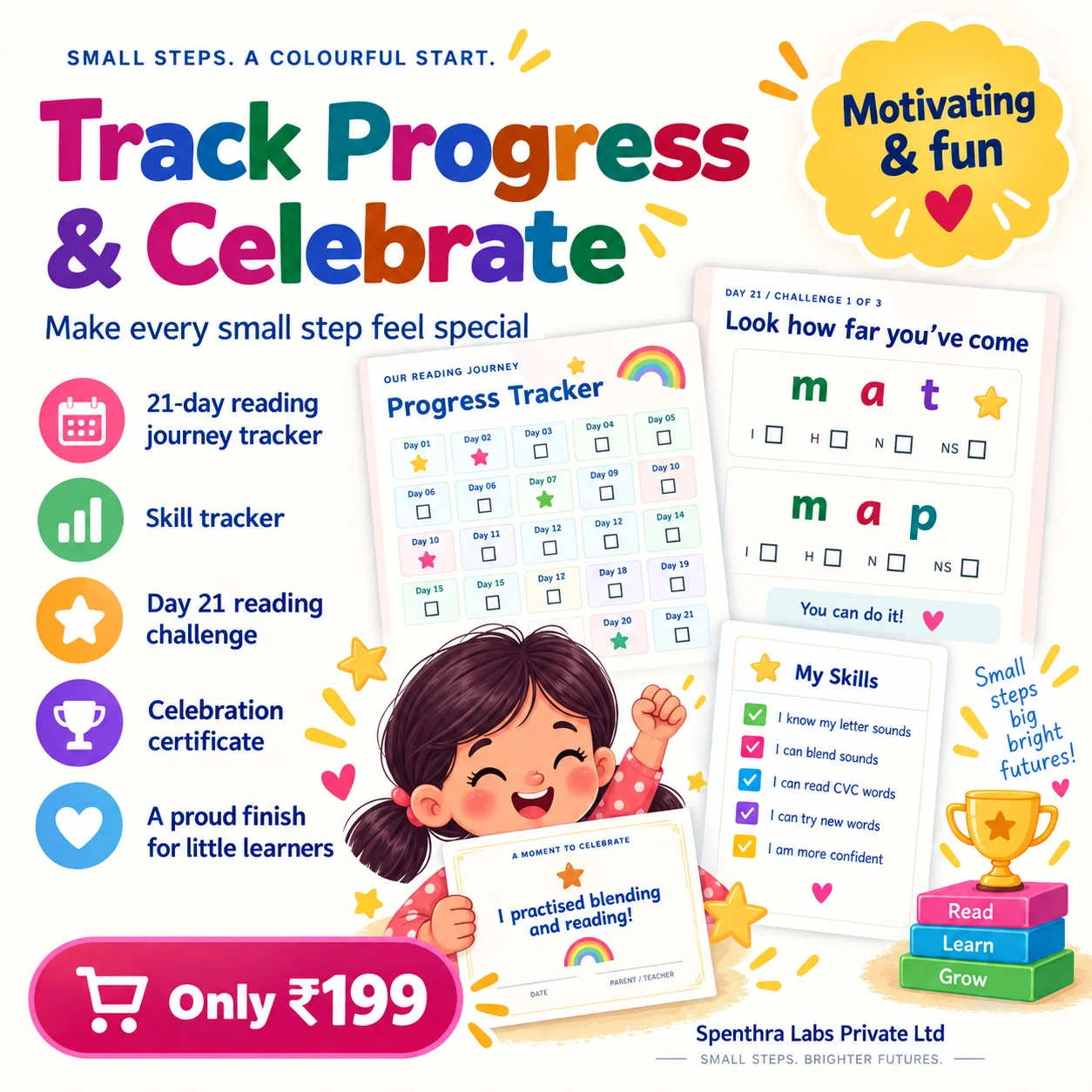
21 days of guided reading practice for little learners.

Ages 4–7 · English · Printable PDF

See More

From Sounds to Words

Free · no sign-up · unlimited

Addition and Subtraction Fact Family Generator

Three numbers, four related facts. Fact families are the clearest way to show a child that addition and subtraction undo each other. Choose a fact family house, a number triangle, or plain blanks.

  • Fact family house, number triangle, or plain layout
  • Give all three numbers, or only the two parts
  • Whole numbers up to 100
  • Answer key writes out all four facts

How to get the most from these worksheets

A few things worth knowing before you print a stack of them.

Why this beats more sums

A child who writes 8 + 5 = 13 and then has to produce 13 - 5 = 8 is being shown the inverse relationship directly. That single idea removes an enormous amount of later guesswork, and it is the foundation for solving equations.

Hide the whole to raise the difficulty

Setting the two parts only means a child must add before they can write any of the four facts, which turns a recall exercise into a two-step problem.

One relationship, four sentences

The trio 3, 5 and 8 generates 3 + 5 = 8, 5 + 3 = 8, 8 − 3 = 5 and 8 − 5 = 3. The point is not that there are four sums to write but that there is one fact underneath them, so a child who knows any one knows all four. This is what turns rote learning into something with structure, and it roughly quarters what has to be memorised.

Part, part, whole is the picture that makes it work

Fact families make sense once a child sees two parts and a whole. Addition puts the parts together; subtraction takes a part away to find the other. Drawing that as a bar or a triangle before writing any sentences gives the relationship a shape, and children who have that shape recover a forgotten fact by reasoning rather than guessing.

Where fact families pay off is missing numbers

A child who has internalised fact families answers __ + 6 = 14 by reaching for 14 − 6 without being told to. One who has not counts up from six. Both arrive; only the first scales to larger numbers and to algebra. If you want a single reason to spend time on this, that is it.

Watch for the fourth sentence being guessed

Children often write the two additions confidently, get the first subtraction right and then write the fourth by swapping digits without thinking. Check it by asking which number is the whole. If they cannot say, the sheet is being completed by pattern rather than understood, and it is worth going back to the part-part-whole picture.

Doubles and near doubles are worth separating

The trio 6, 6, 12 produces only two distinct sentences rather than four, which surprises children who have learned to expect four every time. Including a few doubles deliberately, and asking why there are fewer, is a quick way to check whether the structure is understood or the format is being followed.

What makes this different

Genuinely unlimited

No monthly cap and no premium tier. Make fifty worksheets in an afternoon if you need to.

Nothing is uploaded

Questions, names and PDFs are all built in your browser. No worksheet content is ever sent to a server.

Several exercises per sheet

Combine arithmetic, tracing and a quiz on one page instead of printing three separate worksheets.

Edit every question

Retype any question, replace just one, or delete it — your edits survive when you change the settings.

Frequently asked questions

What is a fact family?

A set of three related numbers and the four number sentences they make. From 3, 5 and 8: 3 + 5 = 8, 5 + 3 = 8, 8 - 3 = 5 and 8 - 5 = 3.

What is the fact family house?

A house shape with the whole in the roof and the two parts in the rooms below. It is the presentation most primary schemes use.

Does the answer key show all four facts?

Yes, all four are printed on the key.

What is a fact family in maths?

A group of three numbers that make a set of related addition and subtraction sentences — 3, 5 and 8 give 3 + 5 = 8, 5 + 3 = 8, 8 − 3 = 5 and 8 − 5 = 3. The purpose is to show that these are one relationship seen four ways rather than four facts to memorise.

Why teach fact families rather than just addition and subtraction?

Because it cuts what has to be memorised and gives children a way to recover a forgotten fact by reasoning. It also builds the habit that makes missing-number problems and, later, algebraic rearrangement feel natural rather than arbitrary.

What age are fact family worksheets for?

Usually six to eight, once single-digit addition and subtraction are both familiar. Introducing them before either operation is comfortable tends to produce sentence-copying rather than understanding of the relationship.

Why do some fact families have only two sentences?

Because the two parts are the same — 6, 6 and 12 give 6 + 6 = 12 and 12 − 6 = 6, and swapping the parts changes nothing. Asking a child why is a quick check on whether they have understood the structure or just the layout.

Related generators

Suitable grade levels