One मात्रा at a time, then mix
Teaching आ की मात्रा on its own until it is secure, then इ, then mixing the two, works far better than presenting all ten together. Use the मात्रा selector to pick exactly which signs appear on each sheet.
From our digital bookshelf
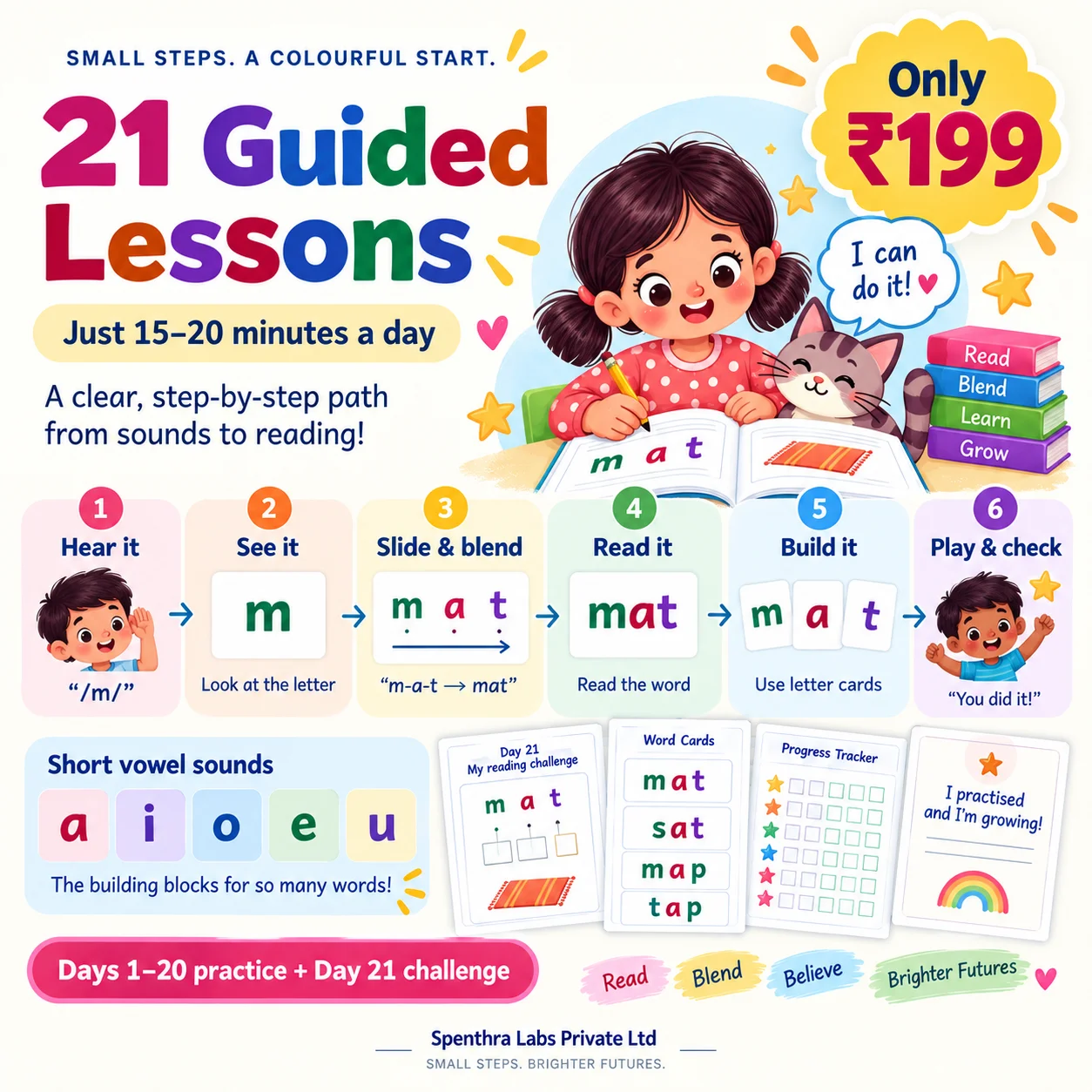
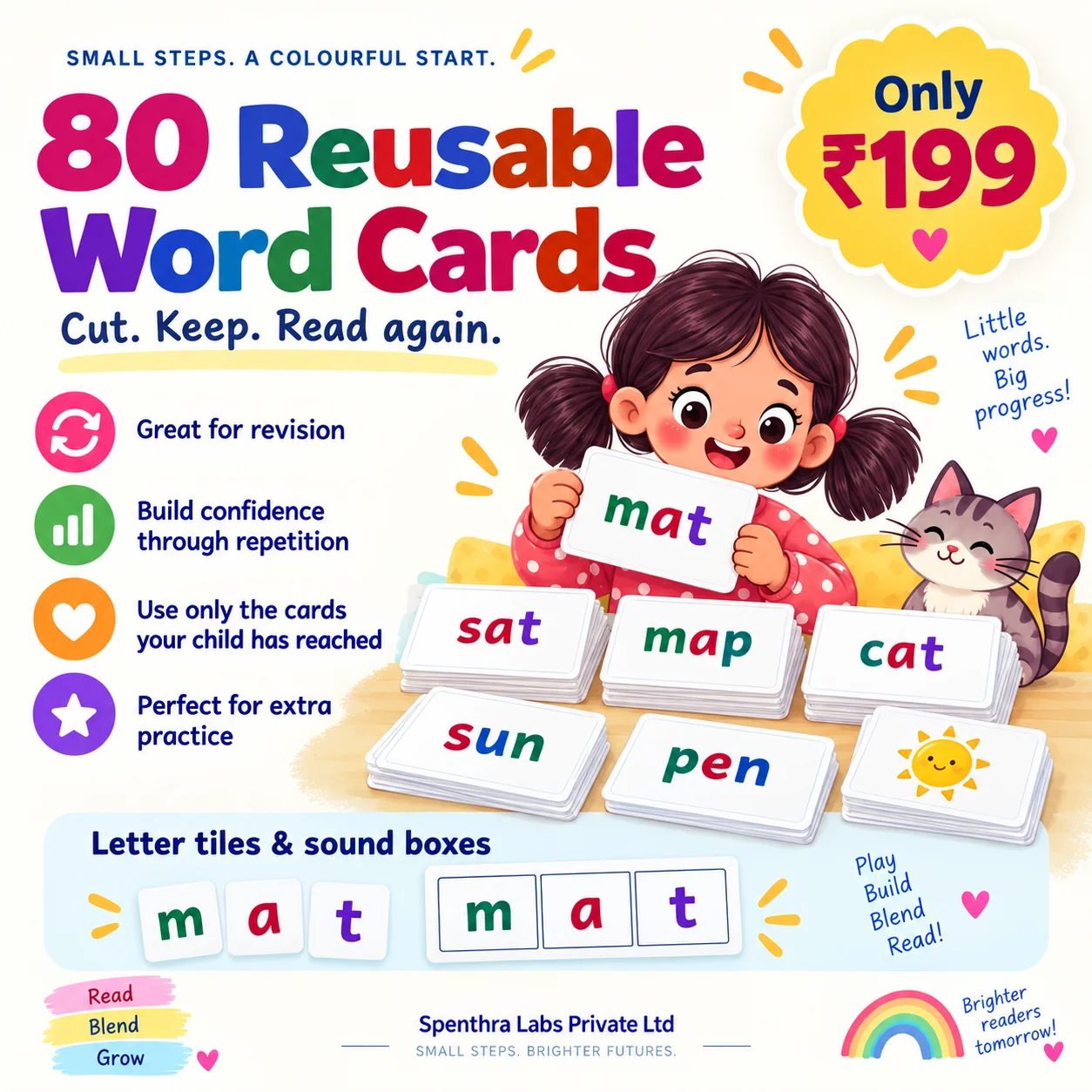
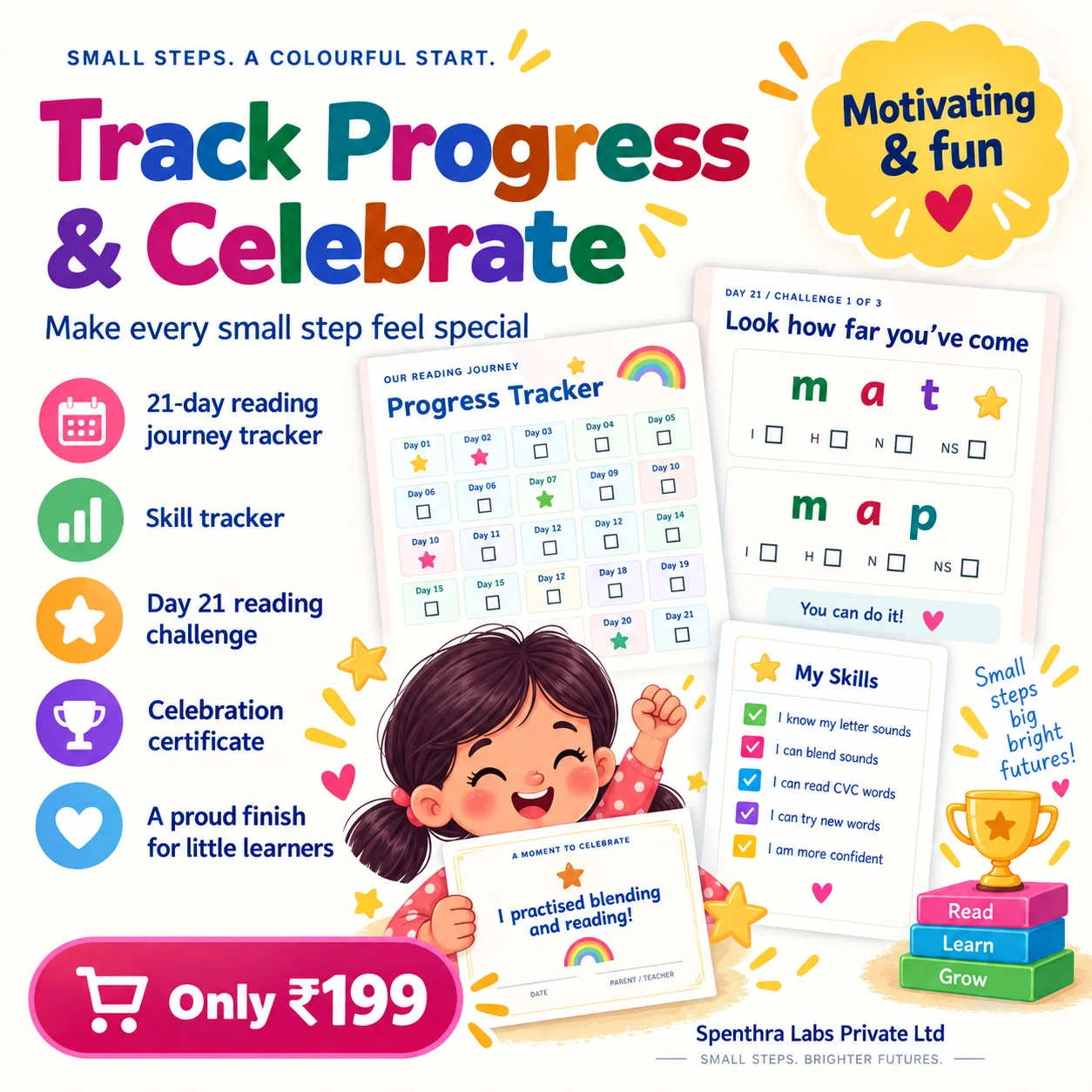
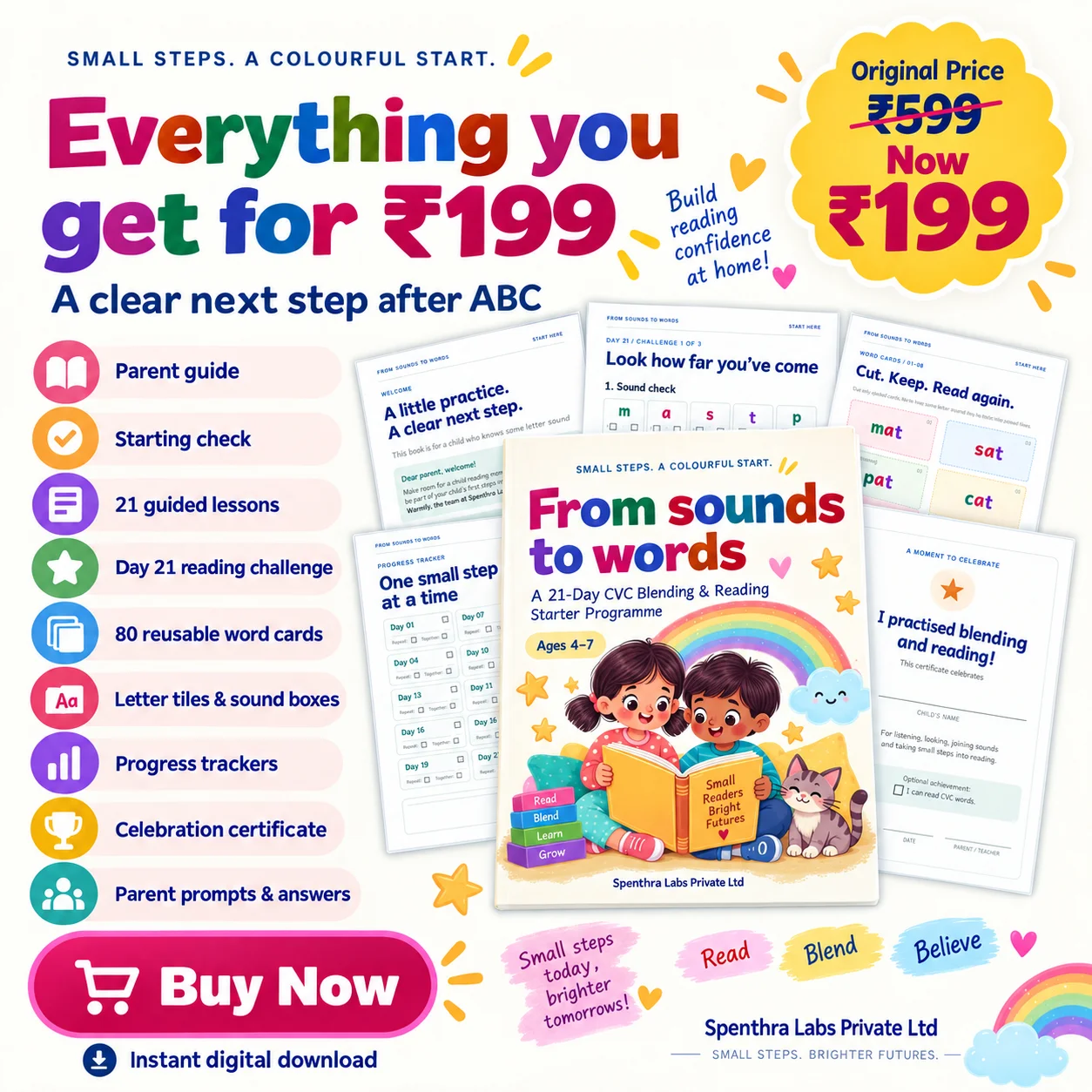
21 days of guided reading practice for little learners.
Ages 4–7 · English · Printable PDF
See MoreTake a look inside
Select an image to enlarge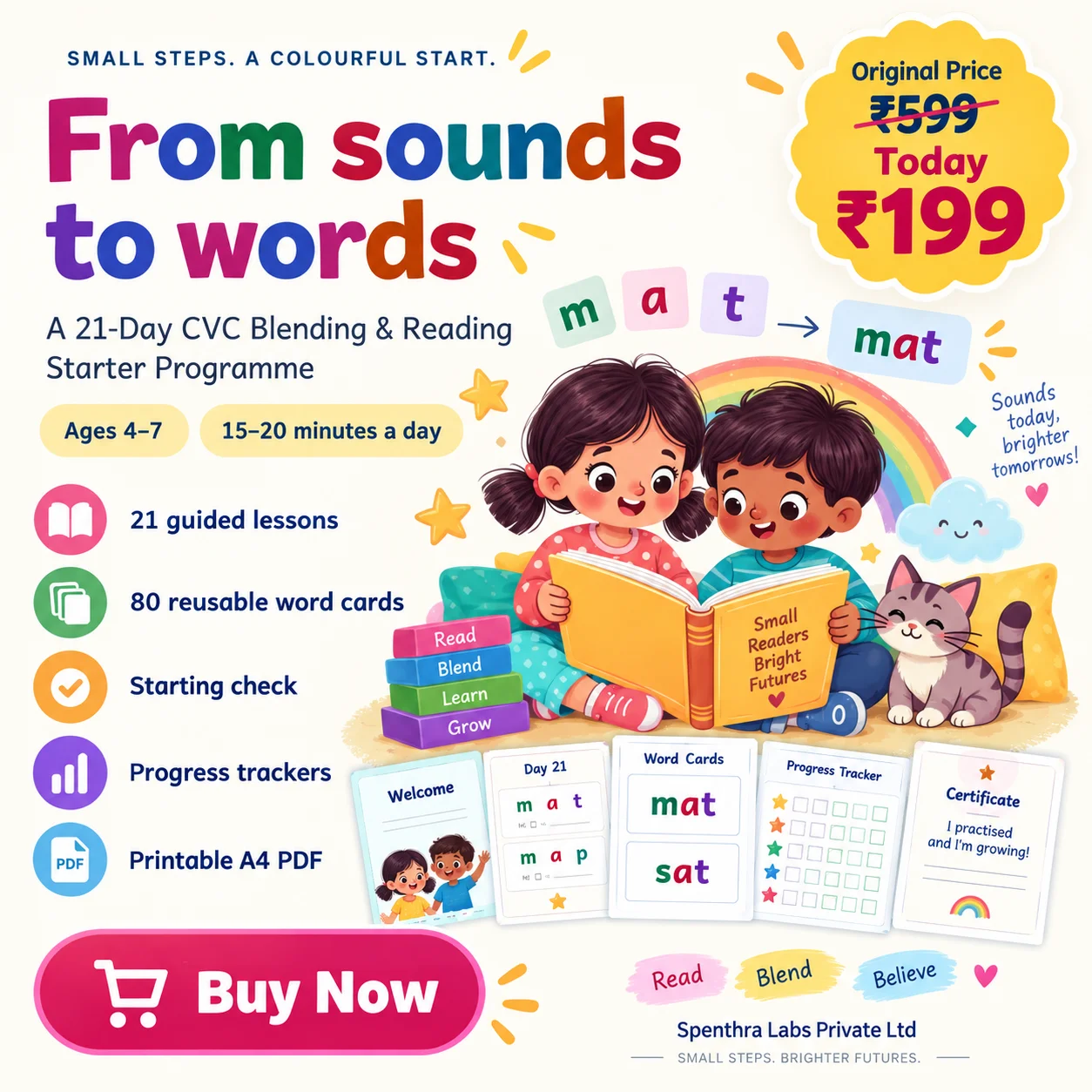
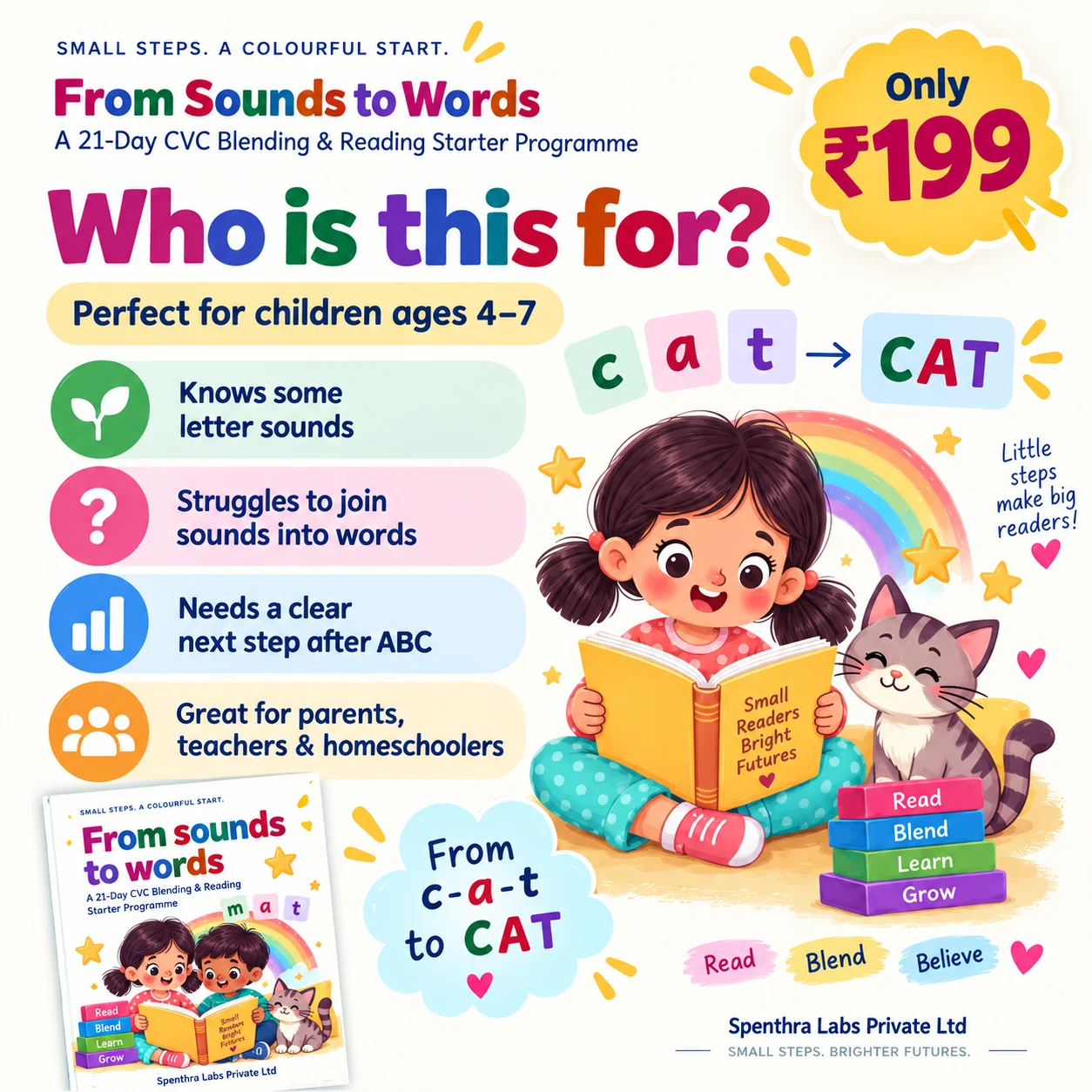
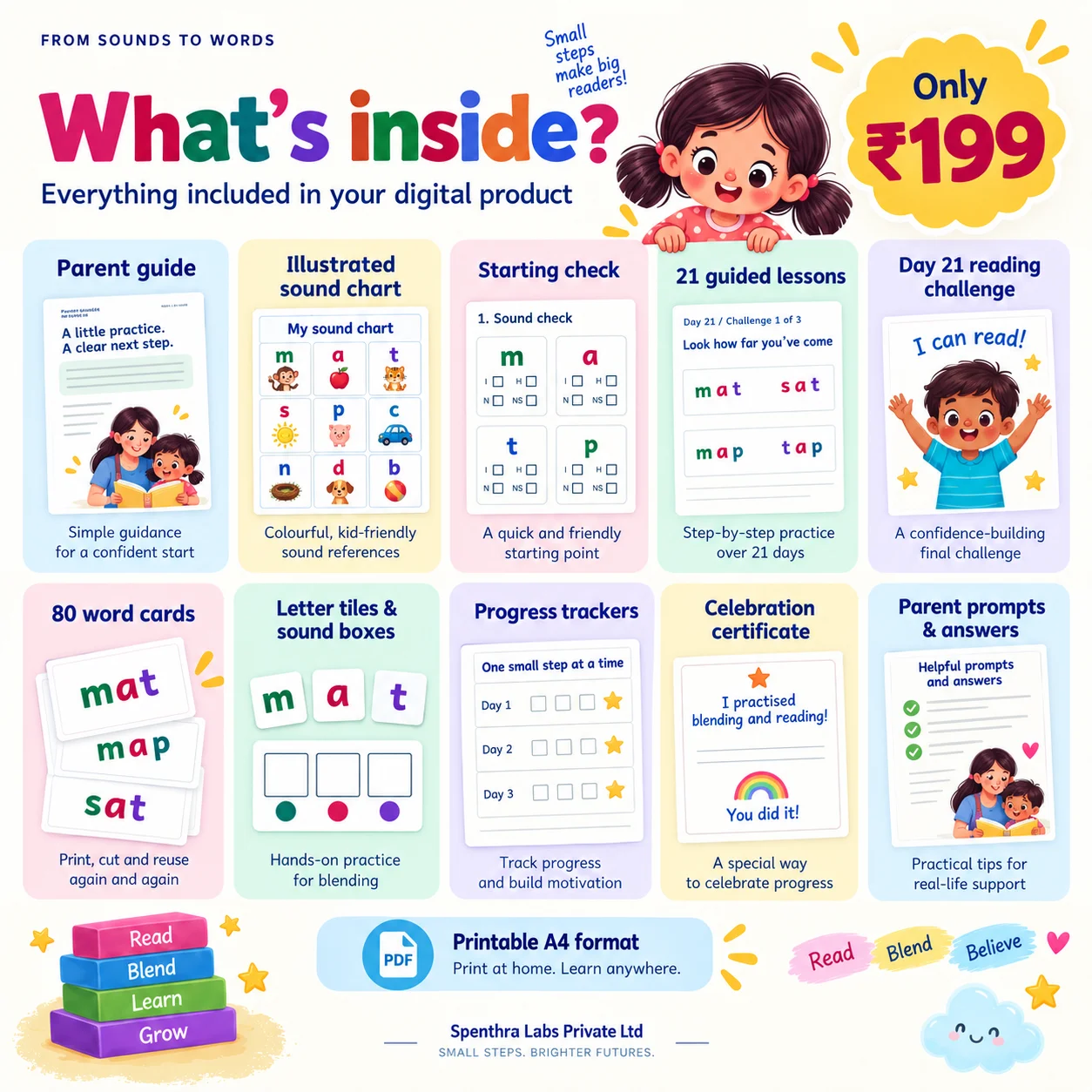

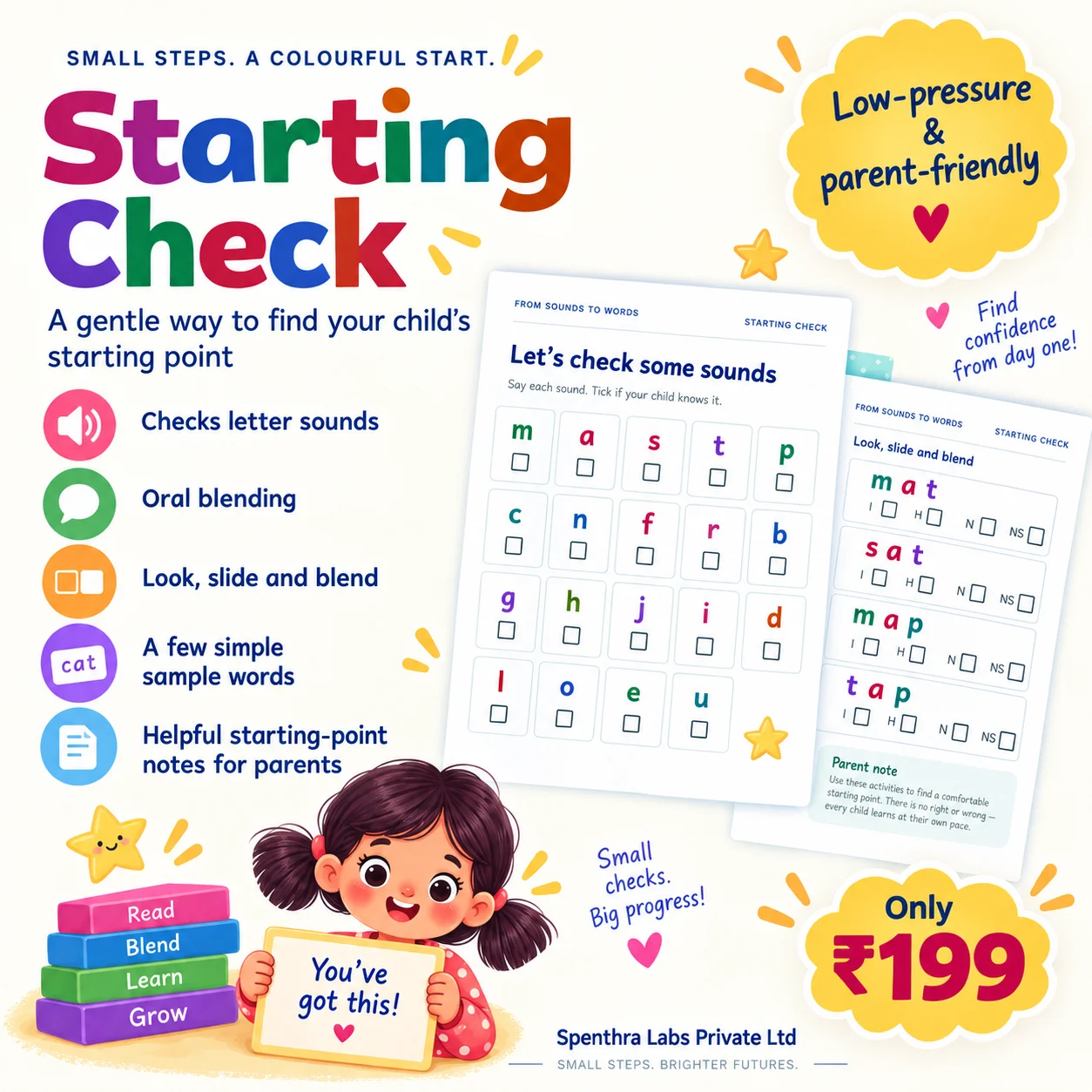
Free · no sign-up · unlimited
मात्रा practice built the way it is actually taught in Indian classrooms. Choose one मात्रा or mix several, and pick from five exercise styles — fill the missing sign, trace the word, choose the correct मात्रा, identify it, or write your own words.
A few things worth knowing before you print a stack of them.
Teaching आ की मात्रा on its own until it is secure, then इ, then mixing the two, works far better than presenting all ten together. Use the मात्रा selector to pick exactly which signs appear on each sheet.
छोटी इ sits before the consonant while बड़ी ई sits after, even though both are pronounced from the same vowel family. A sheet mixing only those two, with everything else excluded, targets the confusion directly.
Many worksheet tools break Devanagari apart, printing कि as क followed by a detached ि. This generator runs a full OpenType shaping engine, so conjuncts like क्ष and reordered signs like the reph in र्क print exactly as they are written by hand.
A child who knows all the consonants can still read almost nothing, because ordinary Hindi text is consonants carrying vowel signs. The matra is the step between knowing the alphabet and reading words, and it is where many children stall — not from difficulty but because the alphabet is taught thoroughly and the matras are assumed to follow. They do not; they need their own practice.
Introducing several at once produces confusion that takes far longer to undo than the time saved. The usual order — आ, इ, ई, उ, ऊ — moves from the most visually distinct to the pairs that differ subtly. Work through a full sheet of words using only one matra, then only the next, before mixing them at all.
Matras attach in four different places: after the consonant, before it, above it, below it. The इ matra is written to the left of the consonant it follows, which contradicts how children read and is a reliable source of error. Worth pointing at explicitly rather than hoping the pattern is absorbed.
इ and ई, उ and ऊ differ in vowel length, and children who cannot hear the difference cannot choose the right sign no matter how much they write. Say the pairs aloud, exaggerate the length, and have the child repeat before writing. This is listening practice that happens to be recorded on paper.
A matra written in the right place but the wrong one produces a real word with a different meaning, which a child will not notice while writing. Reading each completed word aloud catches it immediately, and it keeps the exercise connected to meaning rather than becoming a copying task.
Genuinely unlimited
No monthly cap and no premium tier. Make fifty worksheets in an afternoon if you need to.
Nothing is uploaded
Questions, names and PDFs are all built in your browser. No worksheet content is ever sent to a server.
Several exercises per sheet
Combine arithmetic, tracing and a quiz on one page instead of printing three separate worksheets.
Edit every question
Retype any question, replace just one, or delete it — your edits survive when you change the settings.
जी हाँ — पूरी तरह मुफ़्त, बिना किसी खाते या सीमा के। आप जितनी चाहें वर्कशीट बना और प्रिंट कर सकते हैं।
Yes. Use the मात्रा selector to pick any combination, or leave it empty to mix all of them.
Yes. The PDF embeds a proper Devanagari font and runs full OpenType shaping, so matras, conjuncts and the reph all render exactly as written.
मात्रा भरो (fill the sign), शब्द लिखो (trace), सही मात्रा चुनो (choose), मात्रा पहचानो (identify), and छाँटो (write your own words).
A vowel sign attached to a consonant. Consonants carry an inherent short a, and a matra replaces it with a different vowel — so क with the आ matra becomes का. Ordinary Hindi text is made of consonants with matras, which is why they are the step between knowing the alphabet and reading.
Generally आ first as the most visually distinct, then इ, ई, उ and ऊ. Teach one to fluency before introducing the next — the short and long pairs are easily confused if they arrive together.
Because it is written to the left of the consonant it is pronounced after, which contradicts the left-to-right reading order they are learning everywhere else. It needs pointing out explicitly rather than being left to emerge from practice.
Say the pair aloud with the length exaggerated and have them repeat it before writing anything. The distinction is one of vowel length, so a child who cannot hear it cannot reliably choose the sign however much writing practice they get.